Embedded Planning Keynote at APA Iowa Conference 2022

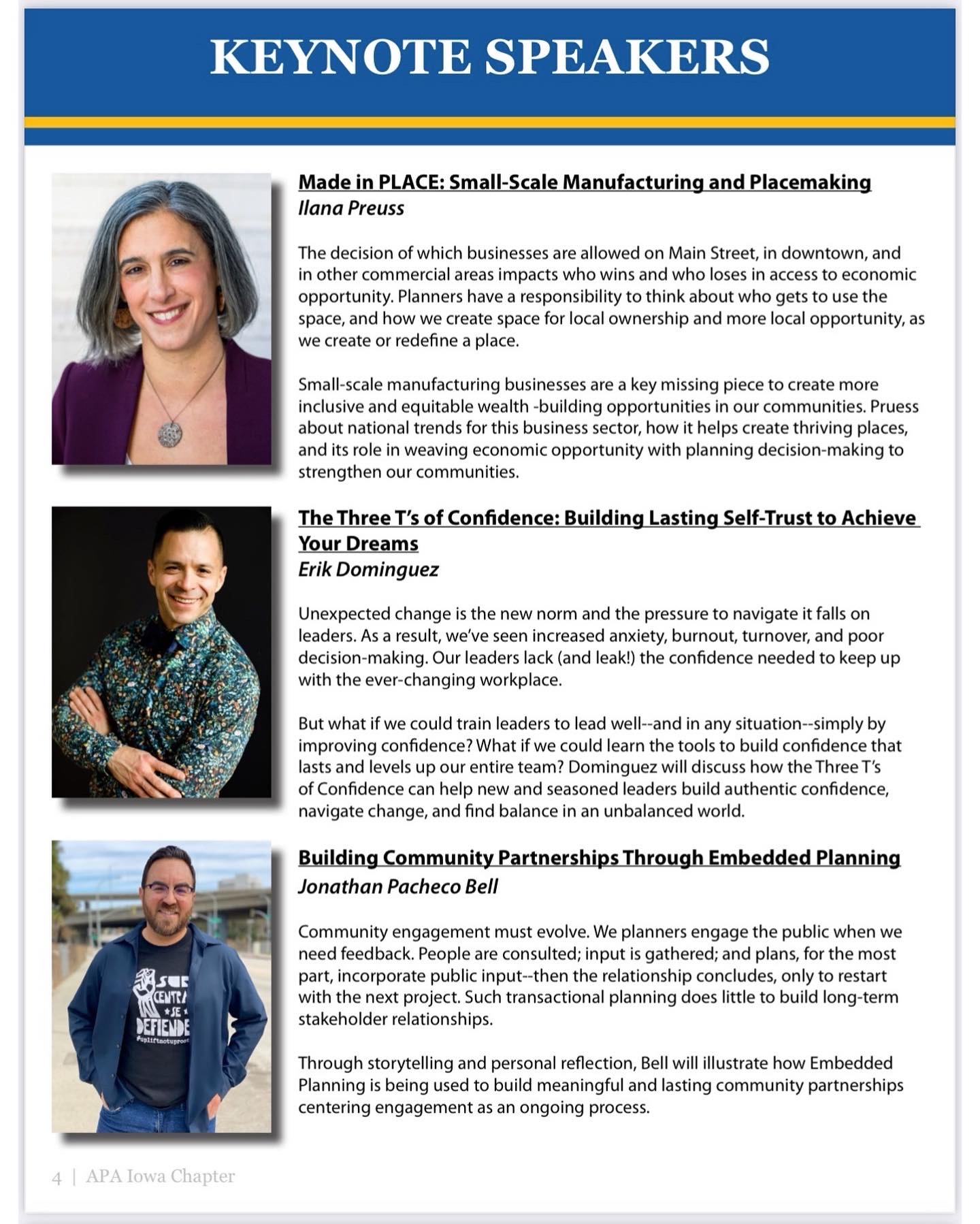
Image by APA Iowa Chapter

Honored to deliver the Friday, Oct 14 keynote at the APA Iowa Chapter Conference

Building Community Partnerships Through Embedded Planning

Community engagement must evolve. We planners engage the public when we need feedback. People are consulted; input is gathered; and plans, for the most part, incorporate public input — then the relationship concludes, only to restart with the next project. Such transactional planning does little to build long-term stakeholder relationships.

In a time of increasing interrogation of planning and its legacies of inequity, planners today are seeking better ways to build and sustain meaningful partnerships. Urban planner Jonathan Pacheco Bell (@c1typlann3r) proposes Embedded Planning as a way to fundamentally restructure community engagement and practice. Embedded Planning means planning from the street, not from a desk. Embedded Planners work in the spaces and places of community members. Embedded Planners build bridges with marginalized communities harmed by past planning practices. Embedded Planning is a praxis that puts theory into action to better this world. Since Bell declared Embedded Planning exists in 2018, it has grown into an international movement embraced by emerging planners.

Through storytelling and personal reflection, Bell will illustrate how #EmbeddedPlanning is being used to build lasting community partnerships that center engagement as an ongoing process. Attendees will learn the benefits and challenges of Embedded Planning, including takeaways for implementation, and understand why this #praxis is the future of planning.

South Central YLEAD

Infographic by South Central YLEAD at CDTech

This week I joined Youth Leaders Empowered Active & Diverse (YLEAD) at CDTech for a conversation on urban planning and gentrification in South Central LA. I shared my story of working on the ground supporting the community with tools and knowledge to preserve South Central history. We shed light on the importance of urban planning for a South Central future without displacement.

Modernism vs Postmodernism

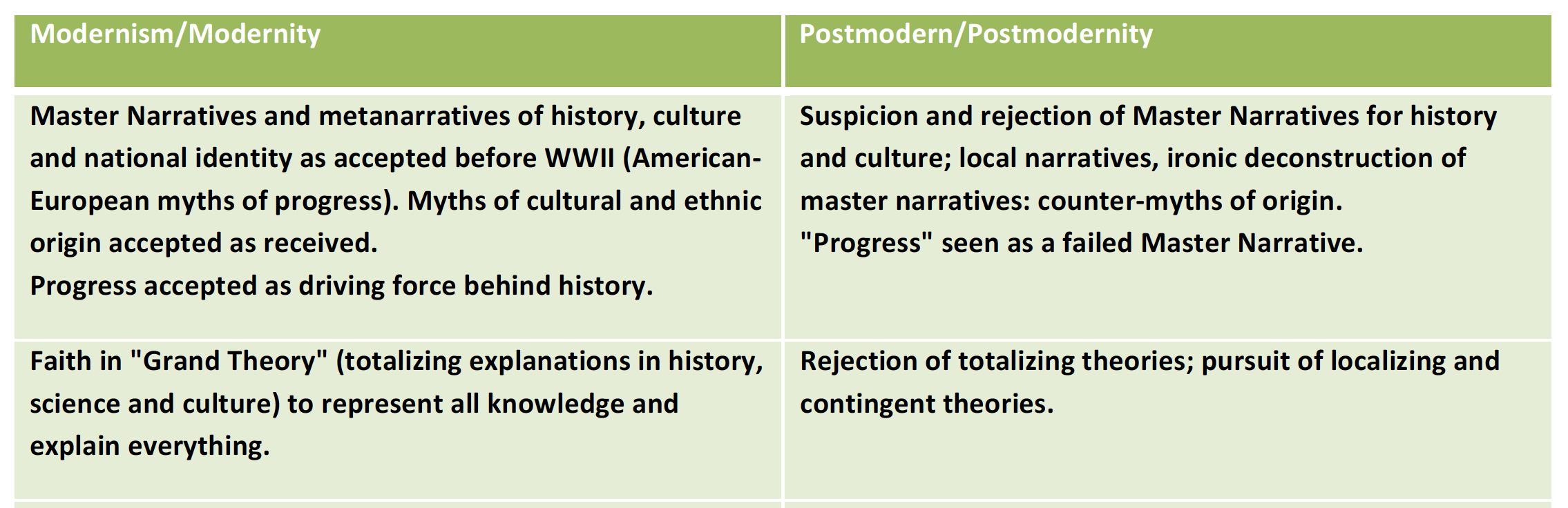
I’m revising an early essay I wrote interrogating planning theory in practice. It’ll be the first entry in my Student Papers Archive. I needed to do some background research on the two theories under scrutiny: Rational Planning and Postmodern Planning. In addition to peer reviewed journals from the planning realm, I found this exceptionally helpful chart comparing Modernism and Postmodernism.

From the URL cited on page 2, I noted the author is Professor Martin Irvine at Georgetown. But a copy-paste of the URL didn’t take me to the chart; instead it forwarded me to the professor’s homepage. And I couldn’t find the chart there. The last revision is dated 2012, but this side-by-side certainly is relevant 10 years later — and will remain so.

I want this chart to live on. I don’t know if the host site’s future update(s) will retain it. So much web ephemera is lost without us knowing. So, I’m doing my part by sharing Professor Irvine’s Modernism vs Postmodernism resource here. Researchers, check it out and please be sure to cite the original author if using the chart.

We Saw Ourselves in Cypress Hill

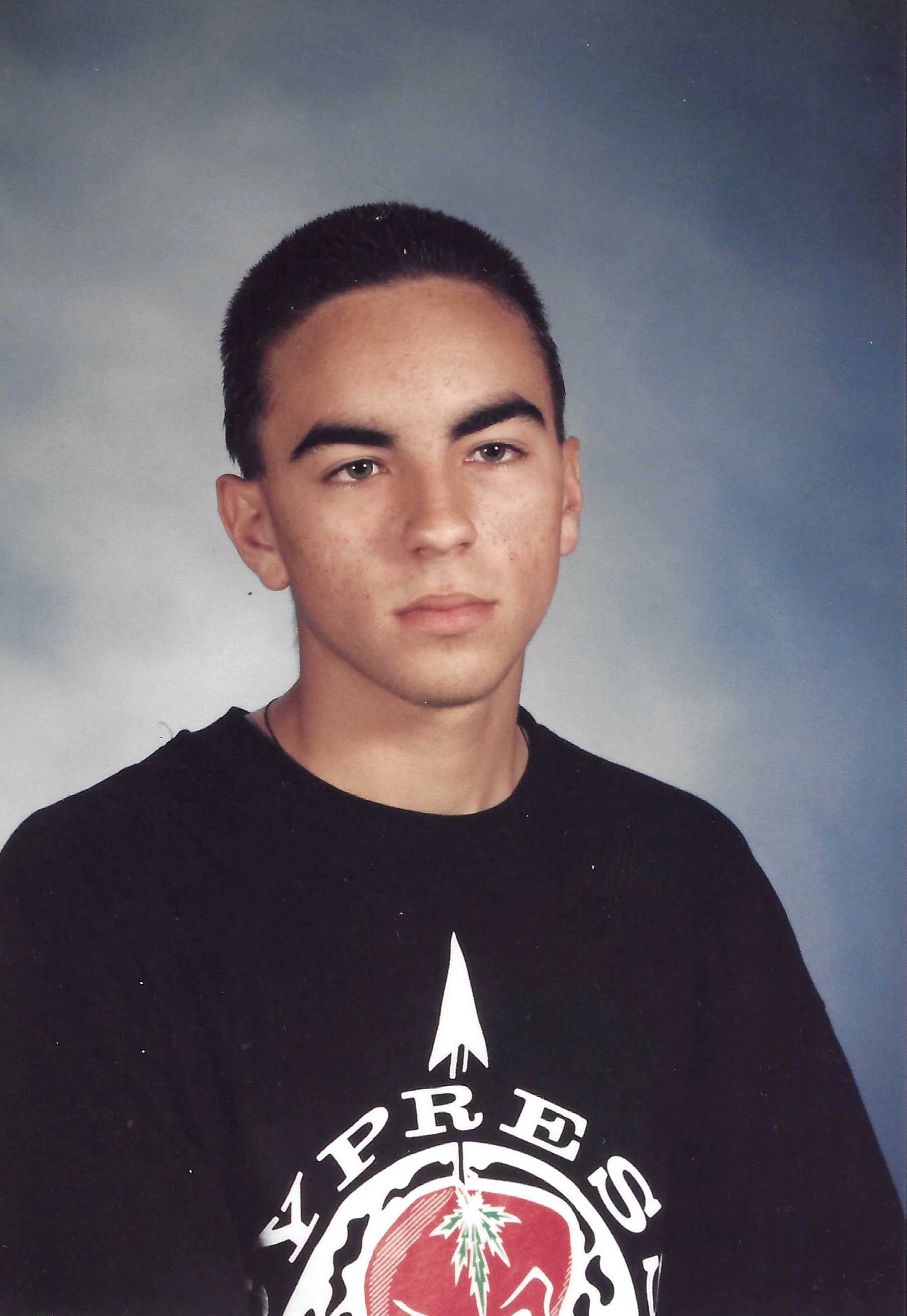
Representing Cypress Hill in my 1992 yearbook photo at Montebello High School

I wrote about the impact of Cypress Hill’s trailblazing self-titled debut album that dropped 31 years ago today, and explained why I represented them to the fullest in my 1992 yearbook photo at Montebello High School.

The #HipHopHistory microessay is on my Instagram (private but I add): https://www.instagram.com/c1typlann3r/

Excerpt:

“We saw ourselves in Cypress. They talked like us. We looked like them. Or tried, if you could grow a goatee.

This foolio went all in. I wore out that cassette tape. I grew a whiskery #brocha. I joined the Cypress Hill fan club, scoring stickers, newsletters, and the OG Cypress Hill t-shirt with the skull, weed, & globe in compass album cover on the front, and on the back it read: “The Phuncky Cypress Hill Shit.” The iconic gear got me suspended from Montebello High and gaffeled up by Magic Mountain security —“harassed by a pig real fast,” to quote B-Real.

When it came time for my 1992 yearbook photo, I had to represent. Vatos don’t smile ey. But I was moody too. The night before I’d phucked up my mustache trim. I cut it all off rather than leave it #chueco in the yearbook. I told myself that I was still down for mine. That’s not Johnny, it’s SKUZ ONE.”

Quoted in LAist on Student Debt

Image: LAist

I’m interviewed about the history of student debt in this excellent long form reporting by Julia Barajas at LAist. I thought about my urban planning students at Cal Poly Pomona and Pitzer College for this one.

Excerpt:

In May 2022, the Washington Post reported that White House officials were exploring the promised cancellation of $10,000 in student debt per borrower, but limiting efforts to people who earned less than $150,000 last year.

Opponents to this proposal can be found across the political spectrum.

Jonathan Pacheco Bell, an urban planner and adjunct professor at Cal Poly Pomona and Pitzer College, said he appreciates that Biden has not forgotten his campaign promise, but $10,000 is insufficient.

“It’s a way to split the difference so that you make some people happy and some people mad, but you’re not going to piss off the other side of the aisle, because you didn’t wipe away all the debt. It’s a very comfortable and extremely safe position,” he said.

Some of his students have taken on tens of thousands of dollars in debt, he added. “Meanwhile, the U.S. seems to be endlessly funding wars and other priorities with almost no hesitation, but it hesitates to invest in its own workforce.”