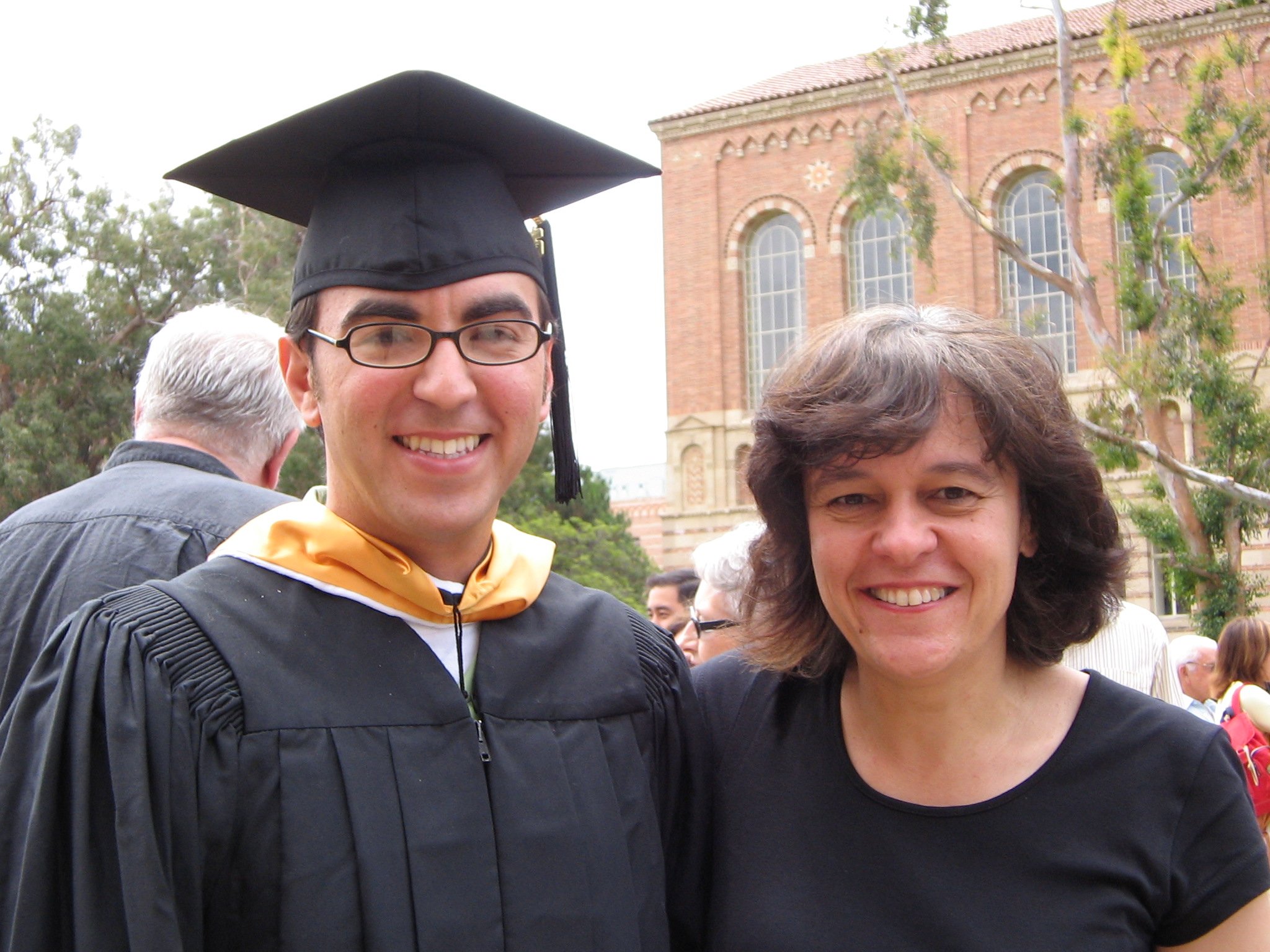
With my advisor and mentor Professor Anastasia Loukaitou-Sideris on graduation day at UCLA Urban Planning, June 17, 2005. [Photo by Jonathan Pacheco Bell]
My background in architecture and political science has made me particularly interested in researching issues of equality, justice, and security in the built environment. As an urban planning student, I aim to bridge my previous work in architectural design with my more recent study of politics in order to comprehend the interrelated social, political, economic, and cultural forces that shape the built environment. To this end, I propose to research the following subjects: 1) the process of ghettoization, particularly in the communities of East and South Central Los Angeles; 2) the impact of de facto and de juresegregation on residential housing patterns in Los Angeles; 3) the effectiveness of urban design strategies in revitalizing inner city communities; 4) the privatization and gentrification of downtown public space; 5) the history of Oscar Newman’s Defensible Space crime-prevention theory and the effectiveness of Crime Prevention Through Environmental Design (CPTED) methods in reducing crime in inner city communities; and 6) the development of Urban Realism, Richard Carson’s post-New Urbanist theory that calls for increased urban security design in the aftermath of the September 11, 2001 terrorist attacks. I anticipate working with Professors Anastasia Loukaitou-Sideris, Evelyn Blumenberg, and Vinit Mukhija, whose research on privatization and security in inner city communities, spatial structures and economic inequality, and urban design and neighborhood revitalization, respectively, compliments my own interests.
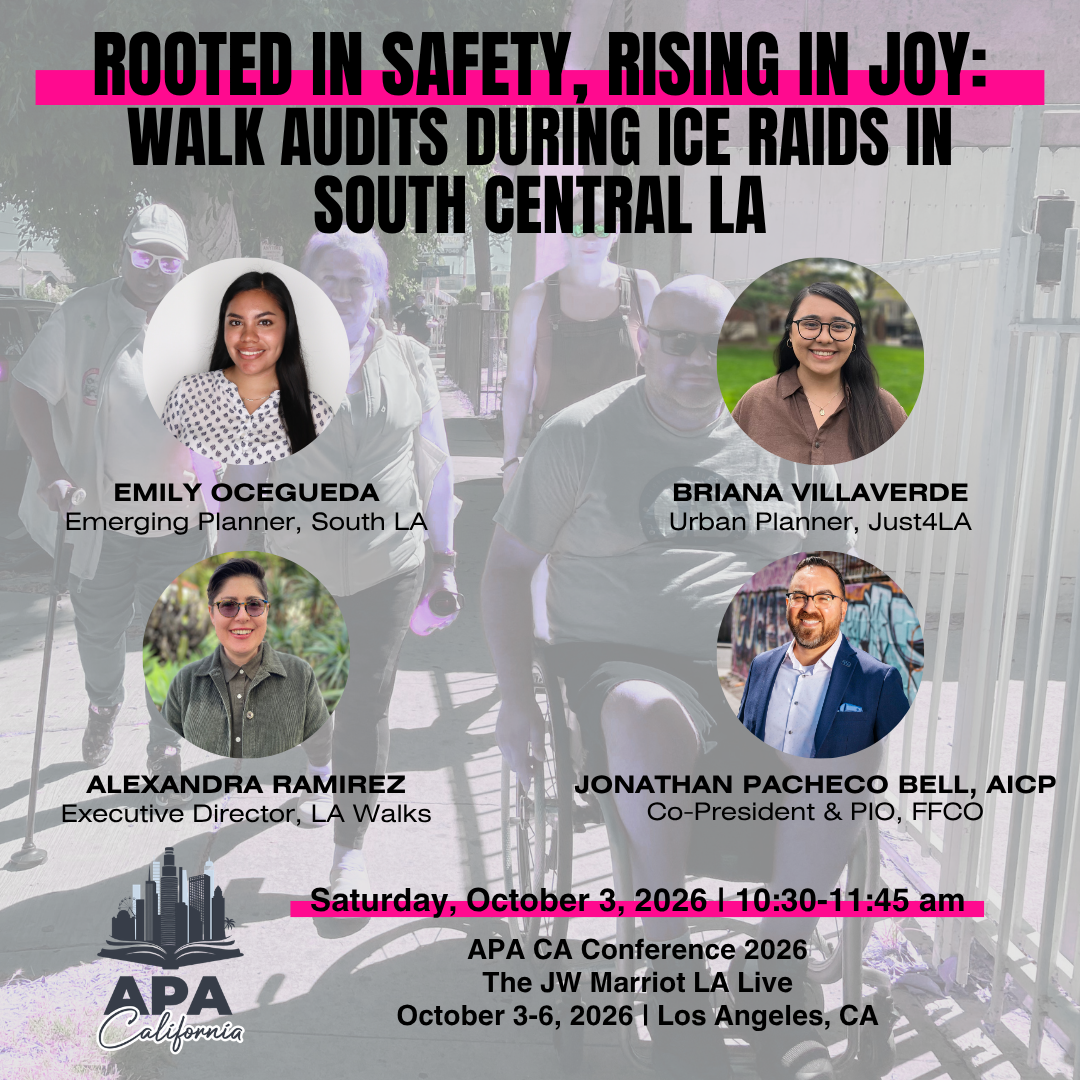
Rooted in Safety, Rising in Joy: Walk Audits During ICE Raids in South Central LA
Saturday, October 3, 2026, 10:30-11:45 a.m. | APA CA Conference 2026, Los Angeles, CA
Speakers:
– Emily Ocegueda: Emerging Planner, Florence-Firestone resident, Walk + Roll Audit participant, UCI Urban Studies graduate
– Briana Villaverde: Urban Planner, Just4LA
– Alexandra Ramirez: Executive Director, Los Angeles Walks
– Jonathan Pacheco Bell, AICP: Co-President & PIO, Florence-Firestone Community Organization (moderator)
Session Summary (short):
How do we plan for safe streets during ICE raids? This session explores a Walk + Roll audit in Florence-Firestone in South Central LA centering joy, creativity, and safety over fear. Learn to use storytelling, reflection, and zine-making to turn walk audits into healing tools for mobility justice.
Session Summary (full):
How do we plan for safe streets when simply being in public space carries risk? In South Central LA’s Florence-Firestone community, active ICE enforcement disrupted a planned walk audit, forcing organizers and residents to reconsider not just how to assess streets, but what questions the assessment should begin with. Rather than centering the audit on traditional infrastructure deficiencies alone, Los Angeles Walks, Florence-Firestone Community Organization, the Vision Zero Artist in Residence, and community members grounded the process in a 7-Generation visioning exercise that asked: For whom are streets meant to be safe, and for what purposes?
This session shares how we restructured the Florence-Firestone Walk + Roll event to prioritize safety, community storytelling, and reflection before observation. Participants engaged in a facilitated walk that uplifted lived experiences, memory, and care – followed by a creative zine-making session that helped translate stories into shared values, priorities, and visions for safer streets. Infrastructure conditions were still observed but interpreted through a relational and cultural lens instead of a checklist.
Panelists will reflect on how this approach shifted facilitation, documentation, and outcomes, and what it revealed about safety, belonging, and accountability in communities facing surveillance and displacement. The session highlights both the possibilities and limits of vision-centered engagement in mobility planning.
Learning Objectives:
– Explore a dual “Walk and Van Ride” audit model to accommodate safety and mobility needs and ensure that seniors, undocumented residents, and other vulnerable community members can participate comfortably in analyzing and documenting neighborhood conditions.
– Learn techniques to lead walk + roll audits that empower community members to engage, reflect, and share their lived experiences with mobility issues in a safe and supportive communal environment.
– Learn how facilitated walk + roll audits can center community stories, memory, and lived experience as valid forms of planning knowledge alongside physical and technical observations.
– Identify ways to reinterpret traditional walk + roll audit findings through a community-defined lens of care, joy, and belonging.
– Recognize how vision-centered engagement can inform Vision Zero efforts by clarifying whose safety is prioritized and how community knowledge can shape problem framing within capital infrastructure and inter-agency processes.
Equity Session Statement:
This session examines how planning can adapt when immigration enforcement makes public spaces unsafe. Drawing from a Walk + Roll event in Florence-Firestone, it centers lived experience across race, immigration status, disability, language, and age. Grounded in 7-Generation visioning, storytelling, and creative documentation, we show how traditional planning tools can exclude disadvantaged communities, and how care-centered approaches can better inform safer streets and Vision Zero efforts.
I served as one of the film’s interviewees and was thoroughly impressed with the team’s analysis, critique, and recommendations. I wanted the world to see this documentary, so I asked if I could archive it on my YouTube page. This video is posted with the permission of the student team and faculty advisor.
Thank you, EMS team! You are future urban planners.
Documentary team: Joanna Kedir, Gelila Assefa, Lucia Wolfe, Edwin Salinas Reyes, Victor Young, Emily Wang, Marcus Kruse, Dr. Walter Scheib
This documentary is posted for educational use only.
In my recent guest talk, “Critical Public Space Planning: Challenges & Possibilities,” we explored this question:
Is critical public space planning practice possible?
Drawing from my life experience — coming up as a hip hop kid & graffiti writer in the 90s, starting in architecture (buildings) in high school before finding urban planning (community spaces) in college, creating the street-level praxis of Embedded Planning in Florence-Firestone (now worldwide!), working as a street-level community planner-organizer, designing equitable parks and open spaces in LA, leading community walks for 10+ years, continuing a lifelong critique of Hostile Architecture from my graffiti days to today — I argued YES.
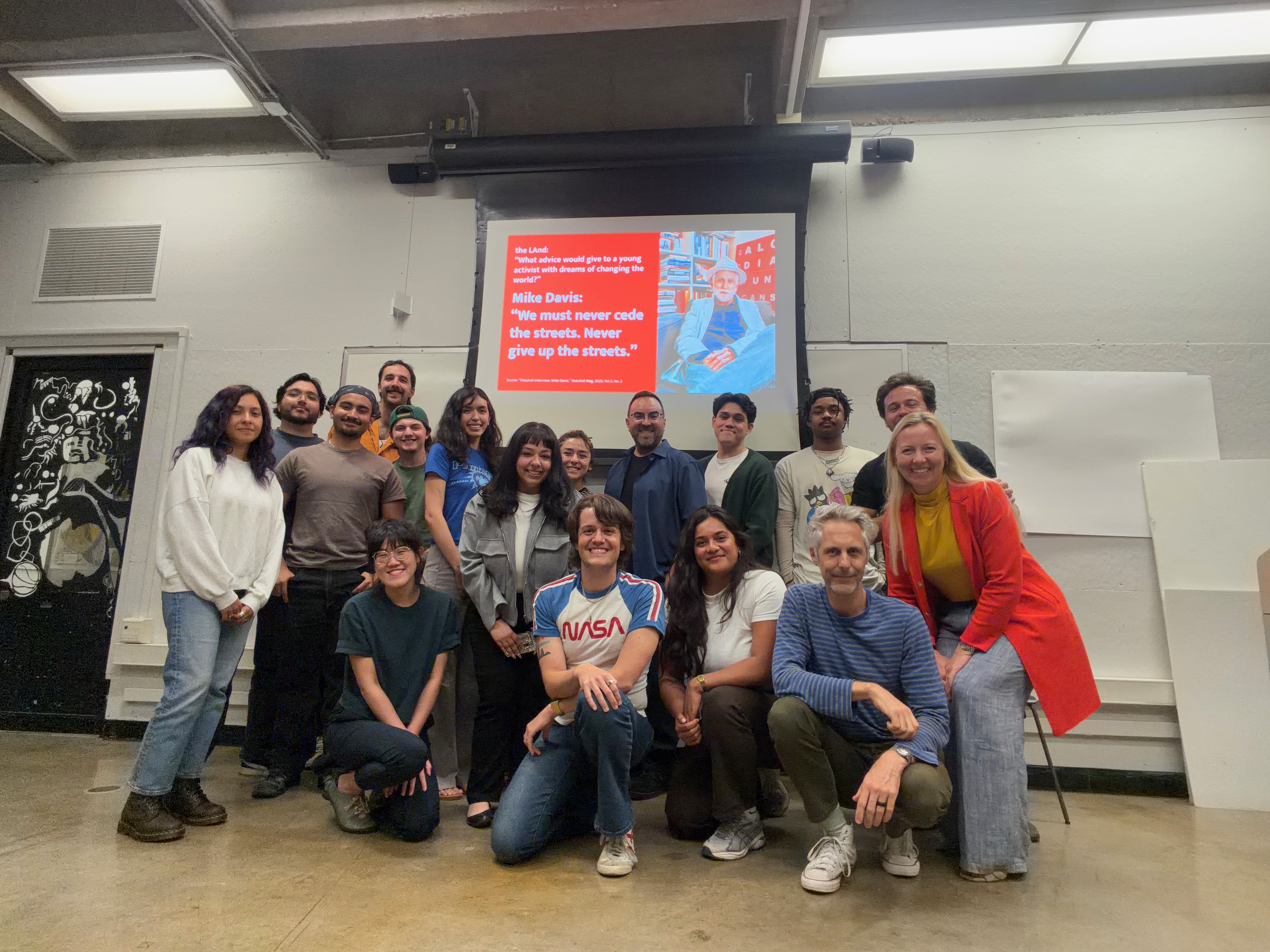
Shout out to Professor Catherine Guentert and CPPURP urban design students for the space and debate.
Big thanks to Professor Cinzia Fissore, environmental science students, and the Hartley House at Whittier College for hosting my guest talk, “The Strength of Street Knowledge: Embedded Planning as Community-Based Praxis.”
And shout out to my community members and former MURP students for coming through! It’s always reassuring to see friendly faces in the audience.
Embedded Planning Praxis is coast-to-coast and well beyond, with practitioners from Mexico and Brasil. This little idea born on the streets of Florence-Firestone in South Central LA is now a worldwide movement.
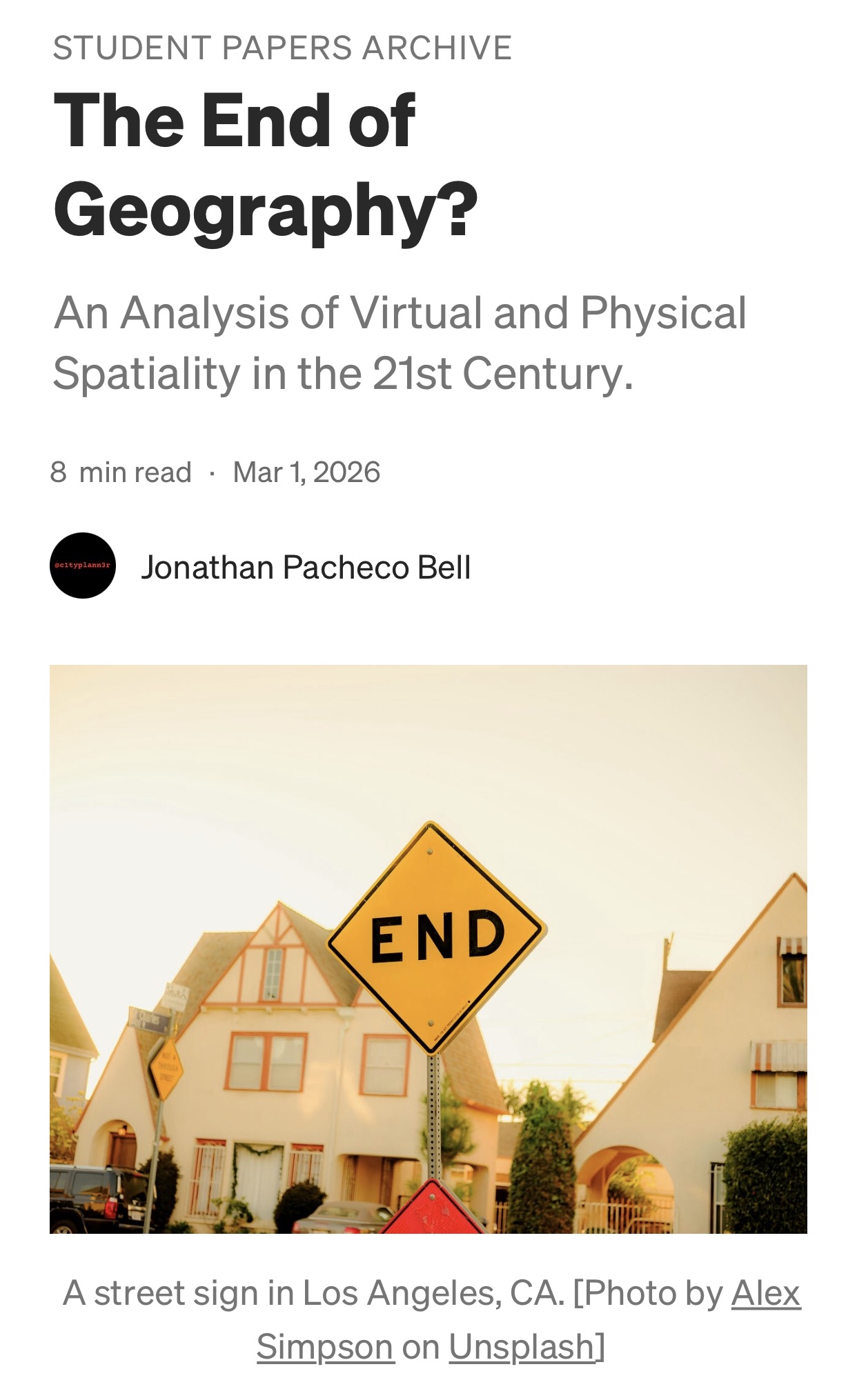
Originally written in 2004 and revised in 2026, my piece “The End of Geography?” is published on Medium. I consider claims alleging geography’s demise in the context of territorial space versus cyberspace. This is the latest contribution to my Student Papers Archive.
PLAN 498/598: We Cannot Plan From Our Desks: Embedded Planning Theory and Practice
This is another step forward for our movement.
Huge thank you to Dan Baisden for inaugurating the class. BSU students are learning from the best. Dan leads the City of Fort Wayne Department of Neighborhoods which is literally an Embedded Planning department, as I’ve shared in recent keynotes.
I’m happy to be in dialogue with Dan about the syllabus.
Hey should we implement an Embedded Planning college course in Los Angeles?
From the Borough of Hollidaysburg (PA) Comprehensive Plan 2035 draft, out now for 45-day public comment period:
EMBEDDED PLANNING
A common theme that emerged from extensive community dialogue was the public’s desire to be engaged, acknowledged, and involved in local matters. Residents expressed a need for Borough Staff to be more responsive to the diverse needs within the community. Considering this feedback, Borough Staff and Blair Planning recognized an opportunity to collaborate with Southern California-based consultant Jonathan Pacheco Bell, the urban planner and change-agent who created Embedded Planning Praxis. A new method and philosophy of practice, Embedded Planning is a praxis in which planning is done from within the community itself, not solely from an office, and planners work on- the-ground to understand people’s needs, build trust and authentic relationships, participate in daily community life, increase community participation through street-level engagement, and ultimately advance equity through targeted and locally responsive planning initiatives. This approach encourages Borough Staff to step out from behind their desks and connect directly with the community they serve.
Beginning in Early 2025, Jonathan consulted directly with Staff and the Steering Committee to provide guidance and ensure that the revision and implementation of this plan posits members of the community not just as participants, but as leaders who are continuing to spearhead the plan’s momentum. Embedded Planning serves as both an inspirational throughline and implementation goal for this comprehensive plan.
The Borough’s Comprehensive Plan Steering Committee met virtually with Jonathan throughout the implementation planning process in order to ensure consistency with the praxis. The Steering Committee hosted various meetings and workshops in early 2025 to address revisions of the initial draft. Following these workshops, additional interviews were conducted with entities responsible for various aspects of implementation in this plan including the department of public works and emergency service departments.
The Biltmore Los Angeles in Downtown LA, October 9-12, 2025
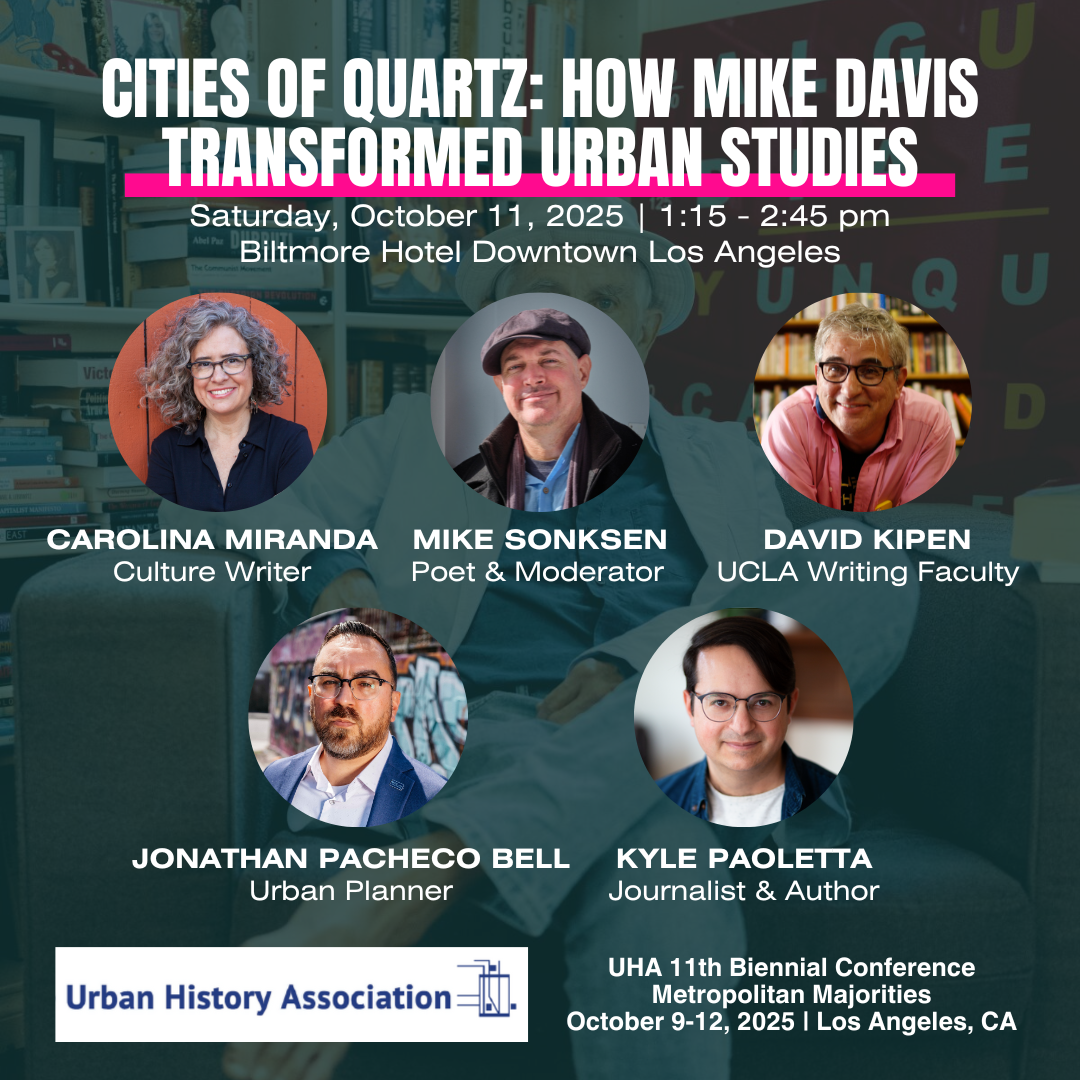
Cities of Quartz: How Mike Davis Transformed Urban Studies (Roundtable)
Saturday, October 11, 2025 | 1:15-2:45pm
Abstract:
In this roundtable discussion, a group of writers, academics, and urban planners will discuss the life and work of Mike Davis. With books like City of Quartz, Ecology of Fear, and Planet of Slums, Davis played an irreplaceable role in pushing urban scholars to foreground questions of equity, justice, and sustainability in their work. Each of Davis’ books and articles was grounded in a clear-eyed assessment of the power dynamics that create unequal societies, and throughout his life he remained a forceful advocate for the moral necessity that poor and working-class communities — whatever their ethnic or racial makeup — have the same chance at opportunity as the ruling class.
To illuminate Davis’ legacy, our discussion will begin with the impact he had on how the city of Los Angeles understands itself, before we open our inquiry into applying his method to cities everywhere and incorporating his ethos into future urban plans.
The roundtable will be moderated by Mike Sonksen, a poet and former Woodbury University professor who was mentored by Mike Davis and remained friends with him for over two decades.
The Biltmore Los Angeles in Downtown LA, October 9-12, 2025
Cities of Quartz: How Mike Davis Transformed Urban Studies (Roundtable)
Saturday, October 11, 2025 | 1:15-2:45pm
Abstract:
In this roundtable discussion, a group of writers, academics, and urban planners will discuss the life and work of Mike Davis. With books like City of Quartz, Ecology of Fear, and Planet of Slums, Davis played an irreplaceable role in pushing urban scholars to foreground questions of equity, justice, and sustainability in their work. Each of Davis’ books and articles was grounded in a clear-eyed assessment of the power dynamics that create unequal societies, and throughout his life he remained a forceful advocate for the moral necessity that poor and working-class communities — whatever their ethnic or racial makeup — have the same chance at opportunity as the ruling class.
To illuminate Davis’ legacy, our discussion will begin with the impact he had on how the city of Los Angeles understands itself, before we open our inquiry into applying his method to cities everywhere and incorporating his ethos into future urban plans.
The roundtable will be moderated by Mike Sonksen, a poet and former Woodbury University professor who was mentored by Mike Davis and remained friends with him for over two decades.
The Biltmore Los Angeles in Downtown LA, October 9-12, 2025
Cities of Quartz: How Mike Davis Transformed Urban Studies (Roundtable)
Saturday, October 11, 2025 | 1:15-2:45pm
Abstract:
In this roundtable discussion, a group of writers, academics, and urban planners will discuss the life and work of Mike Davis. With books like City of Quartz, Ecology of Fear, and Planet of Slums, Davis played an irreplaceable role in pushing urban scholars to foreground questions of equity, justice, and sustainability in their work. Each of Davis’ books and articles was grounded in a clear-eyed assessment of the power dynamics that create unequal societies, and throughout his life he remained a forceful advocate for the moral necessity that poor and working-class communities — whatever their ethnic or racial makeup — have the same chance at opportunity as the ruling class.
To illuminate Davis’ legacy, our discussion will begin with the impact he had on how the city of Los Angeles understands itself, before we open our inquiry into applying his method to cities everywhere and incorporating his ethos into future urban plans.
The roundtable will be moderated by Mike Sonksen, a poet and former Woodbury University professor who was mentored by Mike Davis and remained friends with him for over two decades.
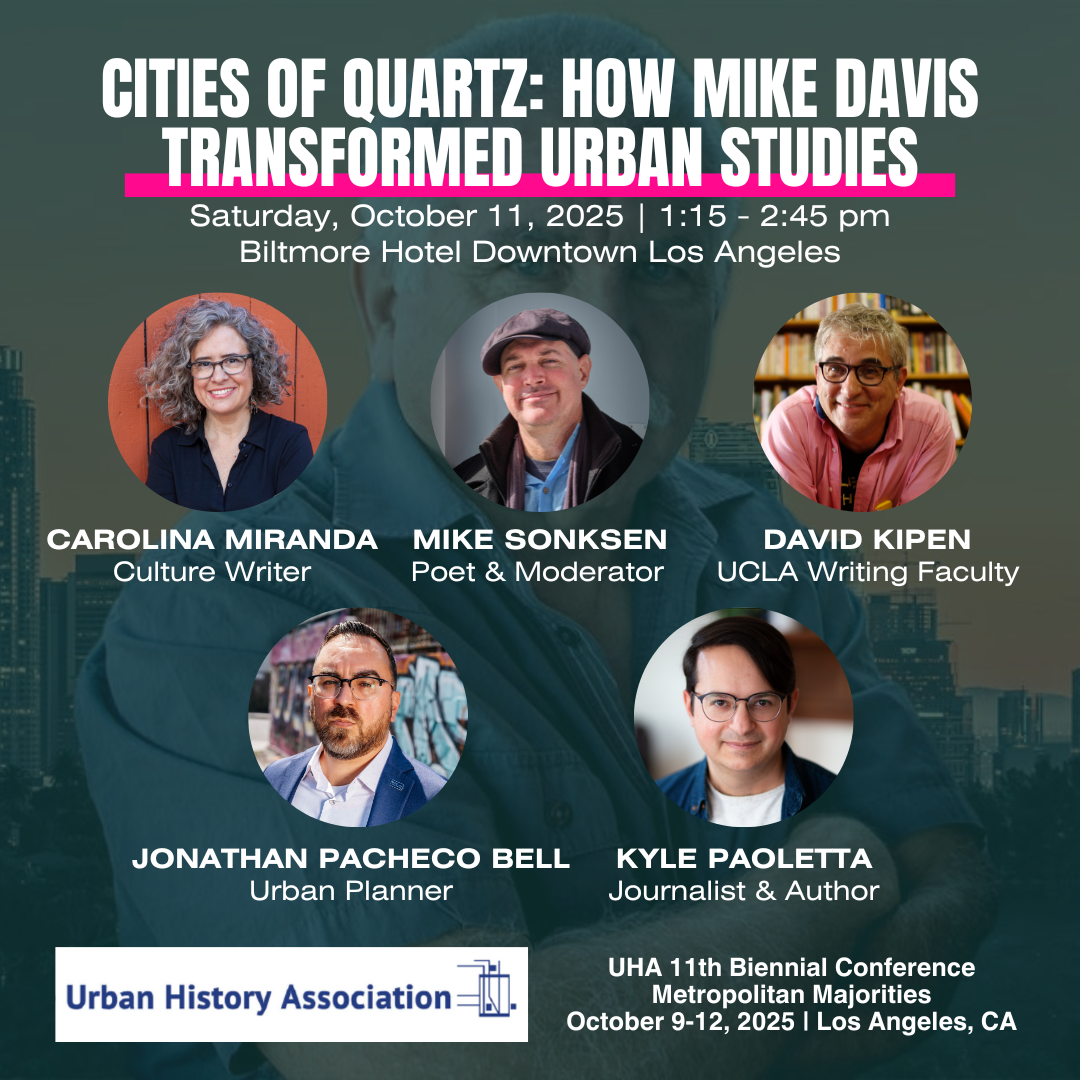
I’m on a panel recognizing the legacy of Mike Davis with writer legends Carolina A. Miranda, Kyle Paoletta, David Kipen, and Mike The PoeT Sonksen at the Urban History Association Conference 2025 in Los Angeles. More to come soon.
Join us on Saturday, October 11th, 1:15-2:45pm at the Biltmore Hotel in Downtown LA.
This analysis was submitted on April 20, 2005 in Edward W. Soja’s UP 230 Intro to Regional Planning course at UCLA Urban Planning. Google was fairly new and better at retrieving information than other search engines. At this point, Soja was writing less about Postmodernism, more about New Regionalism, and always “putting space first.” He asked us to go deep in the search results to uncover definitions of New Regionalism in this digital space.







You must be logged in to post a comment.