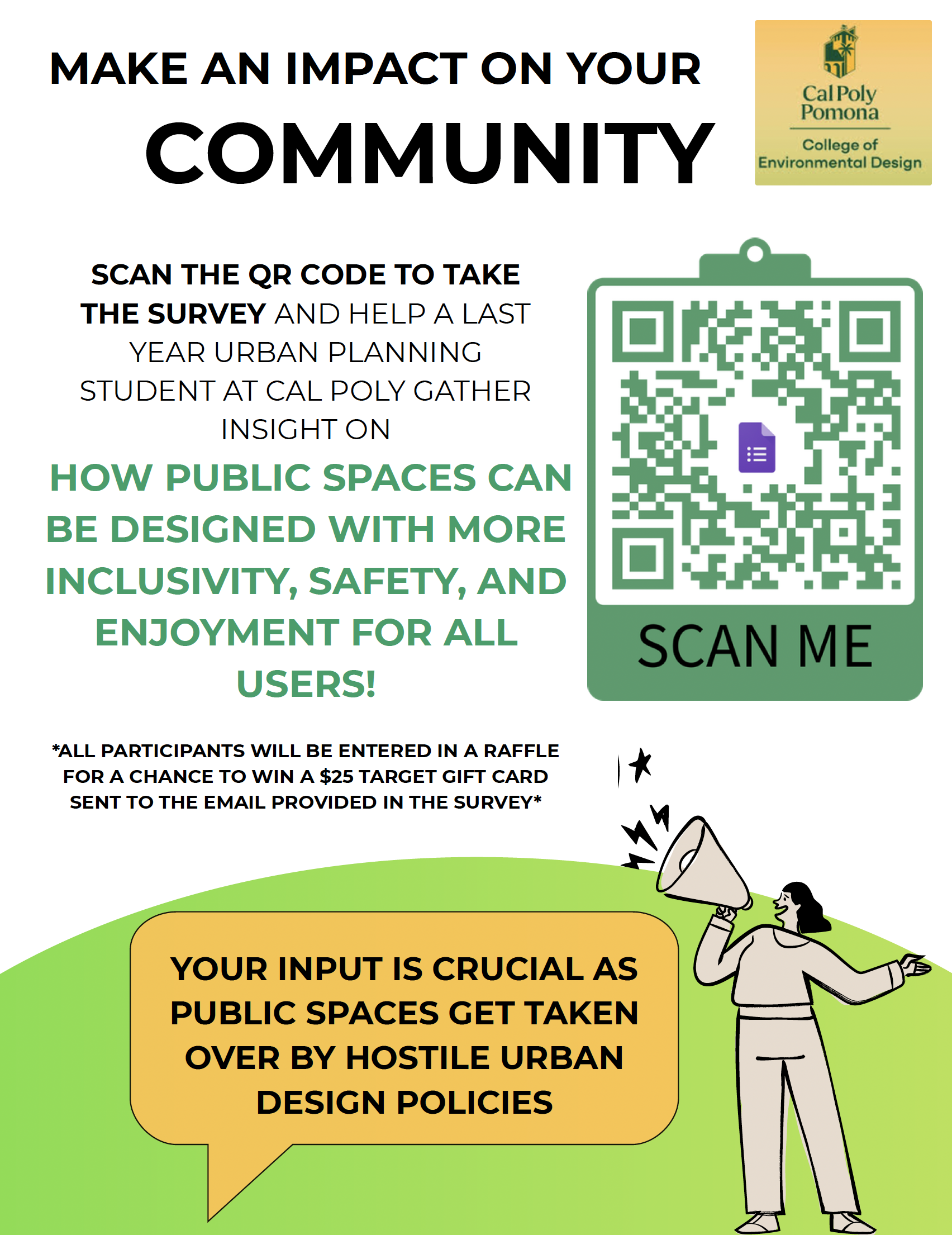
Planners + Community: Zena Al-Beitawi is doing an urban planning senior project examining how public spaces can be designed for inclusivity, safety, and enjoyment versus Hostile Architecture in Pomona, CA.
Identifying the Constraints to Implementing a Vegetation Barrier along Valley Boulevard. By: Taylor Galindo
Celebrating the graduates in my 2024 Senior Project class at Cal Poly Pomona Department of Urban and Regional Planning. Today we uplift this researcher:
Identifying the Constraints to Implementing a Vegetation Barrier along Valley Boulevard
By: Taylor Francis Galindo
Abstract:
Ambient air pollution is a significant health concern where industrial zones directly border residential zones. Numerous studies suggest the effectiveness of implementing vegetation to serve as a mitigative strategy in addressing ambient air pollution. This paper will examine the complexities of implementing vegetation as a barrier to mitigate air pollution in an environmental justice community located along Valley Boulevard in Southern California’s San Gabriel Valley. The qualitative data featured in the study collected interviews with local community stakeholders and professionals from various professional backgrounds. These insights provide a foundation of what agencies would need to overcome to implement a vegetation barrier along Valley Boulevard.
Keywords: Public Health, Environmental Injustice, Tree Canopy, Green Barriers, Sustainable Solutions, Ambient Air Pollution, and Industrial Zoning
Taylor presenting at the 2024 Cal Poly Pomona Urban & Regional Planning Senior Projects Day. Photo: Jonathan Pacheco Bell
Multi-use Trails: A Path to a Third Place at The Tracks at Brea Trail. By: David Pascual
Celebrating the graduates in my 2024 Senior Project class at Cal Poly Pomona Department of Urban and Regional Planning. Today we uplift this researcher:
Multi-use Trails: A Path to a Third Place at The Tracks at Brea Trail
By: David Pascual
Abstract:
This research examines the role of The Tracks at Brea Trail (TAB trail), a multi-use trail located in Brea, California, in Orange County, as a new Third Place among the existing Third Places that Americans identify, such as coffee shops, restaurants, libraries, shops, and even local community centers. Currently, the American adult population is experiencing high stress levels and sedentary lifestyles, increasing mental health problems and fatalities. With rising concerns about mental well-being among adults, there are limited Third Places to improve well-being, which is difficult to do outside peaceful environments.
Eleven walking tours were conducted with thirteen participants and photo evidence was taken, documenting how individuals perceive the greenspace and trail design elements TAB trail offers. The participants’ commentary highlighted their limited knowledge of Third Places, awareness of wildflowers and treescapes along the trail, and sense of isolation in certain trail sections. Participants who experienced distress commented that the trail helped improve their current emotions.
Multi-use trails shed awareness on how transportation planners must consider the greenspaces that individuals use to enhance their well-being while preserving the natural environment for local wildlife and plants and creating sections along those greenspaces. Cities and planners need to move forward in promoting spaces in and among multi-use trails to improve an individual’s social and mental well-being.
David presenting at the 2024 Cal Poly Pomona Urban & Regional Planning Senior Projects Day. Photo: Jonathan Pacheco Bell
Roles of Place Design Between Conventional and Student Housing in South Central Los Angeles. By: Osvaldo Martinez
Celebrating the graduates in my 2024 Senior Project class at Cal Poly Pomona Department of Urban and Regional Planning. Today we uplift this researcher:
Roles of Place Design in Creating a Sense of Community Between Conventional Homes and Student Housing in South Central Los Angeles
By: Osvaldo Martinez
Abstract:
For the last 4 to 5 years, the community around the University of Southern California in South Central LA has experienced an increase in student housing development where conventional, longtime residents live. This development wave not only introduces student housing in new neighborhoods but also implements unprecedented design that strays from existing neighborhood architectural styles and densities. This phenomenon raises the question of how these new forms of student housing affect residents’ perceptions of community identity, and how it affects community interactions with USC students.
Through qualitative research, I interviewed residents about new housing design and social interactions with USC students to understand the role of place design in creating a cohesive community. Residents agreed that the new forms of student housing should align with the community’s existing architectural styles, and that new student housing is being built to profit from the student market. Many residents felt that housing developers were intentional about creating a brand within the neighborhood rather than making developments that contribute to the neighborhood.
Osvaldo presenting at the 2024 Cal Poly Pomona Urban & Regional Planning Senior Projects Day. Photo: Jonathan Pacheco Bell
Planning For The Prestigious Poor. A Critical Analysis of Cal Poly Pomona’s Initiatives Addressing Student Homelessness and Housing Instability. By: Eileen Ramos
Celebrating the graduates in my 2024 Senior Project class at Cal Poly Pomona Department of Urban and Regional Planning. Today we uplift this researcher:
Planning for the Prestigious Poor: A Critical Analysis of Cal Poly Pomona’s Initiatives Addressing Student Homelessness and Housing Instability
By: Eileen Ramos
Excerpt:
This study assesses the ability of housing-insecure college students at Cal Poly Pomona to access support services to meet their needs. It identifies successes, limitations, and areas of improvement within the existing support system.
I will be coining the term the ‘prestigious poor’ in this research, which is in conversation with the concept of The Privileged Poor coined by Anthony Abraham Jack. Jack explores, “the experiences of those who live in poor, often segregated communities but enter college from elite boarding, day, and preparatory schools like Exeter, Choate, or Dalton those whom I call the Privileged Poor.” In contrast, I approach “The Prestigious Poor” from the lens of the most disadvantaged and vulnerable student populations in any university setting. I define the “Prestigious Poor” as college students who lack basic necessities like housing and food while simultaneously working towards a degree to better their socioeconomic status. While the concept of the ‘privileged poor’ portrays the struggles faced by low-income students in contrast to their Ivy League legacy wealthy students, the ‘prestigious poor’ encompasses all disadvantaged students facing critical disruptive instability like homelessness compared to secure students.
Questions driving this research are: “Do the resources provided by Cal Poly Pomona fulfill the needs of students facing housing instability?” and “How can Cal Poly Pomona make these resources more accessible to students in need?”
Eileen presenting at the 2024 Cal Poly Pomona Urban & Regional Planning Senior Projects Day. Photo: Jonathan Pacheco Bell
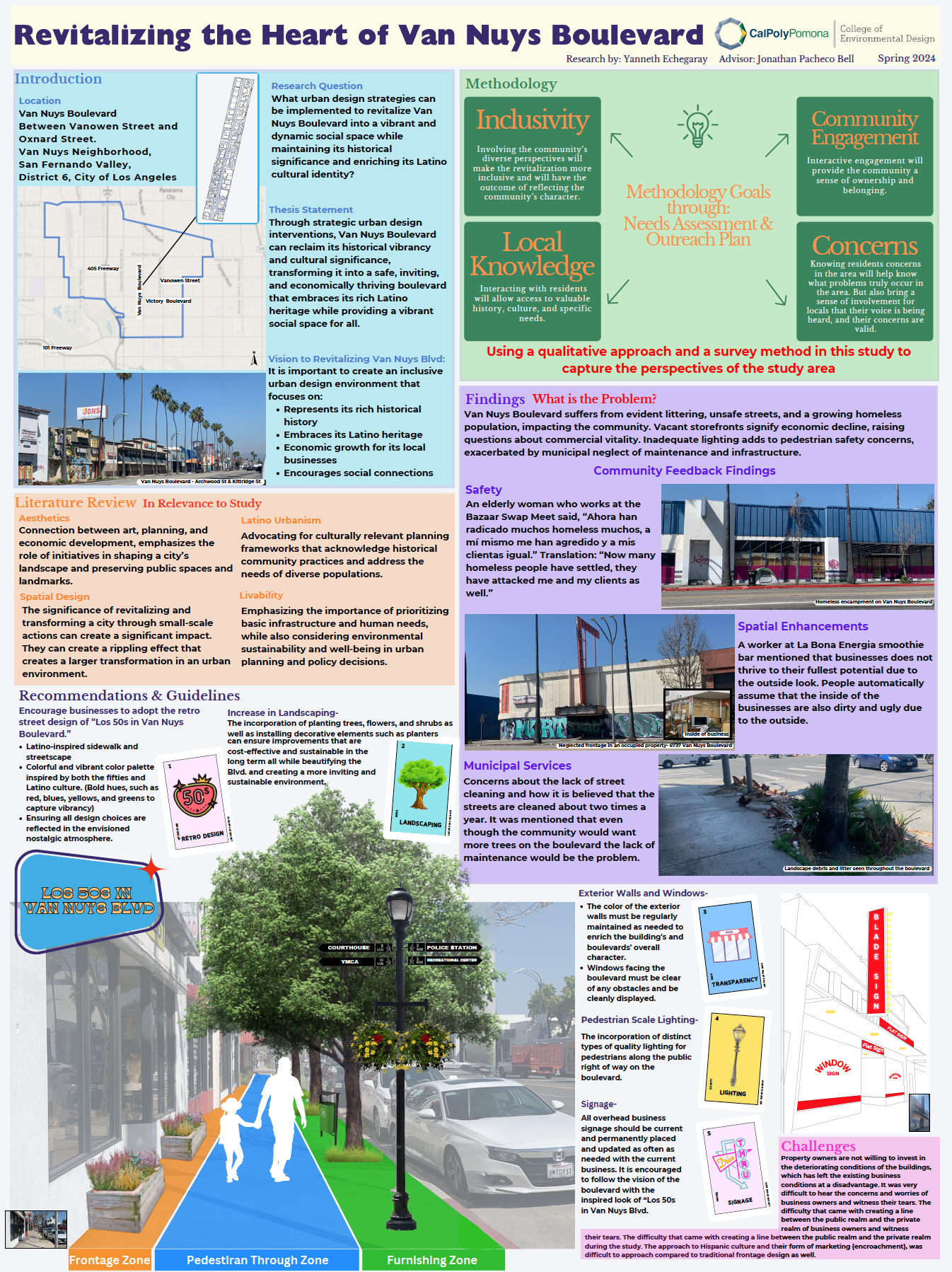
Revitalizing the Heart of Van Nuys Boulevard Through Urban Design. By: Yanneth Echegaray
Celebrating the graduates in my 2024 Senior Project class at Cal Poly Pomona Department of Urban and Regional Planning. Today we uplift this researcher:
Revitalizing the Heart of Van Nuys Boulevard Through Urban Design
By: Yanneth Echegaray (1st Place Poster Winner!)
Excerpt:
This study seeks to address the question, “What urban design strategies can be implemented to revitalize Van Nuys Boulevard into a vibrant and dynamic social space while maintaining its historical significance and enriching its Latino cultural identity?”
The proposed section of Van Nuys Blvd is between Vanowen and Oxnard St in the Van Nuys neighborhood in the San Fernando Valley in Los Angeles County in the State of California. Through strategic urban design interventions, Van Nuys Boulevard can reclaim its historical vibrancy and cultural significance, transforming it into a safe, inviting, and economically thriving boulevard that embraces its rich Latino heritage while providing a vibrant social space for all.
Revitalization Vision:
“To enhance the heart of Van Nuys Blvd, between Vanowen St and Oxnard St, it is important to create an inclusive urban design environment that focuses on its rich historical significance, embraces its Latino heritage, fosters economic growth for its local businesses, and encourages social connections. Through various design strategies, this study aims to revitalize this boulevard into a dynamic and vibrant public space for all.”
Specifications within this study will be Guidelines for redesigning store frontage to enhance the environment through cohesively connecting the public to the private realm. Redesigning the streetscape to capture vibrant and welcoming aspects, while prioritizing lighting and safety features, and embracing the rich and significant Latino culture that has organically been embedded on Van Nuys Boulevard – all of this is aimed at creating a suppositional nexus that will positively affect the economic development of the local businesses inhabiting the boulevard.
Yanneth presenting at the 2024 Cal Poly Pomona Urban & Regional Planning Senior Projects Day. Photo: Jonathan Pacheco Bell
I’m back this semester teaching URP 4620 Senior Project. Building on research proposals developed in 4600A, this course is independent and student-driven. I’ll be guiding the student’s research process leading to an undergraduate capstone paper, project, or design.
[ Background photo by Misty Fong. A view of Downtown LA and South Central taken from the iconic pedestrian bridge over the Metro Blue Line in Florence-Firestone ]
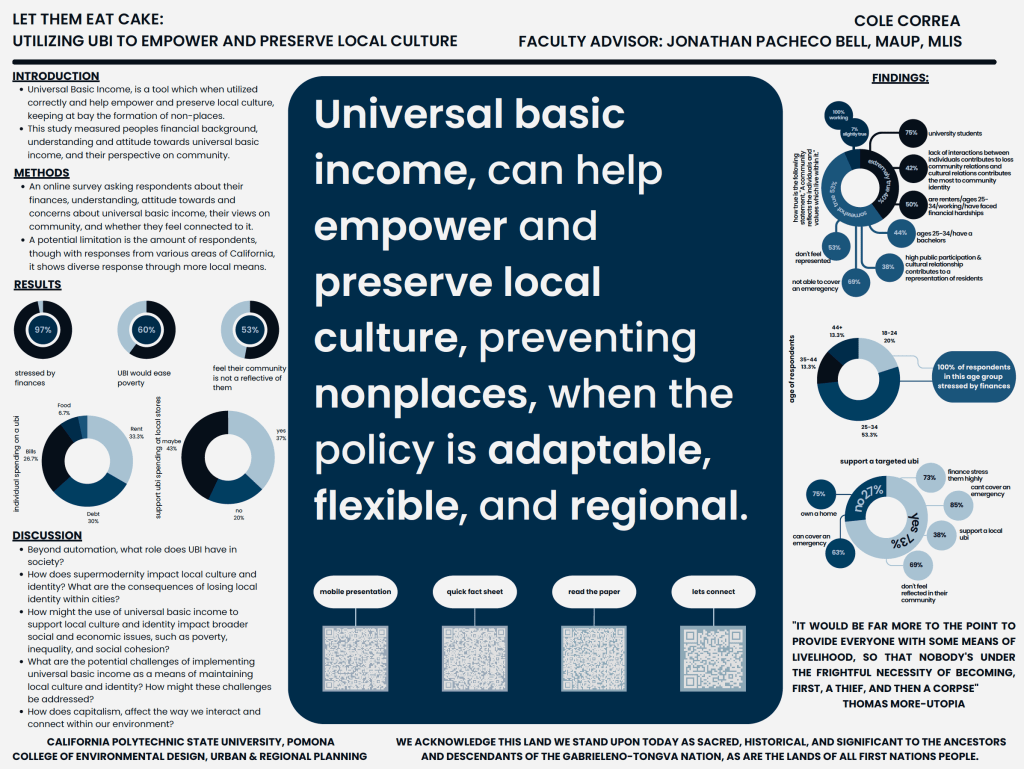
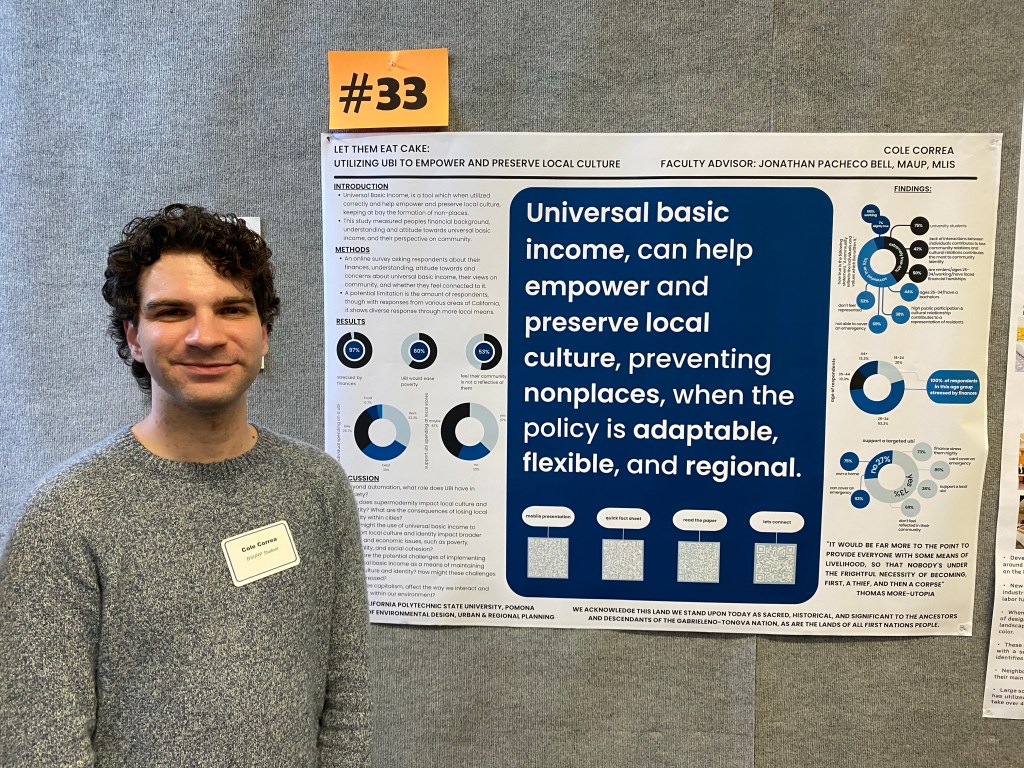
Let Them Eat Cake: Utilizing UBI to Empower and Preserve Local Culture. By: Cole Correa
Celebrating the graduates in my 2023 Senior Projects class at Cal Poly Pomona Department of Urban and Regional Planning. Today we big up this researcher:
Let Them Eat Cake: Utilizing UBI to Empower and Preserve Local Culture
By: Cole Correa
This study examines the potential role of universal basic income (UBI) in maintaining local culture and identity within cities as a response to the negative effects of supermodernity. A descriptive and correlational research design was used to collect data through an online survey of randomly selected individuals in California. The survey gathered information on respondents’ income, connection to their communities, and attitudes toward the use of UBI as a means of preserving local culture. The data was analyzed to identify correlations between these variables and to draw conclusions about the potential effectiveness of using #UBI for this purpose.
The findings suggest that there is a positive correlation between income and connection to local culture and identity, and that UBI has the potential to empower communities and support local culture. However, the study also highlights some potential limitations of using UBI in this way, including the need for careful program design and implementation to avoid unintended consequences. The study concludes by suggesting that further research is needed to explore the potential of UBI to support local culture and identity, and to identify best practices for program design and implementation. This study provides important insights into the potential role of UBI in maintaining local culture and identity within cities. The findings can inform policy and practice in this area and contribute to the growing literature on UBI as a means of addressing broader social and economic issues.
Researcher presenting at the 2023 Cal Poly Pomona Urban & Regional Planning Senior Projects Day. Photo: Jonathan Pacheco Bell
Voices of the Streets: The Lived Experiences of Street Vendors in the Community of Florence-Firestone. By: Sergio Saldana
Celebrating the graduates in my 2023 Senior Projects class at Cal Poly Pomona Department of Urban & Regional Planning. Today we big up this researcher:
Voices of the Streets: The Lived Experiences of Street Vendors in the Community of Florence-Firestone
By: Sergio Saldaña
Abstract: The street vendors in Florence-Firestone, an unincorporated community in Los Angeles County, have been left alone by County entities and enjoyed a certain degree of autonomy. However, this has also led to neglect on the part of the County towards the street vending community. Despite the existence of resources to help street vendors with issues such as rent relief, food, and public safety, the County has failed to address these concerns. Qualitative research in the form of in-person surveys was conducted with street vendors and sheds light on this community’s lived experiences. While street vendors appreciate the County’s hands-off approach, the lack of attention from the County has resulted in many problems for street vendors. Many of them struggle to make ends meet and need assistance. They also face public safety concerns, such as the risk of theft or harassment while working on the street.
Based on interview data from street vendors in Florence-Firestone, the County should take a more proactive role in addressing the concerns of the street vendors. The data derived from this study can play an essential part in helping County officials understand the needs and desires of street vendors by knowing their struggles. To give insight into challenges faced by street vendors as well as areas where they may require additional support, County officials can create an actionable plan to support street vending activity more effectively in future. This data can be used to assist officials with addressing regulatory issues preventing street vendors from succeeding. Officials can take measures such as providing education and guidance on compliance or revising regulations to be more vendor friendly. In the culmination of this paper, it is recommended that the County update the Florence-Firestone Community Plan with a new section addressing the concerns of street vendors and direct them towards available resources that may help.
Researcher presenting at the 2023 Cal Poly Pomona Urban & Regional Planning Senior Projects Day. Photo: Jonathan Pacheco Bell
Female Perceptions of Parking Safety at the First/Last Mile: An Analysis of Cal Poly Pomona. By: Nikole J. Sanchez & Jaden R. Oloresisimo
Celebrating the graduates in my 2023 Senior Projects class at Cal Poly Pomona Department of Urban & Regional Planning. Today we big up this team:
Female Perceptions of Parking Safety at the First/Last Mile: An Analysis of Cal Poly Pomona
By: Nikole J. Sanchez & Jaden R. Oloresisimo
Abstract: This research studies women’s perspective of safety by analyzing women’s fear of victimization at the first/last mile. The first/last mile refers to the very first and last distance of a traveler’s journey such as an automobile driver’s distance from their car to their building and their building back to their car. Research has found that women endure greater fear of victimization than men at the first/last mile due to varying levels of vulnerability, the continuity of violence, and perceived risk caused by the physical conditions of transportation infrastructure. The greater opportunity there is for hidden danger, the greater the perception of lack of safety, the perception of vulnerability, and the fear of victimization.
This research focuses on learning and engaging with women’s perceptions of safety (compared to men’s) in college campus parking. Using Cal Poly Pomona as a case study, this research follows a quantitative methodology through surveys addressing physical and non-physical variables known to impact women’s fear of victimization. The overall goal of this research is to recognize which variables are most impactful to women’s fear of victimization and to create women-endorsed solutions that negate women’s fear.
Research team presenting at the 2023 Cal Poly Pomona Urban & Regional Planning Senior Projects Day. Photo: Jonathan Pacheco Bell
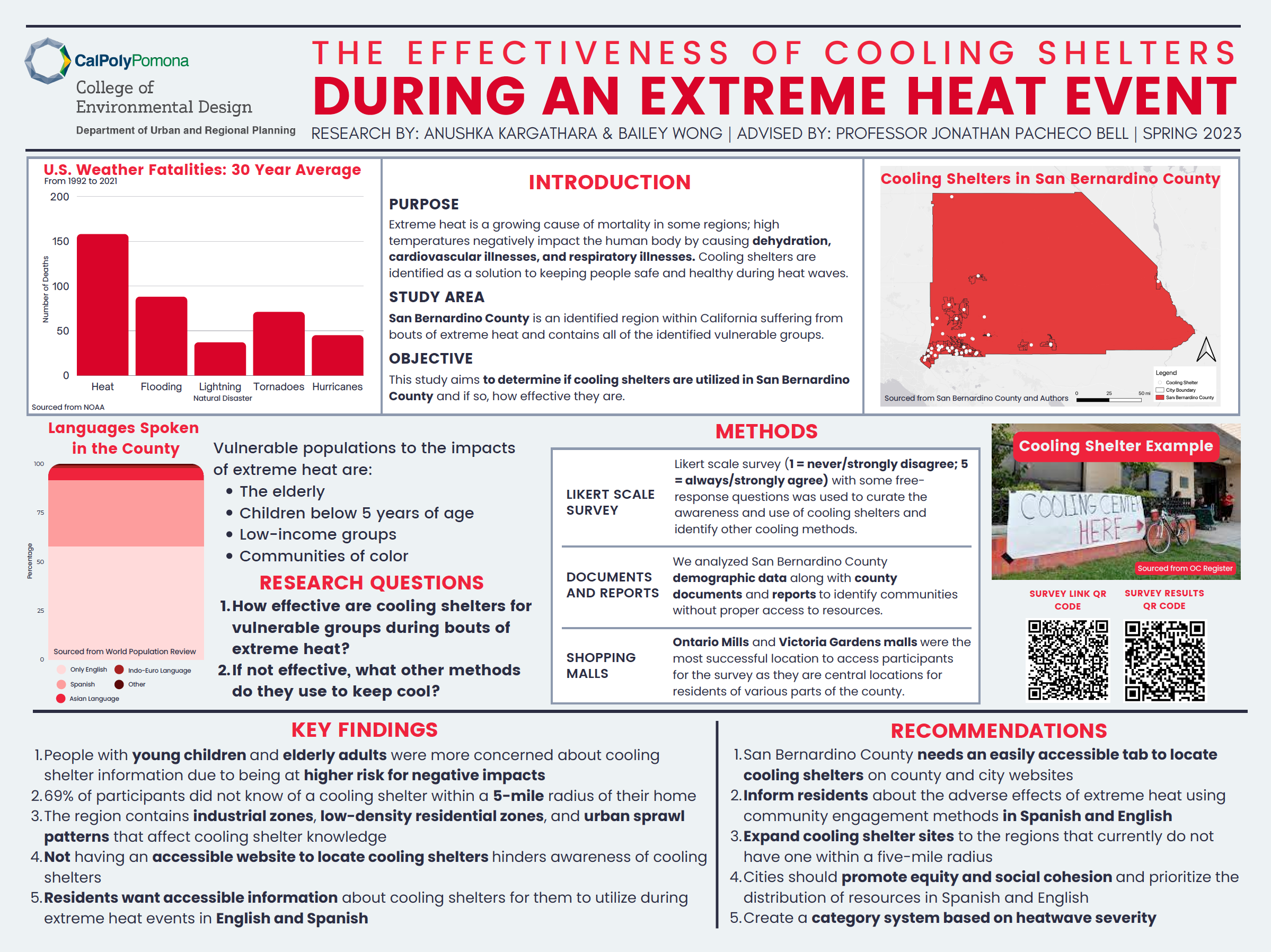
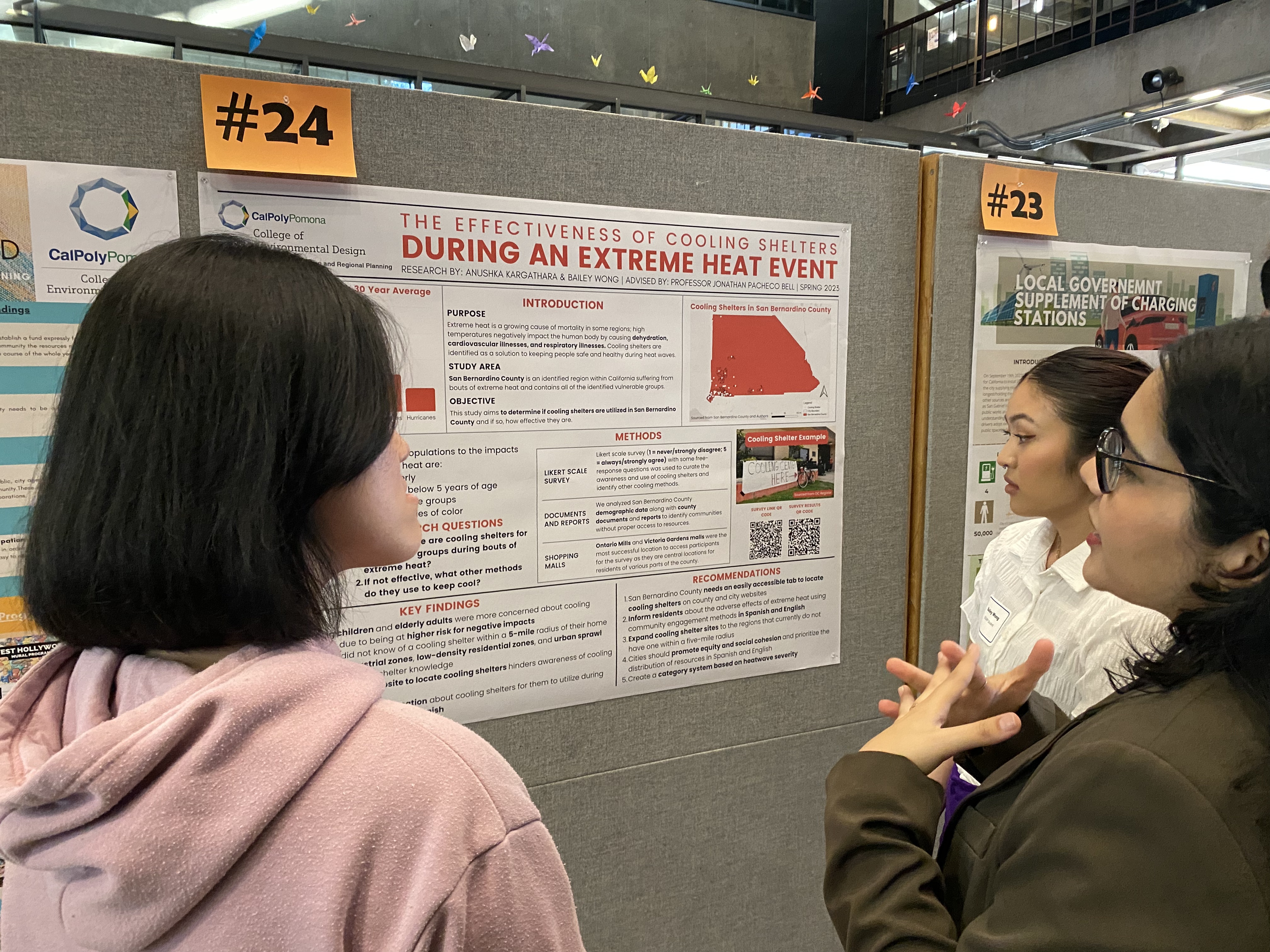
The Effectiveness of Cooling Shelters During an Extreme Heat Event. By: Anushka Kargathara & Bailey Wong
Celebrating the graduates in my 2023 Senior Projects class at Cal Poly Pomona Department of Urban & Regional Planning 🎉 Today we big up this team:
The Effectiveness of Cooling Shelters During an Extreme Heat Event (Winner of the First Place Award 🥇 for Senior Project Poster!)
By: Anushka Kargathara & Bailey Wong
Abstract: Extreme heat is one of the growing causes of mortality in the nation with temperatures surpassing 120˚F. Extreme heat (temperatures above 90 degrees Fahrenheit and 32 degrees Celsius) links an inequitable distribution of heat resources. During hot summer months, specifically June through August, heat negatively affects lower-income and communities of color and causes fatigue, dehydration, and respiratory illnesses due to environmental changes in air quality.
This research aims to analyze how heat impacts vulnerable populations in San Bernardino County, California, that do not have access to proper cooling methods, and what methods, if any, they use to keep cool. Knowledge of cooling shelters was tested through voluntary survey participation at San Bernardino County shopping malls to help local city governments broaden cooling shelter resources and gauge residential knowledge about their existence. Data collected showed an urgent need for improvement in the accessibility and promotion of local resources and equitable distribution focusing on lower-income communities.
Currently, resources are not readily available to residents and need to be accessible in both English and Spanish to ensure health communication equity to all population groups in San Bernardino County. Creating heat intensity awareness to prepare cities and planners to dispense correct and adequate resources is recommended to promote social cohesion and resident well-being during bouts of extreme heat.
Research team presenting at the 2023 Cal Poly Pomona Urban & Regional Planning Senior Projects Day. Photo: Jonathan Pacheco Bell
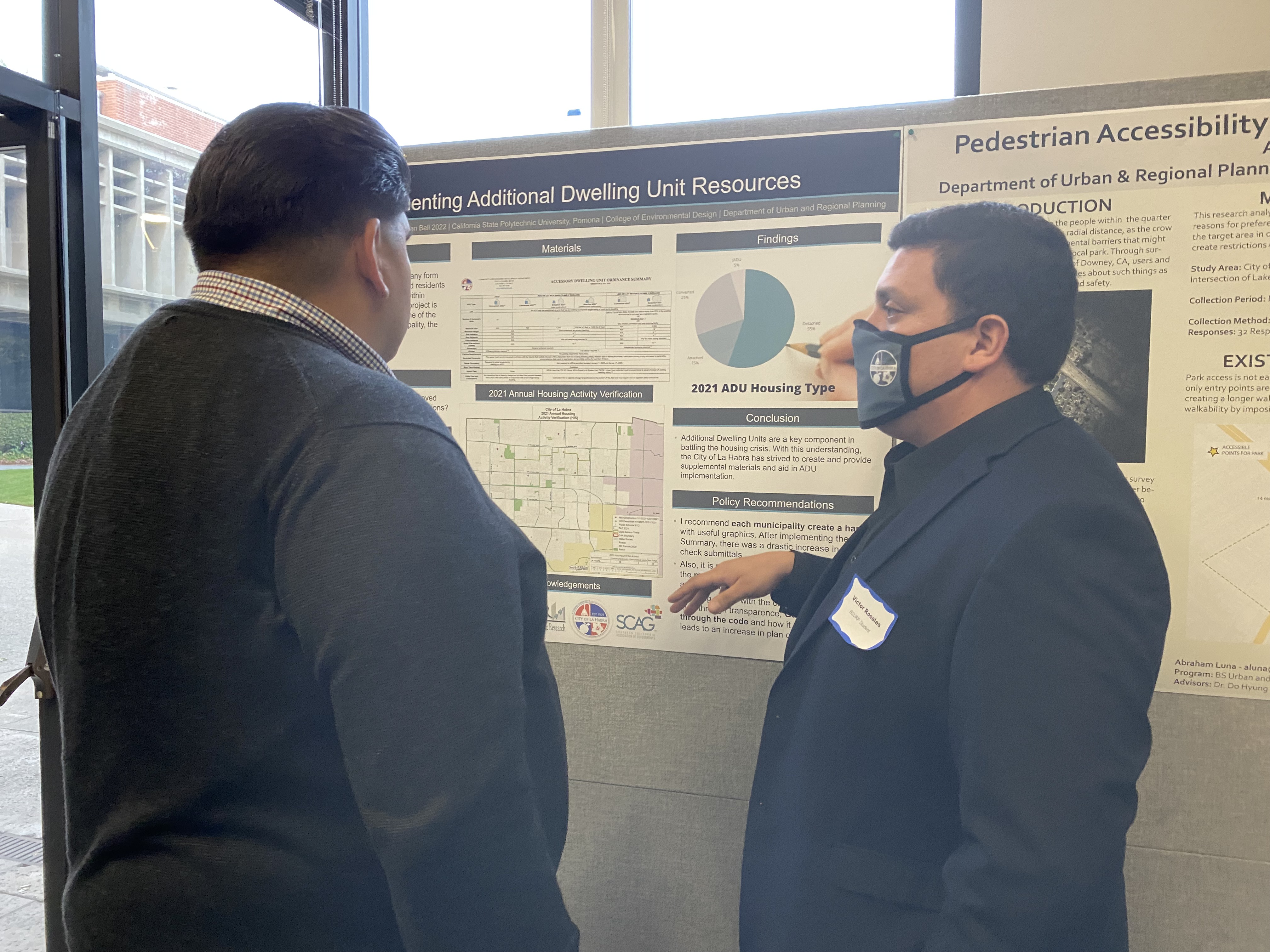
Senior Project poster by Victor Rosales. Image credit: Victor
I’m celebrating the graduates in my Senior Projects class at Cal Poly Pomona Department of Urban & Regional Planning! Today we big up this researcher:
Will ADU Resources Expedite Implementation?
By: Victor Rosales
Abstract: In the City of La Habra, California, there was not enough Accessory Dwelling Units (ADUs) being built to address the housing crisis. One of the main obstacles was a lack of ADU resources and materials available to the public. While the city’s municipal code is accessible for public review, a large portion of the community does not understand how to interpret zoning codes or how codes apply to individual projects.
With this understanding of the problem, I worked with city staff on creating supplemental ADU materials, with the intended goal of increasing the amount of ADUs built within city limits. In 2021, the city’s Senior Building Official created an ADU Summary handout with basic outlines of development standards and simple graphic aides. This newly introduced resource, along with the assistance and communication from staff to the community, resulted in an upsurge in ADU plan check submittals and new construction. City staff tracked the progression of these newly built ADUs though paid plan checks, Certificate of Occupancy, surveys, and California Department of Housing credit logs. The data showed an increased number of ADUs constructed in the last 6 months of 2021, which correlated with the timing of the implementation of the ADU Summary. By providing supplemental materials for ADUs, the City of La Habra was able to increase the amount of ADUs built in their community in 2021. Additionally, staff revised and enhanced these readily available resources to support ADU development. As a result, the amount of plan check submissions has nearly tripled in the first six months of 2022.
Upon studying the City of La Habra’s approach to ADUs, I offer several policy recommendations for resources and information that support expediting ADU implementation in cities.
Victor Rosales at CPP Senior Projects Poster Session 2022. Photo: Jonathan Pacheco Bell
Senior Project poster by Stacy Lee and Eric Ji. Image credit: Stacy and Eric
I’m celebrating the graduates in my Senior Projects class at Cal Poly Pomona Department of Urban & Regional Planning! Today we big up this team:
Wildfire Mitigation & Resilience Strategies: Best Planning Practices across Local Jurisdictions in Southern California
By: Stacy Lee & Eric Ji
Abstract: Increasing forecasts of prolonged and more severe fire seasons can be attributed to several factors: urban density growth; fire suppression and fuel buildup; and climate change. Many of these issues are amplified in Southern California, especially in the wildland-urban interface (WUI). Land-use policies must begin to proactively strategize around the immutable outbreaks of future wildfires as expanding boundaries of development and very high fire severity zones cross onto each other.
This qualitative research empirically analyzes the survey response consisting of a list of 19 planning strategies for wildfire mitigation on a Likert scale on compatibility, feasibility, and necessity of each local jurisdiction across four counties. The Counties of Los Angeles, Orange, Riverside, and San Bernardino with areas of very high fire severity zones identified by CAL FIRE were contacted with the survey request. The 18 responding jurisdiction responses scored each strategy to display the compatibility, feasibility, and necessity on a scale from 0 to 4, and cross analyzed by any implemented strategies in the corresponding jurisdictions or alternative policies in lieu of the strategies presented in the survey.
These findings are used to develop a scale of adoptable strategies based on the context of each jurisdiction as well as possible alternatives and narratives to adopting feasible strategies.
Stacy and Eric at CPP Senior Projects Poster Session 2022. Photo: Jonathan Pacheco Bell
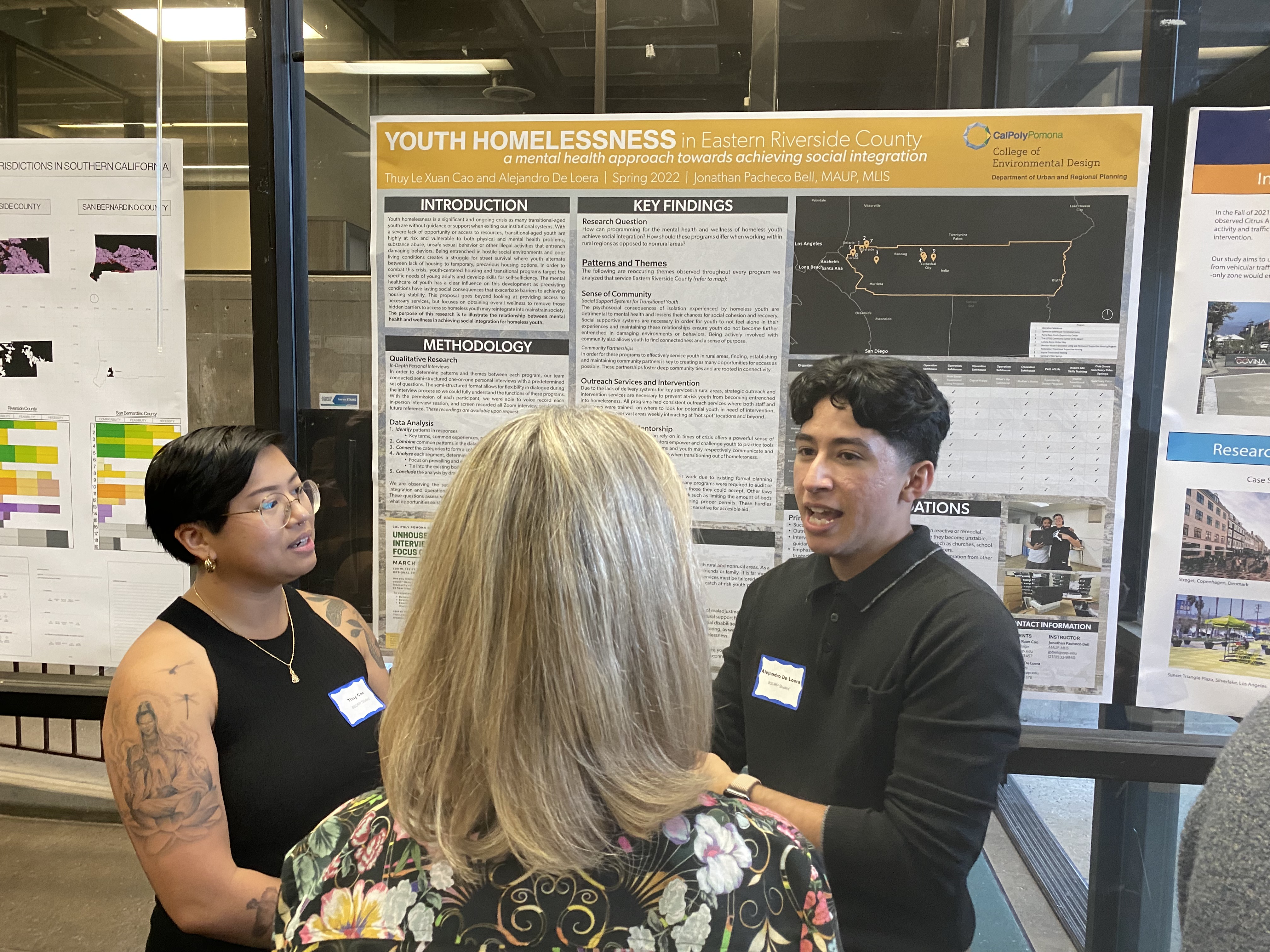
Senior Project poster by Thuy Le Xuan Cao and Alejandro De Loera. Image credit: Thuy and Alejandro
I’m celebrating the graduates in my Senior Projects class at Cal Poly Pomona Department of Urban & Regional Planning! Today we big up this team:
Youth Homelessness in Eastern Riverside County: A Mental Health Approach Towards Achieving Social Integration
By: Thuy Le Xuan Cao & Alejandro De Loera
Abstract: Youth homelessness is an ongoing crisis. Transitional-aged youth need support when exiting institutional systems. Without access to stable living environments, youth are exposed to trauma. Without coping strategies for stress, they’re vulnerable to chronic or cyclical homelessness. Hostile environments and poor living conditions create struggles for street survival. To combat this crisis, youth-centered housing and transitional programs target their unique needs. Youth mental healthcare influences this development as preexisting conditions including housing insecurity, mental health issues, substance use and family dysfunction have psychosocial consequences exacerbating barriers to housing stability. This project examines access to services for wellness and removal of hidden access barriers so unhoused youth can integrate into society.
Youth homelessness is prevalent in rural and nonrural areas and correlates to mental health issues magnified by rural conditions. Supportive services must be tailored to rural homeless youth needs. Beyond skill building, homeless youth require tailored interventions including non-housing case management, mentorship, counseling and mental health treatment. The creation of safe communal spaces promotes social cohesion where youth may interact and gain social capital from peer mentorship. Notably, planning itself creates a barrier to collective action due to formalities required for programs to exist legally.
We’ve created recommendations for 3 stages of intervention: Primary interventions include successful outreach focusing on preventative services for at-risk youth. Secondary programming offers local and short-term supportive programs with flexible hours for youth in crisis. Tertiary support prioritizes community partnerships to offer continuous, long-term services where homelessness occurs. *Abbreviated from original
Thuy and Alejandro at CPP Senior Projects Poster Session 2022. Photo: Jonathan Pacheco Bell










You must be logged in to post a comment.