Voices of the Streets: The Lived Experiences of Street Vendors in the Community of Florence-Firestone. By: Sergio Saldana
Celebrating the graduates in my 2023 Senior Projects class at Cal Poly Pomona Department of Urban & Regional Planning. Today we big up this researcher:
Voices of the Streets: The Lived Experiences of Street Vendors in the Community of Florence-Firestone
By: Sergio Saldaña
Abstract: The street vendors in Florence-Firestone, an unincorporated community in Los Angeles County, have been left alone by County entities and enjoyed a certain degree of autonomy. However, this has also led to neglect on the part of the County towards the street vending community. Despite the existence of resources to help street vendors with issues such as rent relief, food, and public safety, the County has failed to address these concerns. Qualitative research in the form of in-person surveys was conducted with street vendors and sheds light on this community’s lived experiences. While street vendors appreciate the County’s hands-off approach, the lack of attention from the County has resulted in many problems for street vendors. Many of them struggle to make ends meet and need assistance. They also face public safety concerns, such as the risk of theft or harassment while working on the street.
Based on interview data from street vendors in Florence-Firestone, the County should take a more proactive role in addressing the concerns of the street vendors. The data derived from this study can play an essential part in helping County officials understand the needs and desires of street vendors by knowing their struggles. To give insight into challenges faced by street vendors as well as areas where they may require additional support, County officials can create an actionable plan to support street vending activity more effectively in future. This data can be used to assist officials with addressing regulatory issues preventing street vendors from succeeding. Officials can take measures such as providing education and guidance on compliance or revising regulations to be more vendor friendly. In the culmination of this paper, it is recommended that the County update the Florence-Firestone Community Plan with a new section addressing the concerns of street vendors and direct them towards available resources that may help.
Researcher presenting at the 2023 Cal Poly Pomona Urban & Regional Planning Senior Projects Day. Photo: Jonathan Pacheco Bell
At the APA California Conference in Fresno, I spoke in the session “A Community Driven Vision and Plan.” I discussed how #EmbeddedPlanning helped the Del Amo Action Committee develop its own bottom-up Vision Plan for unincorporated West Carson, an #EnvironmentalJustice community in Los Angeles County.
Summary: The Del Amo Community Vision Plan is a remarkable document. This is a project of the Del Amo Action Committee (DAAC) with initial funding by the Rose Foundation, Center for Health, Environment and Justice and California Environmental Protection Agency. It was entirely community led.
Input was gathered from community residents and agency partners over the course of 20 months with the hope that the efforts would set this vision into motion.
The Community Vision Plan was documented with hard work and endless meetings of the community core group members (Bruce Bansen, DAAC Youth Volunteers, Don and Mary Garstang, Jan Kalani, Margaret Manning, Cynthia Medina, Savannah Medina, Rosa and Mary Vega, and University of Dominguez Hills Interns, DAAC staff and board members: Cynthia Babich, Brenda Bibee, Florence Gharibian, Jan Kalani and Lydia Valdez).
All planners can learn from this community-driven effort.
Speakers: ➖Cynthia Babich, Del Amo Action Committee ➖Andrew Flores, AICP, LA County Department of Regional Planning ➖Jonathan Pacheco Bell, 4LEAF, Inc. ➖Christian Mendez, Kearns & West
My last day at the South Bay Cities Council of Governments is August 31st. I’ll miss working with this team of passionate, tenacious change agents.
This has been a space to hone my Advocacy Planning practice. I led state funded housing acceleration projects under REAP 1.0, secured grants for housing implementation under REAP 2.0, and built the COG’s regional planner program to support local planning departments. Most importantly though, I applied Embedded Planning methods to strengthen subregional community partnerships.
A highlight of my work was uplifting the need for backyard housing — an intentional effort after doing housing enforcement for over a decade.
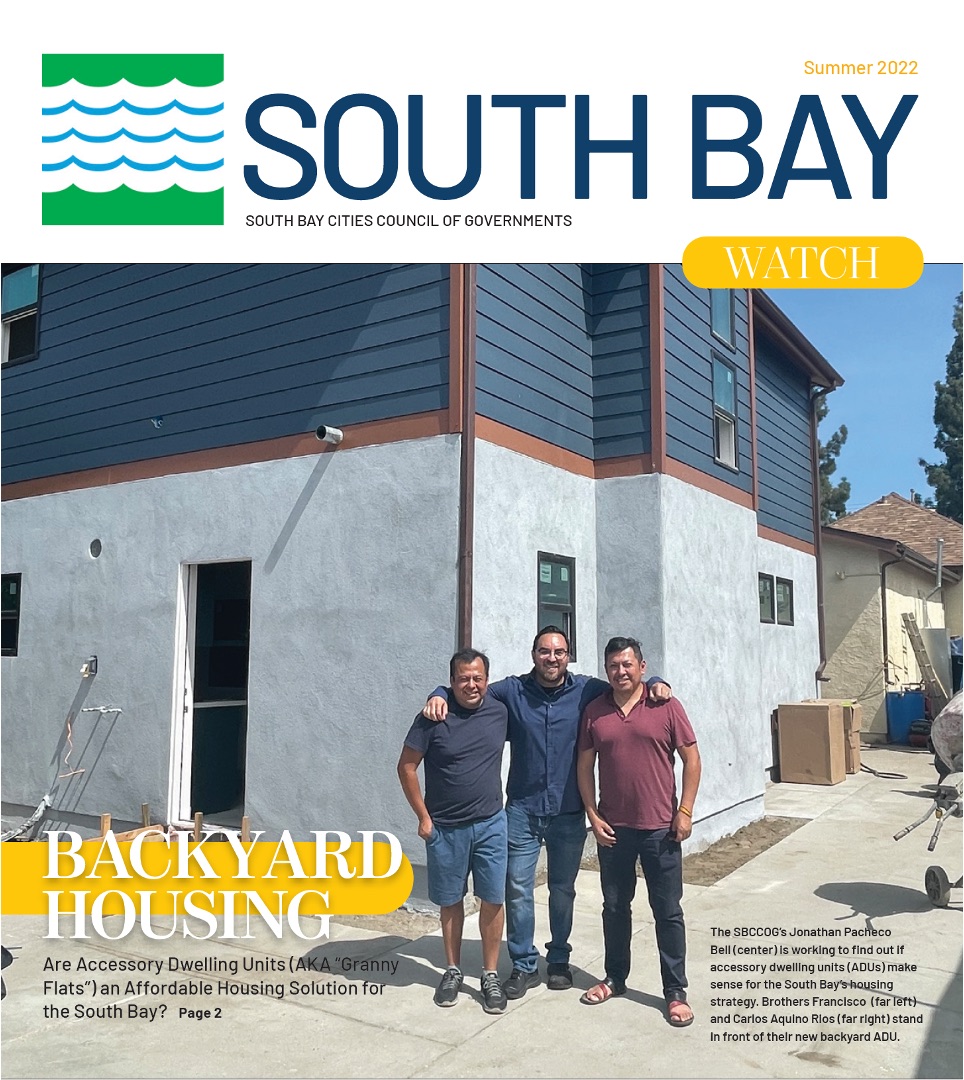
Last year, I reached out on Instagram asking if anyone had an Accessory Dwelling Unit we could visit for a story on our ADU Acceleration REAP 1.0 project. Mr. Francisco Aquino Rios responded. He allowed us to spotlight his family’s newly built two-story ADU in South Central LA. The lived experience of the Aquino Rios Family informed our decision to make this the cover story. Thank you!
I appreciate the opportunity to grow with a strong team at the COG. They inspire me.
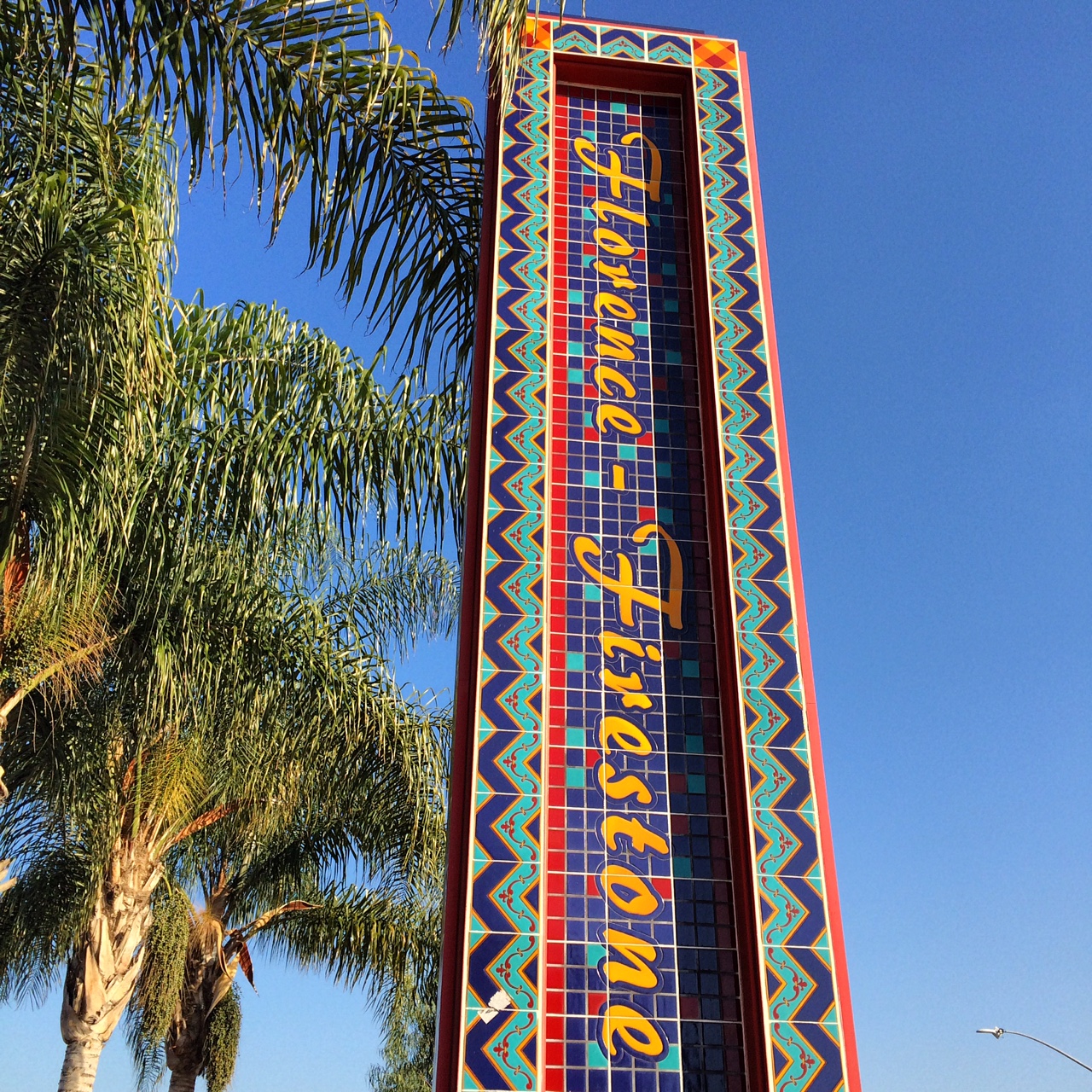
Florence-Firestone monument sign on Florence Avenue. Photo by Jonathan Pacheco Bell
I’m excited to work with Cal Poly Pomona students in Professor Shannon Heffernan’s course URP 4040: Placemaking: Theories, Methods, and Practices. For the Fall 2023 semester, the course will be studying the community of Florence-Firestone in South Central LA (sometimes called “Florence-Graham” using the federal Census designation). The course “client” and contact is the Florence-Firestone Community Organization (501c3), where I proudly serve as Vice President. Florence-Firestone is where I created Embedded Planning praxis as a street-level LA county planner.
Local news coverage of Florence-Firestone lamentably focuses on social ills. The community endures challenges and struggle — as many others do — but there is more to it than clickbait headlines. Our decades-long community-driven work proves it. Florence-Firestone is a vibrant and historic community. CPP students will see it this semester.
Below is a variety of key sources on Florence-Firestone. I’m proud to have worked on most of these projects. These help reframe the narrative about our community. They tell a fuller story of partnerships, solidarity, and hope.
Note: This is a living document for URP 4040. I’ll update it as needed throughout the semester. The revision history is at the bottom of this page.
Florence-Firestone Community Organization and SELA Collaborative interview, including Embedded Planning origins in Florence-Firestone (starts at 5:25 min mark):
How a Tire Shop in South L.A. Became a Community Hub for Locals:
This webpage was originally published on August 25, 2023.
Revised to add Pat Brown Institute article on September 30, 2023.
In support of Vision Zero, join us for a community bike ride in Florence-Firestone this Sunday, August 6th from 10a-1p. No registration required! Just come thru 🚲
📍 Florence-Firestone Community Organization in partnership with Estolano Advisors, BikeLA, Los Angeles County Department of Public Health, & California Office of Traffic Safety
Cal Poly Pomona Communications is recording a short video about my creation ofEmbedded Planning praxis. Students and community members are invited to join! It’s in South Central LA’s Florence-Firestone community, where this street-level praxis was born.
In support of Vision Zero, join us for a community walk in Florence-Firestone Sunday, July 23rd from 10am to 1pm. FFCO’s Ramsey Nicholson and I will highlight landmarks, social history, and community issues on the route. No registration required! Just come through.
Route includes: Compton Avenue, Florence Avenue, Maie Avenue, Graham Avenue, Miramonte Boulevard, E. 66th Street
Florence-Firestone Community Organization in partnership with Estolano Advisors, BikeLA, Los Angeles County Department of Public Health, & California Office of Traffic Safety
This week I joined Youth Leaders Empowered Active & Diverse (YLEAD) at CDTech for a conversation on urban planning and gentrification in South Central LA. I shared my story of working on the ground supporting the community with tools and knowledge to preserve South Central history. We shed light on the importance of urban planning for a South Central future without displacement.
Still image from “Reflections of the LA Uprising” 30 Years Later
The 1992 Los Angeles Uprising began thirty years ago today — April 29, 1992.
I was interviewed for “Reflections of the LA Uprising”30 years later. This is a collaboration by JOVRNALISM, USC Annenberg, KCET, and LA Times.
I shared how the unrest led me on a path toward urban planning in/for South Central LA. And I testified this path would inspire me to create Embedded Planning as an LA County planner on the ground in Florence-Firestone.
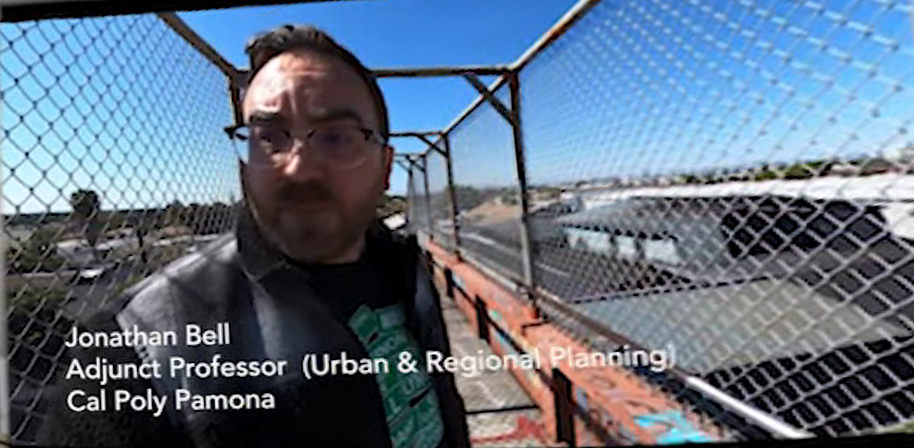
Rightfully, this interview was done at the landmark Roosevelt Park pedestrian bridge over the Blue Line.
Many community voices are part of this project. Check out the immersive video “Echoes of the Uprising” where we share our memories and oral histories.
I’m interviewed in the New York Times about the human dimensions of informal housing enforcement in South Central Los Angeles. I’m grateful to the family in @FlorenceFirestone who trusted me to share their story.
I spoke at length about @EmbeddedPlanning praxis, west coast hip hop origins, and South Central LA.
The group distilled our conversation into a dope podcast called, “Flatlands: We Cannot Pod From Our Desks.”
Listen to my podcast interview and view the companion Thick Map of South Central LA — portion of it is this post’s image. Check out all project podcasts and infographics.
Thank you to Samantha Solis, Miranda Hirujo-Rincon, Carrie Gammell, and Celia Sanchez Zelaya.







You must be logged in to post a comment.