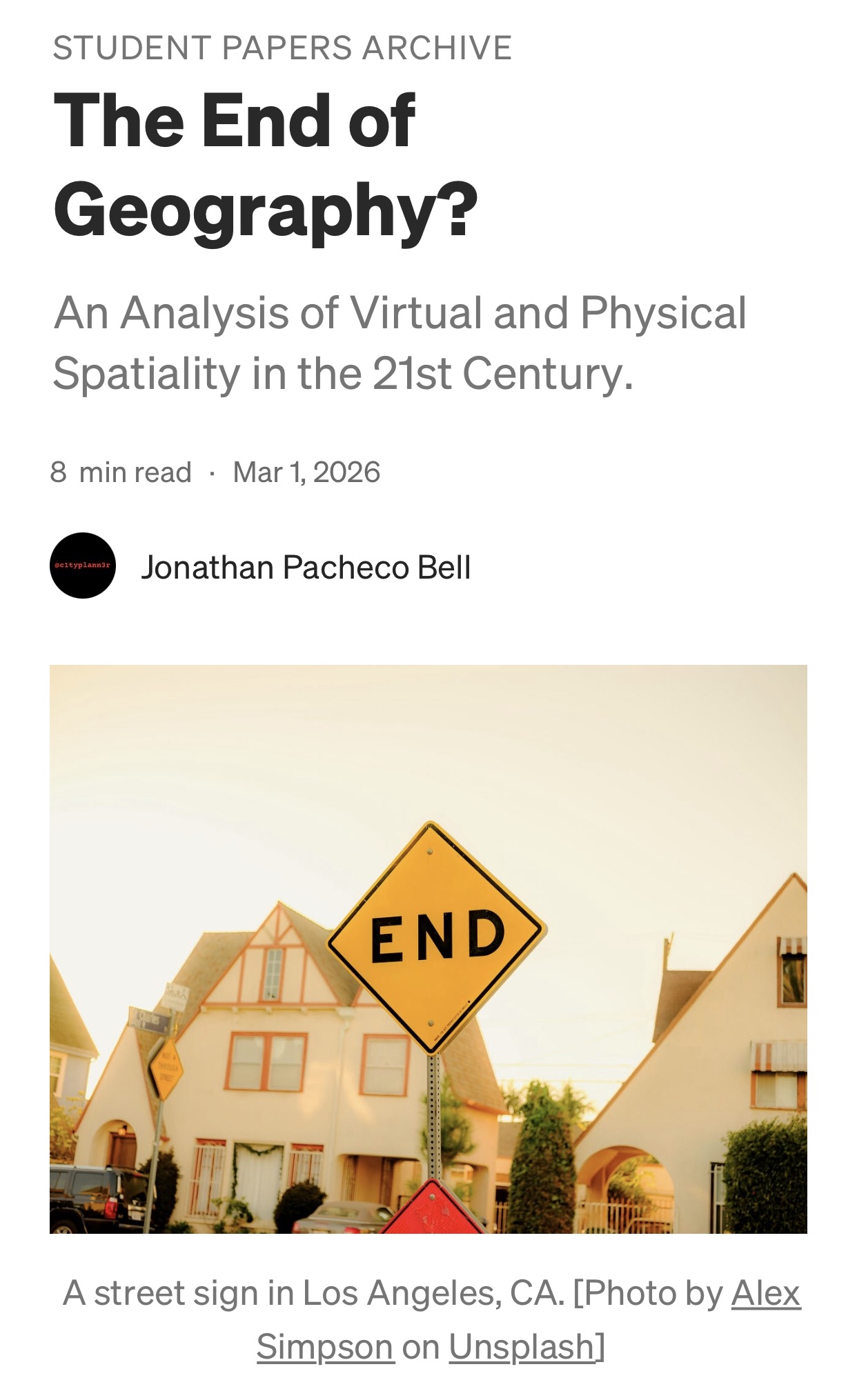
Originally written in 2004 and revised in 2026, my piece “The End of Geography?” is published on Medium. I consider claims alleging geography’s demise in the context of territorial space versus cyberspace. This is the latest contribution to my Student Papers Archive.
PLAN 498/598: We Cannot Plan From Our Desks: Embedded Planning Theory and Practice
This is another step forward for our movement.
Huge thank you to Dan Baisden for inaugurating the class. BSU students are learning from the best. Dan leads the City of Fort Wayne Department of Neighborhoods which is literally an Embedded Planning department, as I’ve shared in recent keynotes.
I’m happy to be in dialogue with Dan about the syllabus.
Hey should we implement an Embedded Planning college course in Los Angeles?
From the Borough of Hollidaysburg (PA) Comprehensive Plan 2035 draft, out now for 45-day public comment period:
EMBEDDED PLANNING
A common theme that emerged from extensive community dialogue was the public’s desire to be engaged, acknowledged, and involved in local matters. Residents expressed a need for Borough Staff to be more responsive to the diverse needs within the community. Considering this feedback, Borough Staff and Blair Planning recognized an opportunity to collaborate with Southern California-based consultant Jonathan Pacheco Bell, the urban planner and change-agent who created Embedded Planning Praxis. A new method and philosophy of practice, Embedded Planning is a praxis in which planning is done from within the community itself, not solely from an office, and planners work on- the-ground to understand people’s needs, build trust and authentic relationships, participate in daily community life, increase community participation through street-level engagement, and ultimately advance equity through targeted and locally responsive planning initiatives. This approach encourages Borough Staff to step out from behind their desks and connect directly with the community they serve.
Beginning in Early 2025, Jonathan consulted directly with Staff and the Steering Committee to provide guidance and ensure that the revision and implementation of this plan posits members of the community not just as participants, but as leaders who are continuing to spearhead the plan’s momentum. Embedded Planning serves as both an inspirational throughline and implementation goal for this comprehensive plan.
The Borough’s Comprehensive Plan Steering Committee met virtually with Jonathan throughout the implementation planning process in order to ensure consistency with the praxis. The Steering Committee hosted various meetings and workshops in early 2025 to address revisions of the initial draft. Following these workshops, additional interviews were conducted with entities responsible for various aspects of implementation in this plan including the department of public works and emergency service departments.
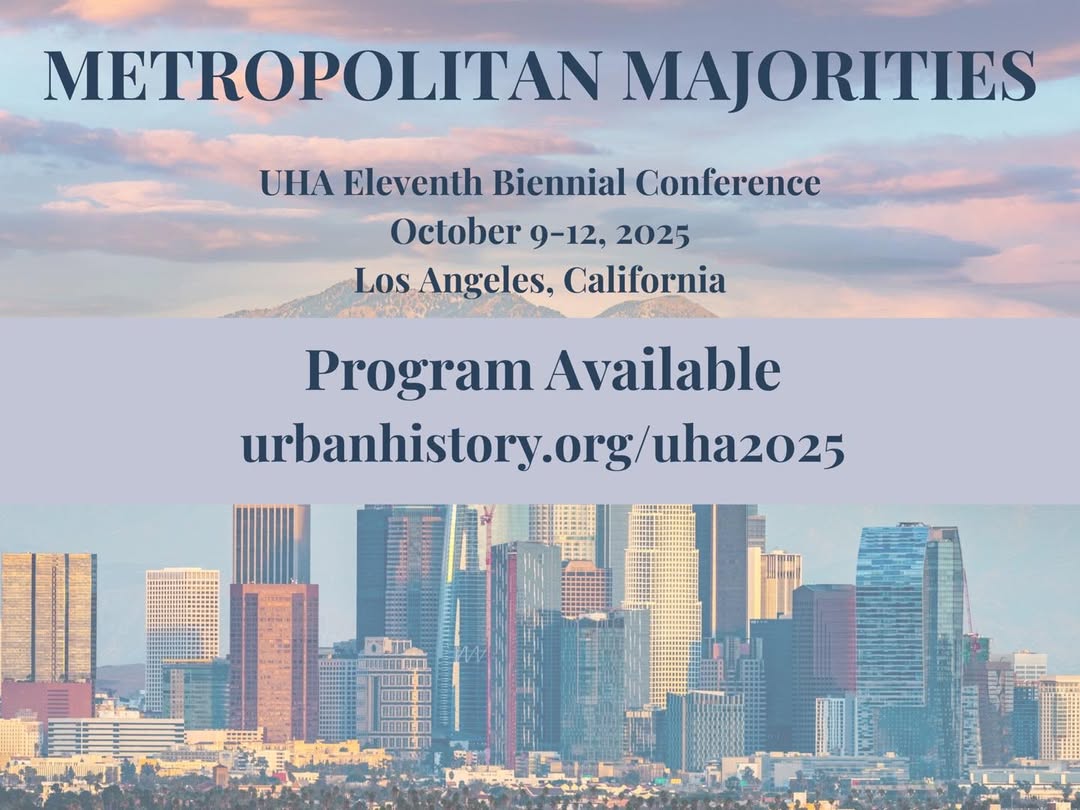
The Biltmore Los Angeles in Downtown LA, October 9-12, 2025
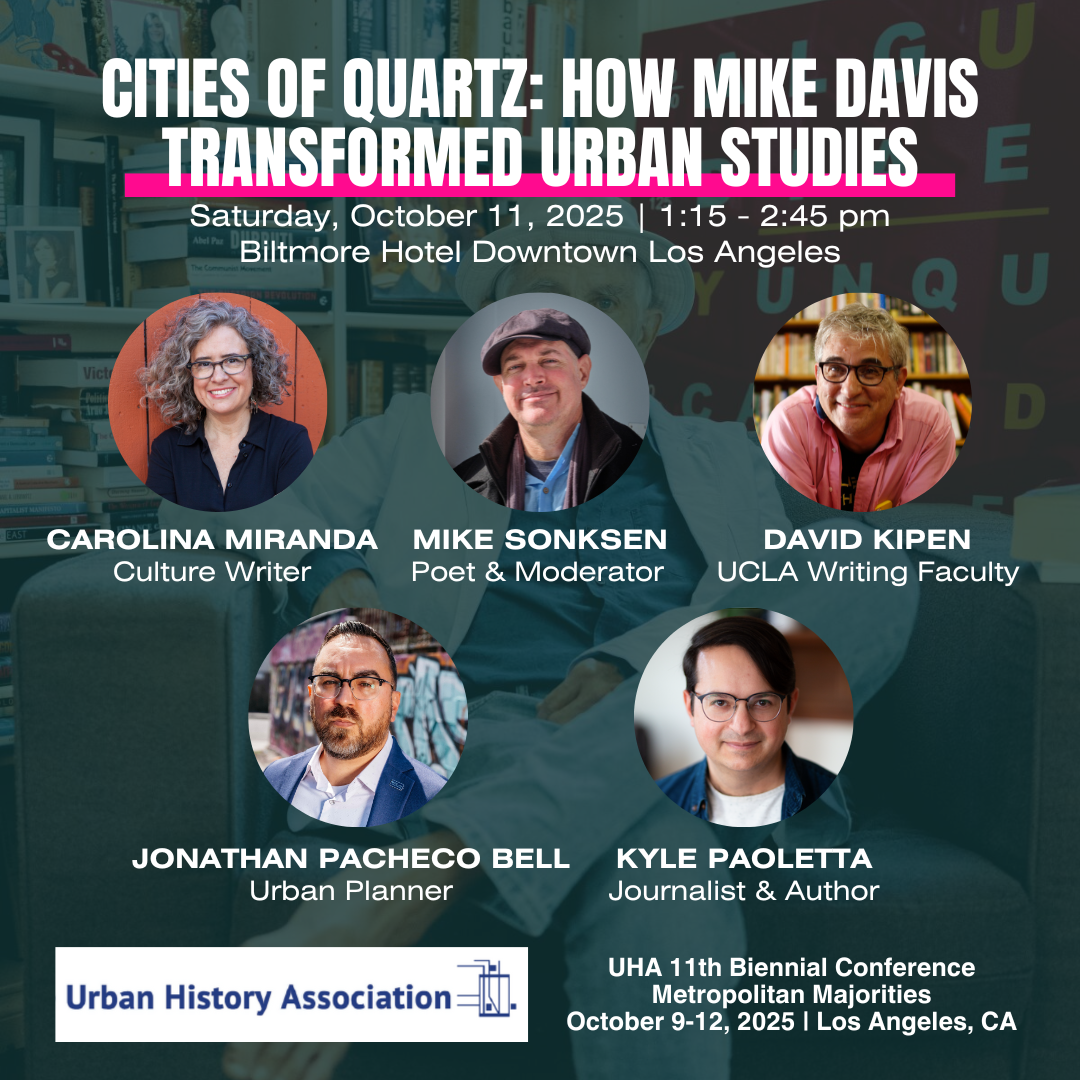
Cities of Quartz: How Mike Davis Transformed Urban Studies (Roundtable)
Saturday, October 11, 2025 | 1:15-2:45pm
Abstract:
In this roundtable discussion, a group of writers, academics, and urban planners will discuss the life and work of Mike Davis. With books like City of Quartz, Ecology of Fear, and Planet of Slums, Davis played an irreplaceable role in pushing urban scholars to foreground questions of equity, justice, and sustainability in their work. Each of Davis’ books and articles was grounded in a clear-eyed assessment of the power dynamics that create unequal societies, and throughout his life he remained a forceful advocate for the moral necessity that poor and working-class communities — whatever their ethnic or racial makeup — have the same chance at opportunity as the ruling class.
To illuminate Davis’ legacy, our discussion will begin with the impact he had on how the city of Los Angeles understands itself, before we open our inquiry into applying his method to cities everywhere and incorporating his ethos into future urban plans.
The roundtable will be moderated by Mike Sonksen, a poet and former Woodbury University professor who was mentored by Mike Davis and remained friends with him for over two decades.
The Biltmore Los Angeles in Downtown LA, October 9-12, 2025
Cities of Quartz: How Mike Davis Transformed Urban Studies (Roundtable)
Saturday, October 11, 2025 | 1:15-2:45pm
Abstract:
In this roundtable discussion, a group of writers, academics, and urban planners will discuss the life and work of Mike Davis. With books like City of Quartz, Ecology of Fear, and Planet of Slums, Davis played an irreplaceable role in pushing urban scholars to foreground questions of equity, justice, and sustainability in their work. Each of Davis’ books and articles was grounded in a clear-eyed assessment of the power dynamics that create unequal societies, and throughout his life he remained a forceful advocate for the moral necessity that poor and working-class communities — whatever their ethnic or racial makeup — have the same chance at opportunity as the ruling class.
To illuminate Davis’ legacy, our discussion will begin with the impact he had on how the city of Los Angeles understands itself, before we open our inquiry into applying his method to cities everywhere and incorporating his ethos into future urban plans.
The roundtable will be moderated by Mike Sonksen, a poet and former Woodbury University professor who was mentored by Mike Davis and remained friends with him for over two decades.
The Biltmore Los Angeles in Downtown LA, October 9-12, 2025
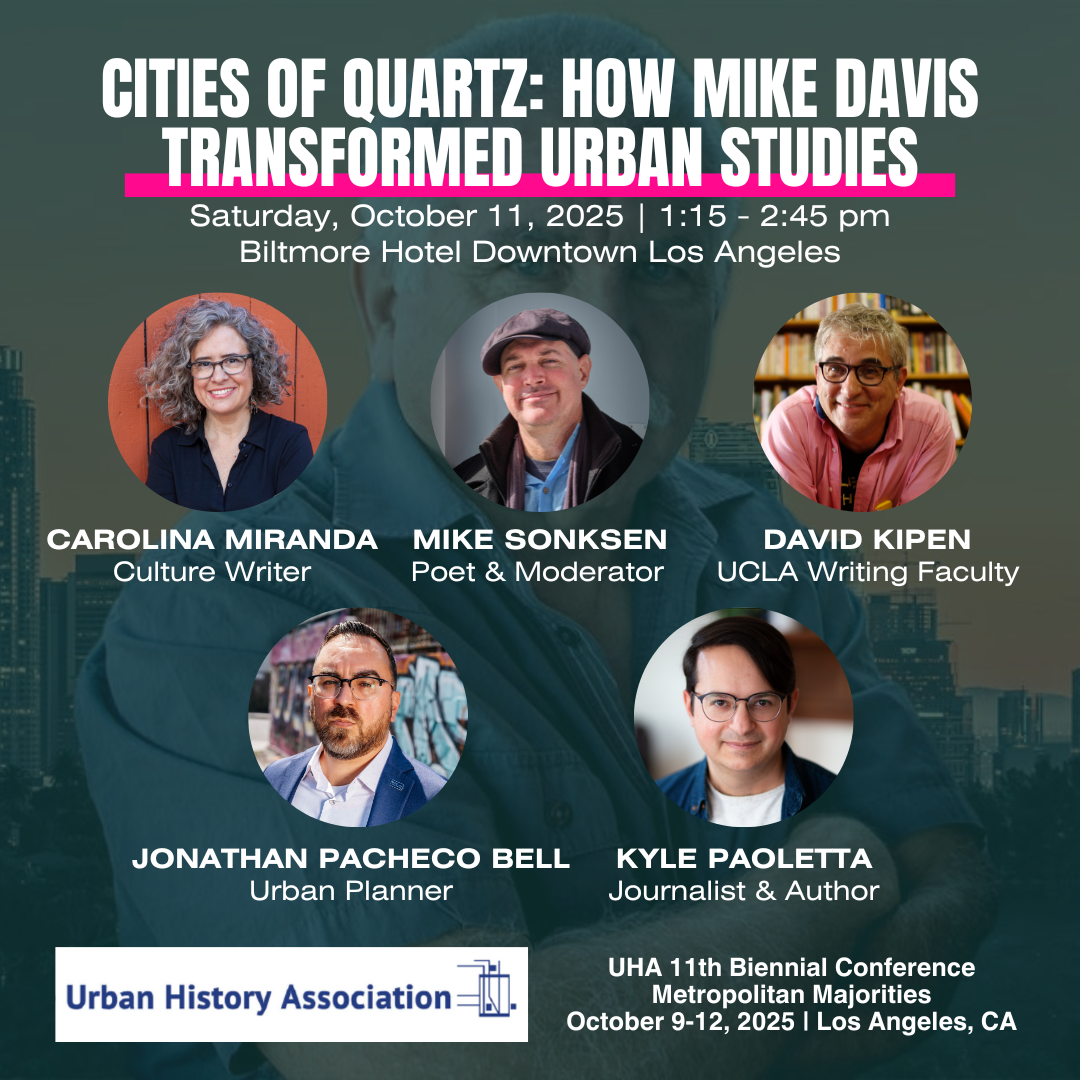
Cities of Quartz: How Mike Davis Transformed Urban Studies (Roundtable)
Saturday, October 11, 2025 | 1:15-2:45pm
Abstract:
In this roundtable discussion, a group of writers, academics, and urban planners will discuss the life and work of Mike Davis. With books like City of Quartz, Ecology of Fear, and Planet of Slums, Davis played an irreplaceable role in pushing urban scholars to foreground questions of equity, justice, and sustainability in their work. Each of Davis’ books and articles was grounded in a clear-eyed assessment of the power dynamics that create unequal societies, and throughout his life he remained a forceful advocate for the moral necessity that poor and working-class communities — whatever their ethnic or racial makeup — have the same chance at opportunity as the ruling class.
To illuminate Davis’ legacy, our discussion will begin with the impact he had on how the city of Los Angeles understands itself, before we open our inquiry into applying his method to cities everywhere and incorporating his ethos into future urban plans.
The roundtable will be moderated by Mike Sonksen, a poet and former Woodbury University professor who was mentored by Mike Davis and remained friends with him for over two decades.
I’m on a panel recognizing the legacy of Mike Davis with writer legends Carolina A. Miranda, Kyle Paoletta, David Kipen, and Mike The PoeT Sonksen at the Urban History Association Conference 2025 in Los Angeles. More to come soon.
Join us on Saturday, October 11th, 1:15-2:45pm at the Biltmore Hotel in Downtown LA.
This analysis was submitted on April 20, 2005 in Edward W. Soja’s UP 230 Intro to Regional Planning course at UCLA Urban Planning. Google was fairly new and better at retrieving information than other search engines. At this point, Soja was writing less about Postmodernism, more about New Regionalism, and always “putting space first.” He asked us to go deep in the search results to uncover definitions of New Regionalism in this digital space.
Guest lecture “Embedded Planning is Radical Planning” in the Radical Planning Collective’s student-led course at UC San Diego. We will examine the origins and implementation of Embedded Planning praxis as an application of Radical Planning.
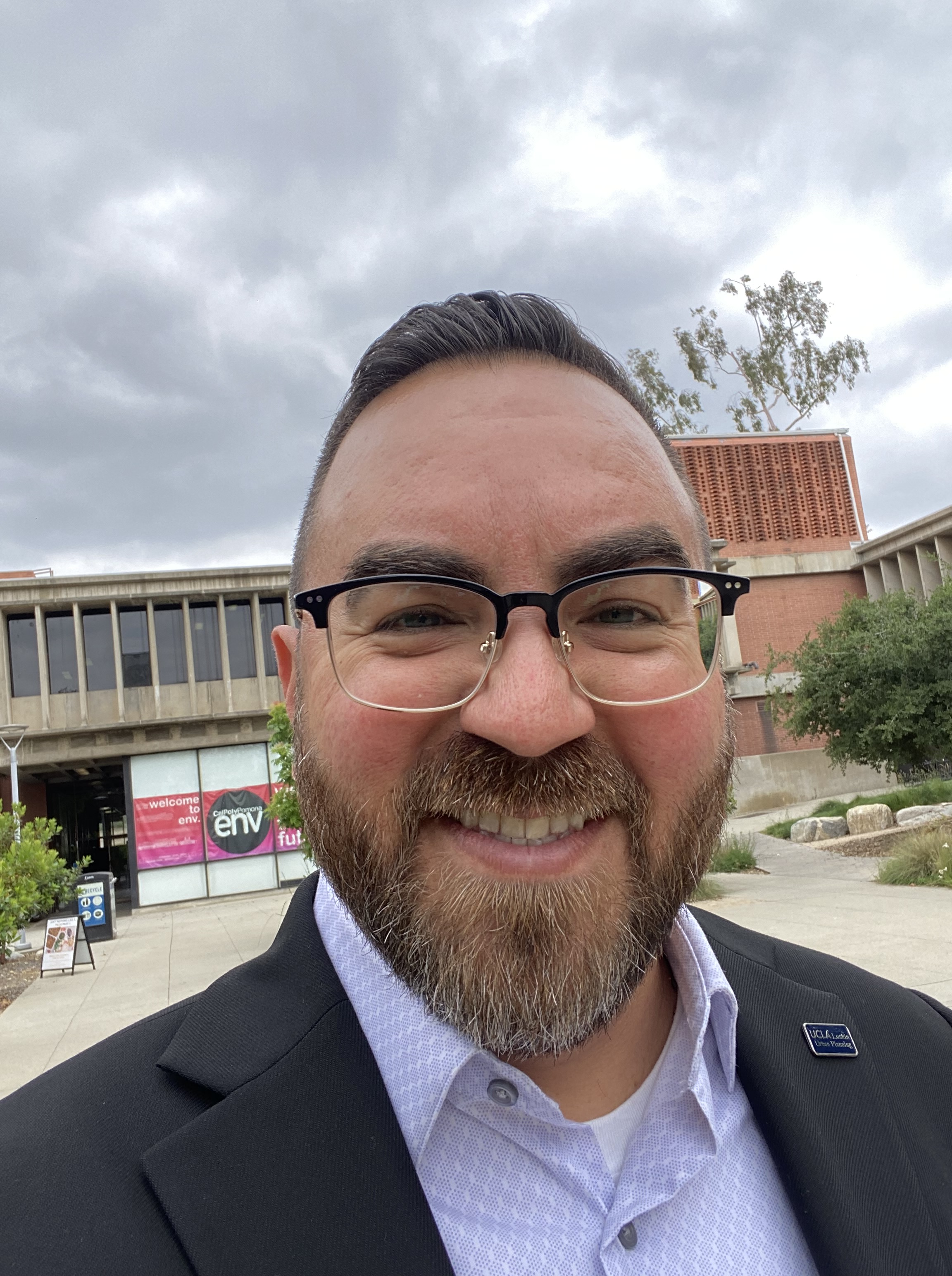
My time at Cal Poly Pomona has come to an end. The last 4 years were a dream come true. In 2021, I’d never have imagined that 1 lower division course would blossom into 6 across our bachelor’s and MURP programs, including my personal goal of teaching planning theory (my favorite at UCLA Luskin!). With that accomplished, I’ve decided to exit on a high note. This move makes space for new lecturers . . . new ideas, new lessons, new texts, new assignments, new theories, new planning methods, new pedagogies, new critiques, new praxis.
I’ll miss my students. My greatest joy was being a part of their journeys. I got to see folks new to the field evolve before my eyes into fierce urban planners—change agents. I hope my ramblings contributed to their growth. My students give me boundless hope. The future of urban planning is in good hands.
I was a mentor before CPP and I remain one. I’ve formed lifelong relationships with CPP students, faculty, and university fam. Many believe in Embedded Planning and other forms of activist praxis. We have momentum.
So this isn’t a “goodbye” but rather a “see you out there, in the neighborhoods, alongside our community members, planning and organizing, with your feet on the street.”
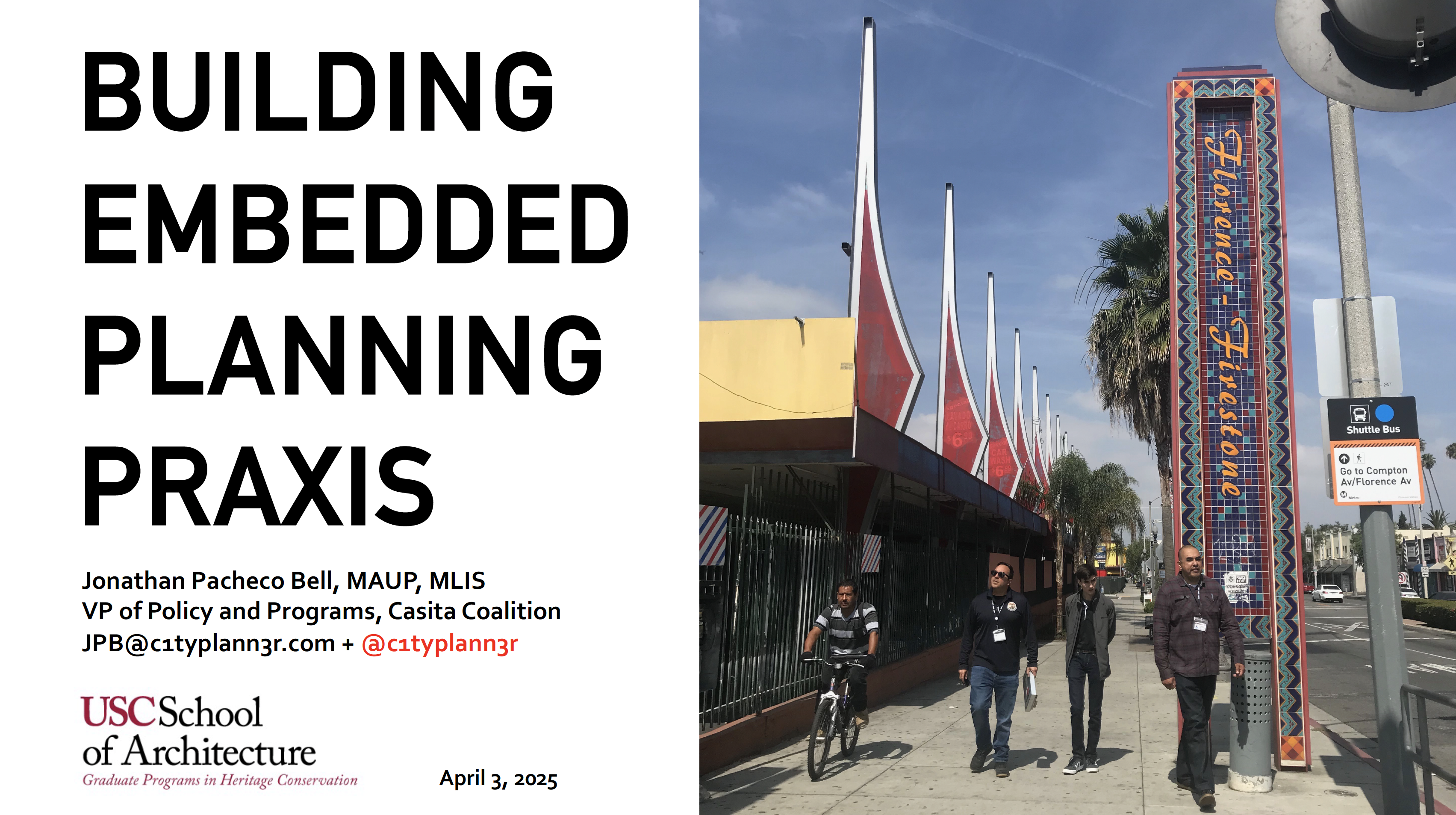
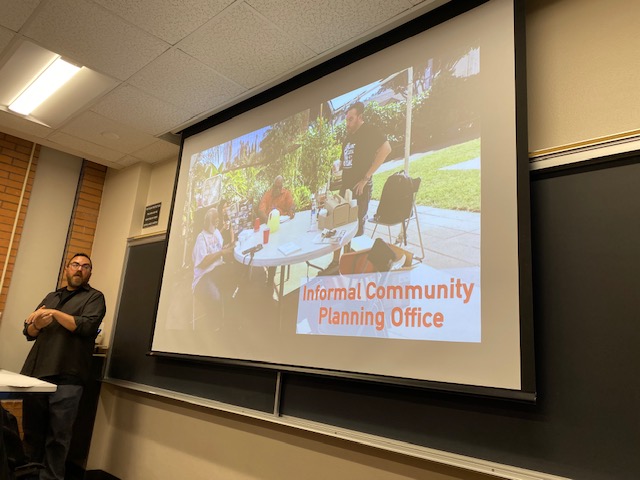
Scenes from USC Architecture from my 4/3 guest talk, “Building Embedded Planning Praxis.” The invited lecture was delivered in the USC Master of Heritage Conservation graduate course, Heritage Conservation Policy and Planning.
Who’s the cat in the photo?! In 2003 in the MAUP program at UCLA Luskin Department of Urban Planning, I took an architecture theory course where I learned Professor Gregory Ulmer’s CATTt method for writing a manifesto. I would go on to use the CATTt to write my 1-page manifesto on Embedded Planning titled, “We Cannot Plan From Our Desks,” published in the October 2018 issue of APA’s Planning Magazine.
And now we’re a worldwide movement in planning theories and practices.
Photos by Meredith Drake Reitan, Professor & Associate Dean. Thanks for the invite to speak with your MHC students!
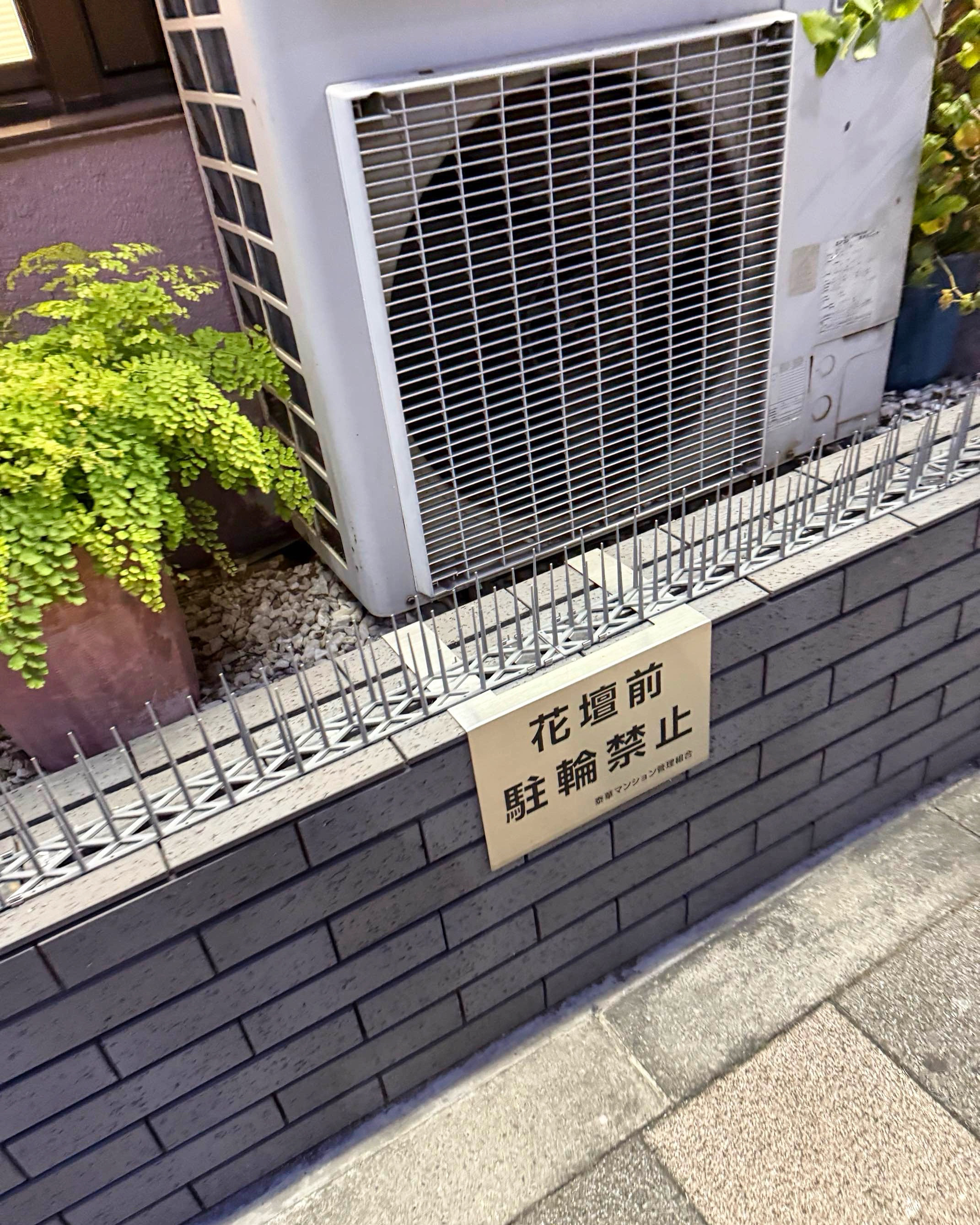
Cal Poly Pomona MURP student Abby Urquiza found some conspicuous Hostile Architecture in Tokyo. Last semester, we examined Hostile Architecture in the Planning & Control module in our course, URP 5120: Planning Ideas & Action. From our readings:
The city is engaged in a merciless struggle to make public facilities and spaces as ‘unlivable’ as possible for the homeless and the poor.
Jonathan Pacheco Bell’s Embedded Planning approach revolutionizes planning practice by emphasizing street-level planning within the community rather than traditional desk-based methods. Developed by Bell in South Central LA and publicly introduced in 2018, this praxis seeks to rebuild trust and foster meaningful relationships with marginalized communities historically harmed by inequitable planning.
Embedded Planning involves planners working directly from community spaces and places, engaging residents in their everyday environments. This immersive approach helps planners gain a deeper understanding of local needs and aspirations, ensuring that community voices significantly shape planning decisions. By embedding themselves into neighborhoods, planners build strong, authentic relationships, moving beyond one-off, transactional, superficial consultations to create lasting and impactful partnerships.
Despite its support from communities, Embedded Planning has faced resistance from conventional planning practice and management, which has viewed this approach with skepticism. Working from the neighborhood to integrate community directly into planning processes challenges traditional methods and requires navigating complex dynamics between stakeholder expectations and regulatory constraints.
Since its inception, Embedded Planning has gained an international following among emerging planners who are eager to implement more inclusive practices. Bell’s talk will highlight real-world case studies, reflections, and personal experiences, while also showcasing the approach’s challenges and benefits. Attendees will learn how Embedded Planning fosters trust, informs better decision-making, and promotes more equitable community development. This emerging movement represents a crucial shift towards centering planning as an active and continuous process from within the community and represents the future of planning.











You must be logged in to post a comment.