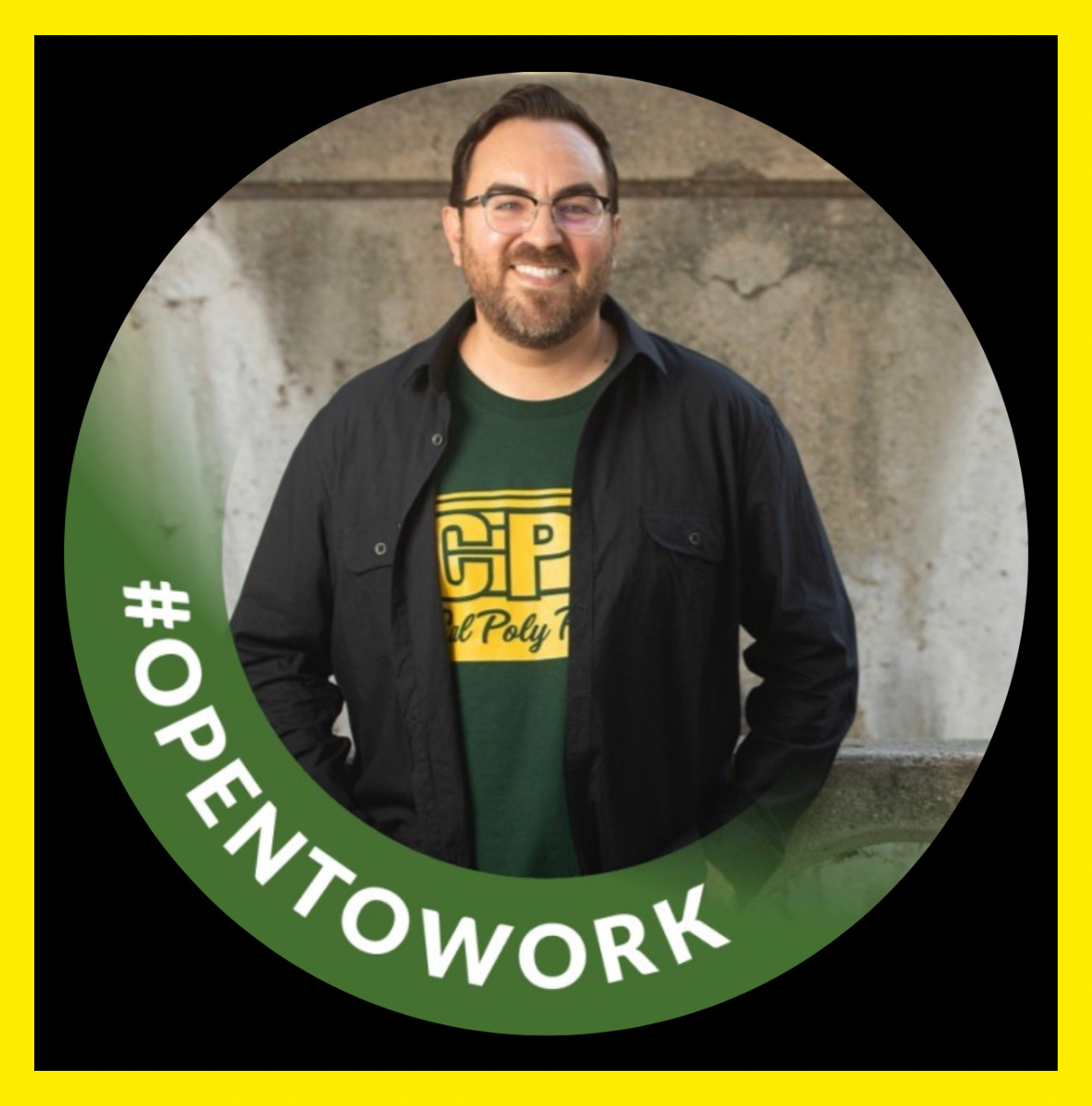
This month marks a new chapter of professional growth. It’s time. I’m #OpenToWork.
With two decades of land use experience, I’m seeking new opportunities to improve communities including: urban planner, senior planner, housing planner, community engagement planner; code compliance or housing inspector; lecturer or adjunct faculty in planning and allied fields; and other similar roles. I’m seeking a collaborative space that prioritizes innovation, service, and people. I’m seeking work that values partnerships and community.
If your organization offers this role, let’s talk!
Support, connections, referrals, and opportunities are indeed appreciated.
Join me and APA Los Angeles Young & Emerging Planners on July 14th at 12pm Pacific to learn about Embedded Planning praxis in the contexts of planning education and practice.
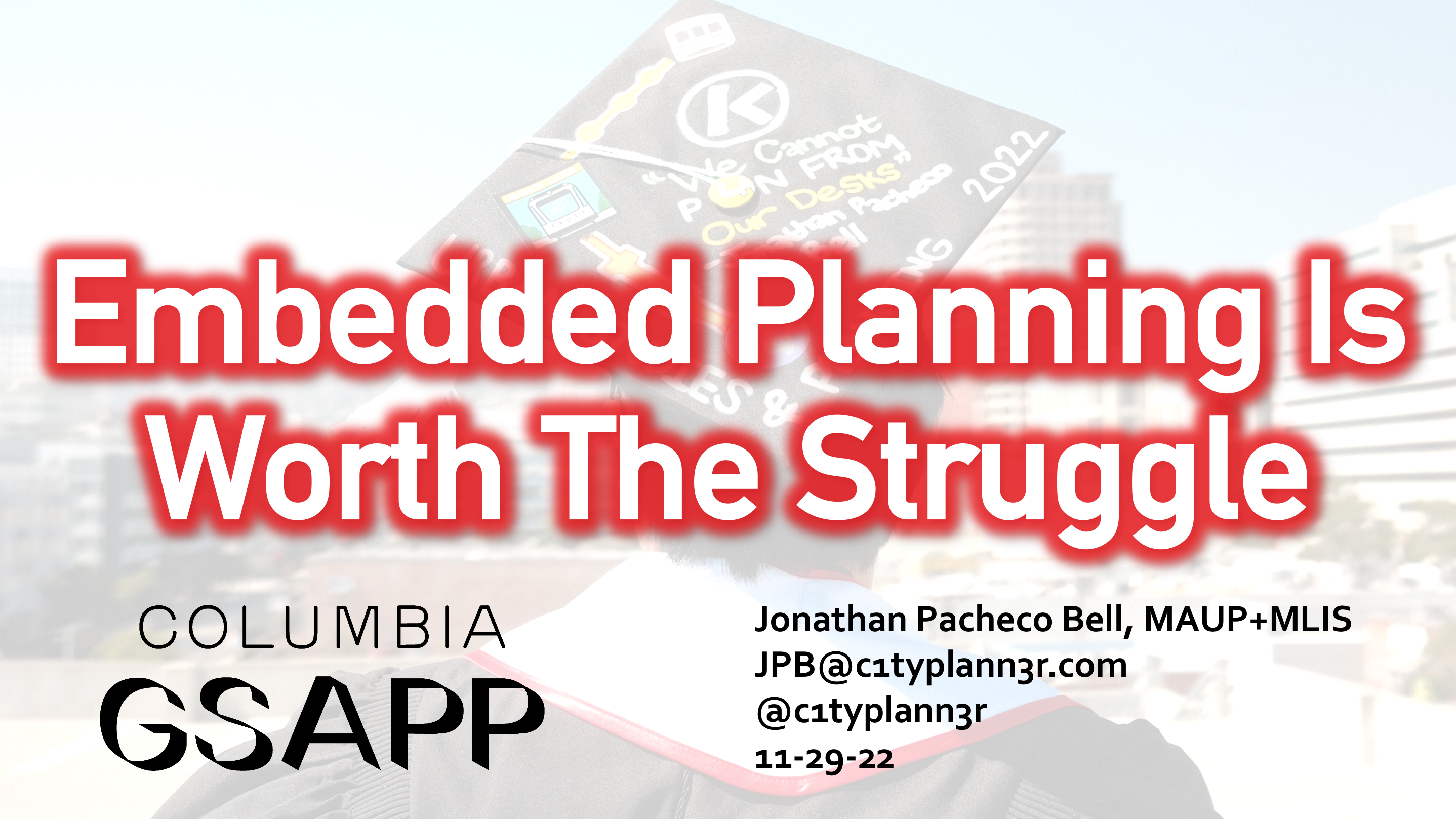
In partnership with the Urban Studies Student Association, I’m doing the talk “Embedded Planning is Worth The Struggle” at UC Irvine on June 1, 2023 at 5pm. Attend in person or throughZoom.
Session Description:
Planning is political. Decisions about the built environment inherently impact people’s lives. Everything planners do involves a struggle over “who gets what, when, where, how, and why?” Planners respond to this debate but many of our practices have resulted in unjust planning.
In this time of increasing interrogation of planning’s legacies of inequity, planners are moving with intention to be better partners. As part of repair and healing, planners are seeking more ways to build meaningful community partnerships. No longer is technocratic rational planning the default. But while the pivot to participatory methods helped democratize the planning process, professional practice still prefers project-based, one-off, transactional engagement.
Orthodox planning must evolve.
A better way is possible.
Los Angeles-based urban planner Jonathan Pacheco Bell urges practitioners to consider Embedded Planning praxis. Developed by Bell on the ground in South Central LA, Embedded Planning is a way to fundamentally restructure community engagement & practice. Embedded Planning means planning from the street, not from a desk. Embedded Planners work in the spaces & places of community members, building bridges with marginalized communities harmed by inequitable planning. Embedded Planning is a praxis that puts theory into action to better this world. Since Bell declared Embedded Planning exists in 2018, it has grown into an international movement among emerging planners. Bell will show how Embedded Planning is being used to transform engagement into lasting community partnerships rooted in trust.
Community members have embraced Embedded Planning because they feel seen and included. Yet despite the praxis bringing ignored voices to the table, Bell encountered blatant hostility from planning figureheads who judged Embedded Planning as “too political.” Through storytelling and personal reflection, Bell will illustrate the struggle to carry out Embedded Planning in the face of power. Attendees will learn the challenges and benefits of this unorthodox approach and understand why this praxis is the future of planning.
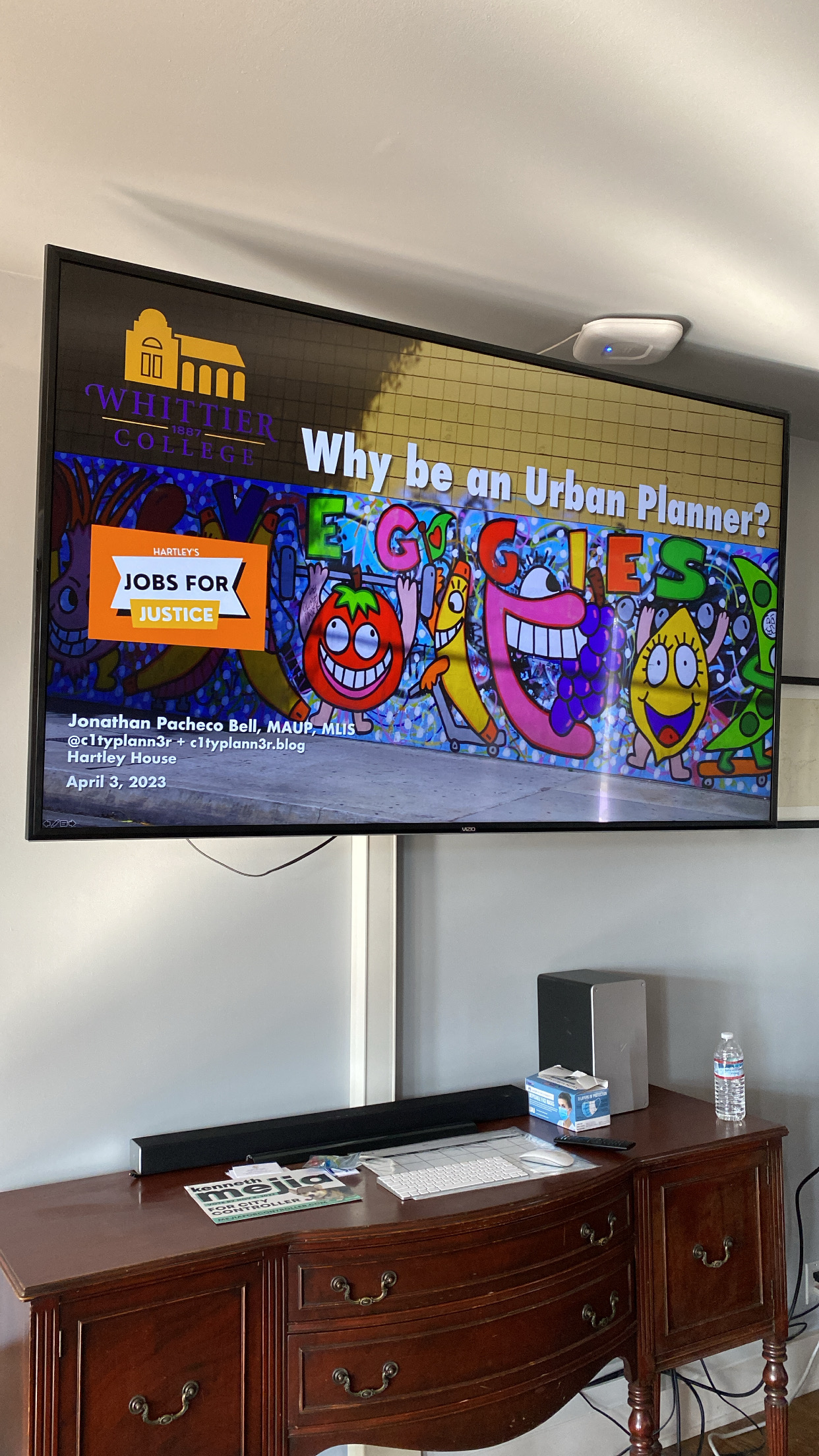
I appreciated speaking at Whittier College in the Jobs For Justice series.
Titled, “Why be an Urban Planner?,” the talk explored my route to planning through hip hop, graffiti, and architecture; what urban planning is; careers in public, private, nonprofit planning & allied fields; and my thesis that the future of planning is #EmbeddedPlanning praxis.
Shout out to Dr. Rebecca Overmeyer-Velazquez for the invitation.
Planning is political. Decisions about the built environment inherently impact people’s lives. Everything planners do involves a struggle over “who gets what, when, where, how, and why?” Planners respond to this debate but many of our practices have resulted in unjust planning. In this time of increasing interrogation of planning’s legacies of inequity, planners are moving with intention to be better partners. And as part of repair and healing, planners are seeking more ways to build meaningful community partnerships. No longer is technocratic rational planning the default. But while the pivot to participatory methods helped democratize the planning process, professional practice still prefers project-based, one-off, transactional engagement.
Orthodox planning must evolve.
A better way is possible.
Los Angeles-based urban planner Jonathan Pacheco Bell urges practitioners to consider Embedded Planning praxis. Developed by Bell on the ground in South Central LA, Embedded Planning is a way to fundamentally restructure community engagement and practice. Embedded Planning means planning from the street, not from a desk. Embedded Planners work in the spaces and places of community members, building bridges with marginalized communities harmed by inequitable planning. Embedded Planning is a praxis that puts theory into action to better this world. Since Bell declared Embedded Planning exists in 2018, it has grown into an international movement among emerging planners. In this talk, Bell will show how Embedded Planning is being used to transform engagement into lasting community partnerships rooted in trust.
Community members have embraced Embedded Planning because they feel seen and included. Yet despite this praxis bringing ignored voices to the table, Bell encountered blatant hostility from planning figureheads who judged Embedded Planning as “too political.” Through storytelling and personal reflection, Bell will illustrate the struggle to carry out Embedded Planning in the face of power. Attendees will learn the challenges and benefits of this unorthodox approach and understand why this praxis is the future of planning.
In this time of increasing interrogation of planning’s legacies of inequity, planners are moving with intention to be better partners. And as part of repair and healing, planners are seeking more ways to build meaningful community #partnerships. No longer is technocratic rational planning the default.
But while the pivot to participatory methods helped democratize the planning process, professional practice still prefers project-based, one-off, transactional engagement.
Orthodox planning must evolve.
A better way is possible.
Los Angeles-based urban planner Jonathan Pacheco Bell urges practitioners to consider Embedded Planning praxis. Developed by Bell on the ground in South Central LA, Embedded Planning is a way to fundamentally restructure community engagement and practice. Embedded Planning means planning from the street, not from a desk. Embedded Planners work in the spaces and places of community members, building bridges with marginalized communities harmed by inequitable planning. Embedded Planning is a #praxis that puts theory into action to better this world.
Since Bell declared Embedded Planning exists in 2018, it has grown into an international movement among emerging planners. In this talk, Bell will show how #EmbeddedPlanning is being used to transform engagement into lasting community partnerships rooted in trust.
Community members have embraced Embedded Planning because they feel seen and included. Yet despite this praxis bringing ignored voices to the table, Bell encountered blatant #hostility from planning figureheads who judged Embedded Planning as “too political.” Through storytelling and personal reflection, Bell will illustrate the struggle to carry out Embedded Planning in the face of power. Attendees will learn the challenges and benefits of this unorthodox approach and understand why this praxis is the future of planning.
When I abruptly quit architecture school in 1998 and was depressed and lost but found my way to critical planning practice, the book that got me there was City of Quartz.
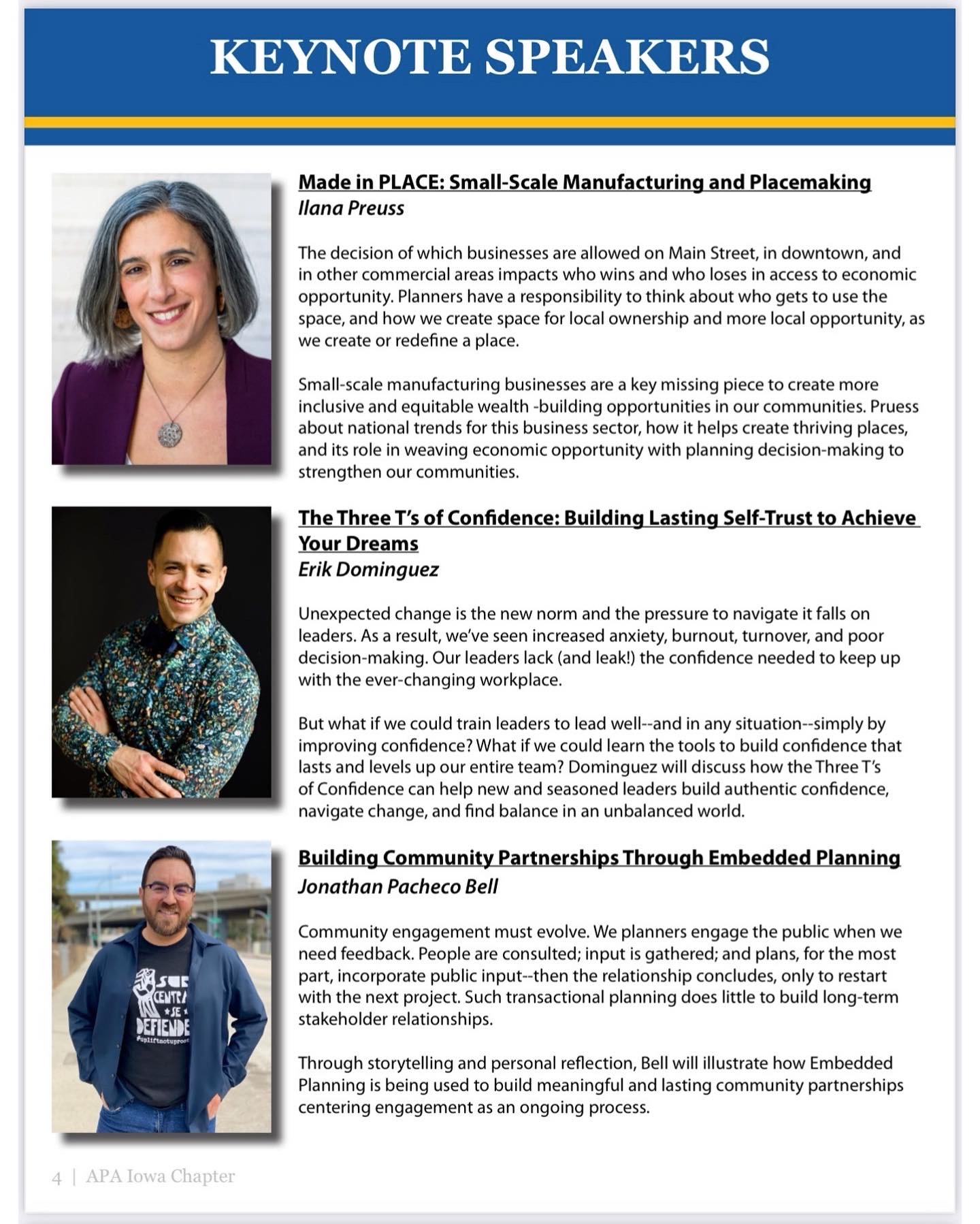
Building Community Partnerships Through Embedded Planning
Community engagement must evolve. We planners engage the public when we need feedback. People are consulted; input is gathered; and plans, for the most part, incorporate public input — then the relationship concludes, only to restart with the next project. Such transactional planning does little to build long-term stakeholder relationships.
In a time of increasing interrogation of planning and its legacies of inequity, planners today are seeking better ways to build and sustain meaningful partnerships. Urban planner Jonathan Pacheco Bell (@c1typlann3r) proposes Embedded Planning as a way to fundamentally restructure community engagement and practice. Embedded Planning means planning from the street, not from a desk. Embedded Planners work in the spaces and places of community members. Embedded Planners build bridges with marginalized communities harmed by past planning practices. Embedded Planning is a praxis that puts theory into action to better this world. Since Bell declared Embedded Planning exists in 2018, it has grown into an international movement embraced by emerging planners.
Through storytelling and personal reflection, Bell will illustrate how #EmbeddedPlanning is being used to build lasting community partnerships that center engagement as an ongoing process. Attendees will learn the benefits and challenges of Embedded Planning, including takeaways for implementation, and understand why this #praxis is the future of planning.
This week I joined Youth Leaders Empowered Active & Diverse (YLEAD) at CDTech for a conversation on urban planning and gentrification in South Central LA. I shared my story of working on the ground supporting the community with tools and knowledge to preserve South Central history. We shed light on the importance of urban planning for a South Central future without displacement.
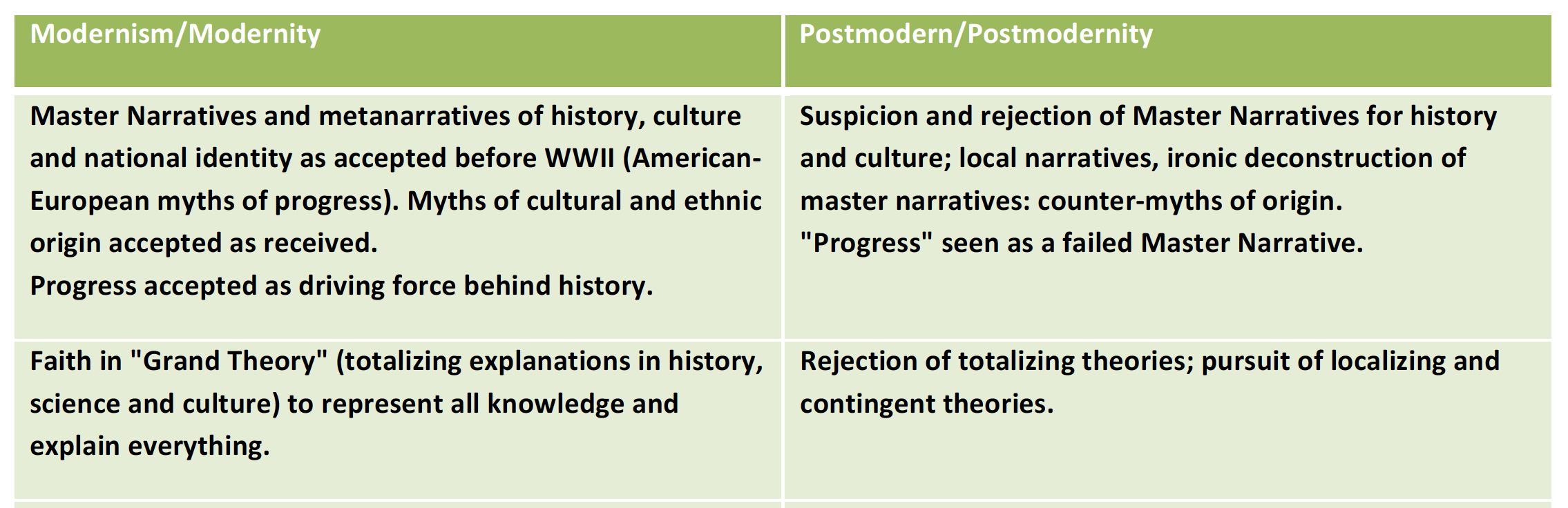
I’m revising an early essay I wrote interrogating planning theory in practice. It’ll be the first entry in my Student Papers Archive. I needed to do some background research on the two theories under scrutiny: Rational Planning and Postmodern Planning. In addition to peer reviewed journals from the planning realm, I found this exceptionally helpful chart comparing Modernism and Postmodernism.
From the URL cited on page 2, I noted the author is Professor Martin Irvine at Georgetown. But a copy-paste of the URL didn’t take me to the chart; instead it forwarded me to the professor’s homepage. And I couldn’t find the chart there. The last revision is dated 2012, but this side-by-side certainly is relevant 10 years later — and will remain so.
I want this chart to live on. I don’t know if the host site’s future update(s) will retain it. So much web ephemera is lost without us knowing. So, I’m doing my part by sharing Professor Irvine’s Modernism vs Postmodernism resource here. Researchers, check it out and please be sure to cite the original author if using the chart.
The office of Edward W. Soja at UCLA Urban Planning after the 2015 In Memoriam celebration of Ed’s life. Before going home, I posted my “Epitaph for Edward W. Soja” to say goodbye, and to promise Ed that I would keep the flame lit. Photo: Jonathan Pacheco Bell
Congratulations to my fellow UCLA Bruin planners graduating today 👏🏽 You’re the next generation of planning. We’re in good hands.
Draw on our past to inform (y)our future. See the work of Edward W. Soja, Jackie Leavitt, Leo Estrada, VC Powe, Marty Wachs, John Friedmann and many others who rest in power.
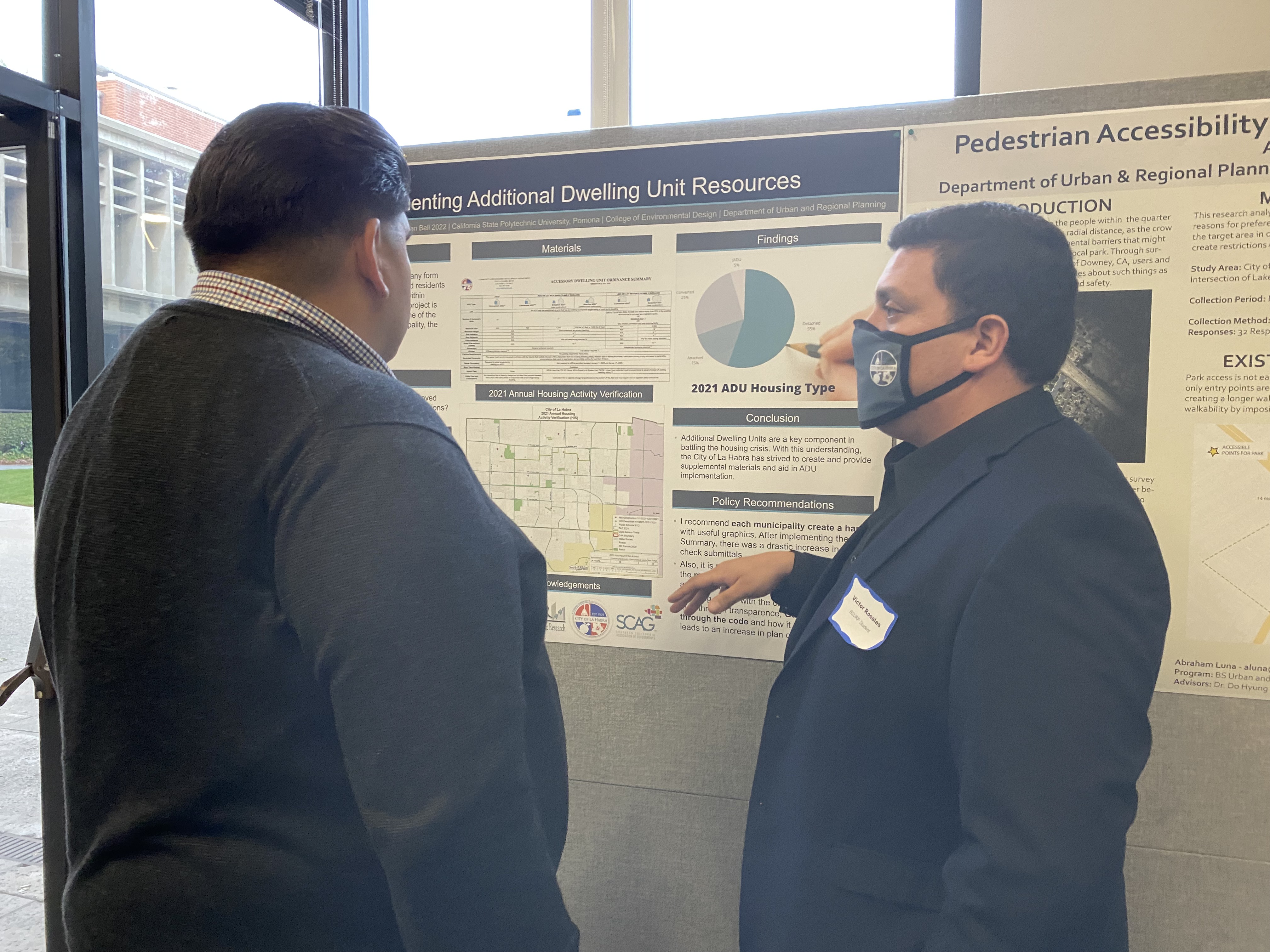
Senior Project poster by Victor Rosales. Image credit: Victor
I’m celebrating the graduates in my Senior Projects class at Cal Poly Pomona Department of Urban & Regional Planning! Today we big up this researcher:
Will ADU Resources Expedite Implementation?
By: Victor Rosales
Abstract: In the City of La Habra, California, there was not enough Accessory Dwelling Units (ADUs) being built to address the housing crisis. One of the main obstacles was a lack of ADU resources and materials available to the public. While the city’s municipal code is accessible for public review, a large portion of the community does not understand how to interpret zoning codes or how codes apply to individual projects.
With this understanding of the problem, I worked with city staff on creating supplemental ADU materials, with the intended goal of increasing the amount of ADUs built within city limits. In 2021, the city’s Senior Building Official created an ADU Summary handout with basic outlines of development standards and simple graphic aides. This newly introduced resource, along with the assistance and communication from staff to the community, resulted in an upsurge in ADU plan check submittals and new construction. City staff tracked the progression of these newly built ADUs though paid plan checks, Certificate of Occupancy, surveys, and California Department of Housing credit logs. The data showed an increased number of ADUs constructed in the last 6 months of 2021, which correlated with the timing of the implementation of the ADU Summary. By providing supplemental materials for ADUs, the City of La Habra was able to increase the amount of ADUs built in their community in 2021. Additionally, staff revised and enhanced these readily available resources to support ADU development. As a result, the amount of plan check submissions has nearly tripled in the first six months of 2022.
Upon studying the City of La Habra’s approach to ADUs, I offer several policy recommendations for resources and information that support expediting ADU implementation in cities.
Victor Rosales at CPP Senior Projects Poster Session 2022. Photo: Jonathan Pacheco Bell
Senior Project poster by Stacy Lee and Eric Ji. Image credit: Stacy and Eric
I’m celebrating the graduates in my Senior Projects class at Cal Poly Pomona Department of Urban & Regional Planning! Today we big up this team:
Wildfire Mitigation & Resilience Strategies: Best Planning Practices across Local Jurisdictions in Southern California
By: Stacy Lee & Eric Ji
Abstract: Increasing forecasts of prolonged and more severe fire seasons can be attributed to several factors: urban density growth; fire suppression and fuel buildup; and climate change. Many of these issues are amplified in Southern California, especially in the wildland-urban interface (WUI). Land-use policies must begin to proactively strategize around the immutable outbreaks of future wildfires as expanding boundaries of development and very high fire severity zones cross onto each other.
This qualitative research empirically analyzes the survey response consisting of a list of 19 planning strategies for wildfire mitigation on a Likert scale on compatibility, feasibility, and necessity of each local jurisdiction across four counties. The Counties of Los Angeles, Orange, Riverside, and San Bernardino with areas of very high fire severity zones identified by CAL FIRE were contacted with the survey request. The 18 responding jurisdiction responses scored each strategy to display the compatibility, feasibility, and necessity on a scale from 0 to 4, and cross analyzed by any implemented strategies in the corresponding jurisdictions or alternative policies in lieu of the strategies presented in the survey.
These findings are used to develop a scale of adoptable strategies based on the context of each jurisdiction as well as possible alternatives and narratives to adopting feasible strategies.
Stacy and Eric at CPP Senior Projects Poster Session 2022. Photo: Jonathan Pacheco Bell










You must be logged in to post a comment.