Near Schurr High School in Montebello, view of Eaton Fire looking north toward Pasadena. Photo: Jonathan Pacheco Bell
Originally posted on LinkedIn, this message is cross-posted on my website and facebook.
Thank you to fellow planners and community members who reached out. As the Eaton Fire grew, Alejandra and I left Pasadena for mom’s in Montebello. Not everyone had that possibility.
My heart breaks for our friends and neighbors who have suffered catastrophic losses. It is just devastating. Altadena, Pasadena, and neighboring communities are changed forever. While we collectively grieve, there is a monumental community support and mutual aid effort underway. Assistance, support, solidarity is welcome.
Before leaving our block, we donated to the Pasadena Humane Society. They are inundated with animals of all sizes needing treatment and shelter. If you would like to help our communities, consider donating to Pasadena Humane.
In 2024, what began in Florence-Firestone transformed into an international movement. Embedded Planning won.
When I started this praxis in South Central LA, some planning figureheads viewed street-level planning work with skepticism. Today, planning organizations are implementing Embedded Planning praxis as official policy. The City of Fort Wayne didn’t just adopt our approach — they embraced it fully, showing what’s possible when management supports planners working directly from community spaces.
This year validated what our community knew all along: We Cannot Plan From Our Desks.
Key transformations: • Fort Wayne’s formal implementation of Embedded Planning with full institutional support • Florence-Firestone Community Organization’s expansion of street-level programs • FFCO’s Latin Labic + Expo Kermesse bringing creative placemaking to South Central LA • Growing recognition through APA Planning Advocate and Pioneer awards • Cal Poly Pomona Urban and Regional Planning students advancing community-centered research
Looking ahead: As Embedded Planning expands globally in 2025, our focus remains clear — rebuilding trust through street-level planning while keeping our trailblazing work in Florence-Firestone as our north star.
To every planner now embedding themselves in communities, and to every community member who showed us the way: this transformation belongs to all of us. The future of planning isn’t in our offices. It’s on the streets, in the neighborhoods, with the people.
Jonathan Pacheco Bell’s Embedded Planning approach revolutionizes planning practice by emphasizing street-level planning within the community rather than traditional desk-based methods. Developed by Bell in South Central LA and publicly introduced in 2018, this praxis seeks to rebuild trust and foster meaningful relationships with marginalized communities historically harmed by inequitable planning.
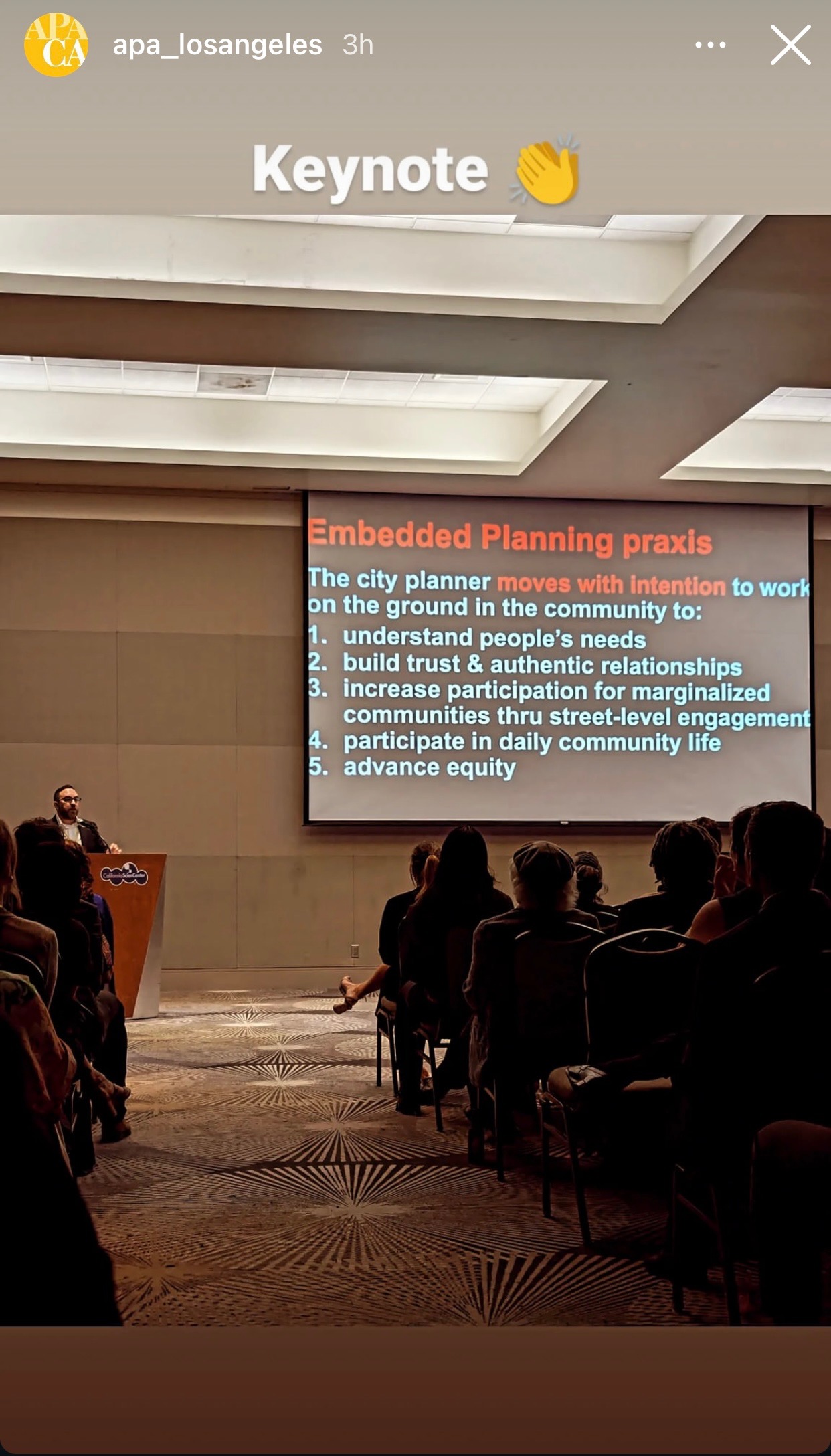
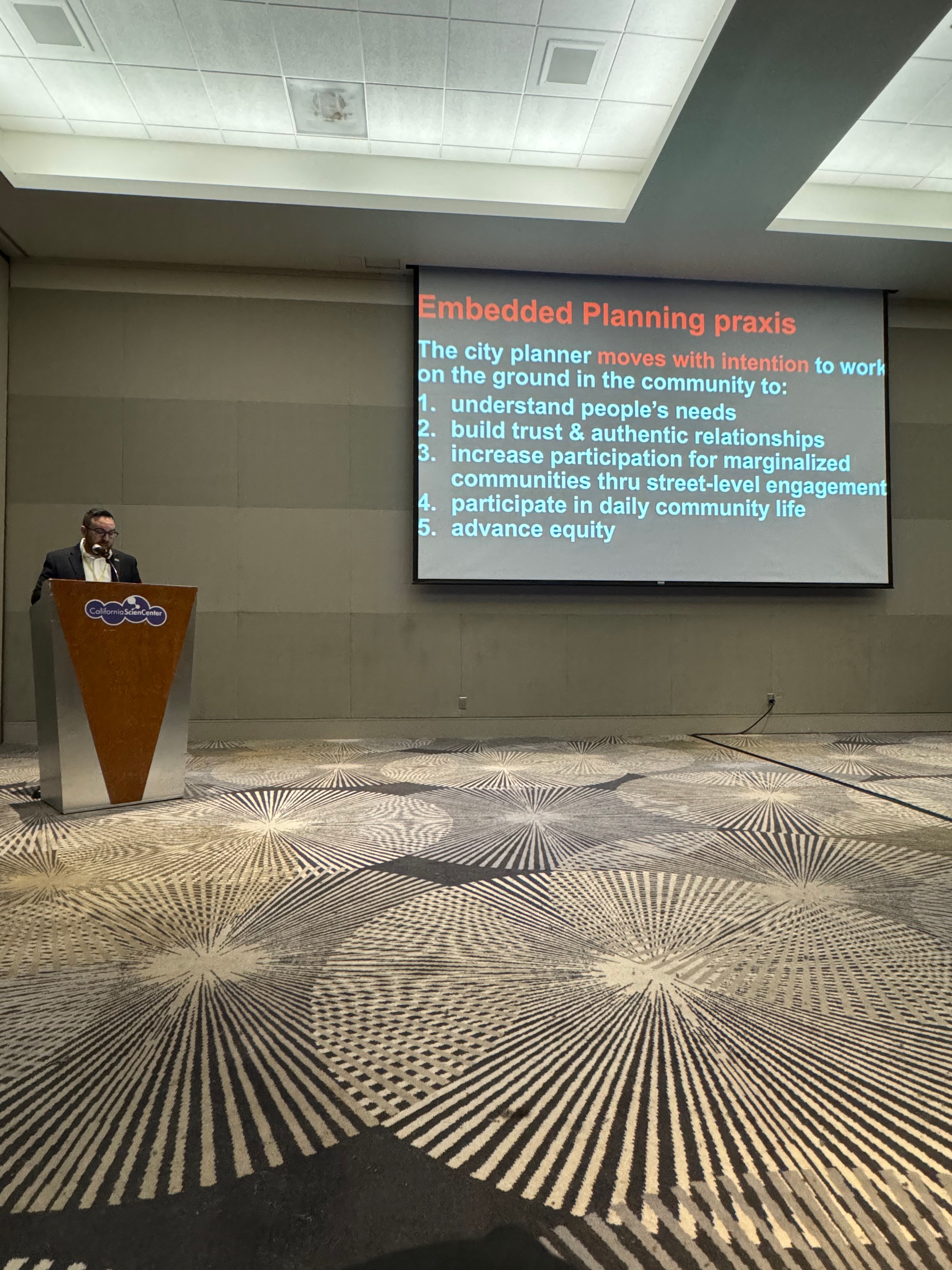
Embedded Planning involves planners working directly from community spaces and places, engaging residents in their everyday environments. This immersive approach helps planners gain a deeper understanding of local needs and aspirations, ensuring that community voices significantly shape planning decisions. By embedding themselves into neighborhoods, planners build strong, authentic relationships, moving beyond one-off, transactional, superficial consultations to create lasting and impactful partnerships.
Despite its support from communities, Embedded Planning has faced resistance from conventional planning practice and management, which has viewed this approach with skepticism. Working from the neighborhood to integrate community directly into planning processes challenges traditional methods and requires navigating complex dynamics between stakeholder expectations and regulatory constraints.
Since its inception, Embedded Planning has gained an international following among emerging planners who are eager to implement more inclusive practices. Bell’s talk will highlight real-world case studies, reflections, and personal experiences, while also showcasing the approach’s challenges and benefits. Attendees will learn how Embedded Planning fosters trust, informs better decision-making, and promotes more equitable community development. This emerging movement represents a crucial shift towards centering planning as an active and continuous process from within the community and represents the future of planning.
Jonathan Pacheco Bell is a Senior Embedded Planner at 4LEAF, Inc., Lecturer in Urban & Regional Planning at Cal Poly Pomona, and Vice President/Public Information Officer of the nonprofit Florence-Firestone Community Organization in South Central Los Angeles.
A practicing urban planner with over 20 years of experience spanning the public, private, and nonprofit sectors, Jonathan has expertise in community engagement, participatory design, inclusive public space, long-range plans, zoning enforcement, ordinance development, planning studies, and project management.
During his tenure as a County planner in South Central LA’s Florence-Firestone community, Jonathan created Embedded Planning. This praxis situates the work of planners on the street-level, not behind a desk, to increase equity and participation for historically marginalized populations harmed by inequitable planning. What began in South Central is now an international movement of Embedded Planners with feet on the street. Jonathan has guest lectured widely on Embedded Planning praxis. His speaking engagements include Columbia University, UCLA, Ohio State, University of Utah, Pratt Institute, Stanford Engineering, Woodbury University, and East LA College Architecture; state and national APA Conferences in California, Iowa, and Louisiana; and public forums such as AARP Livable Communities, City Parks Alliance, and the SF Urban Film Fest.
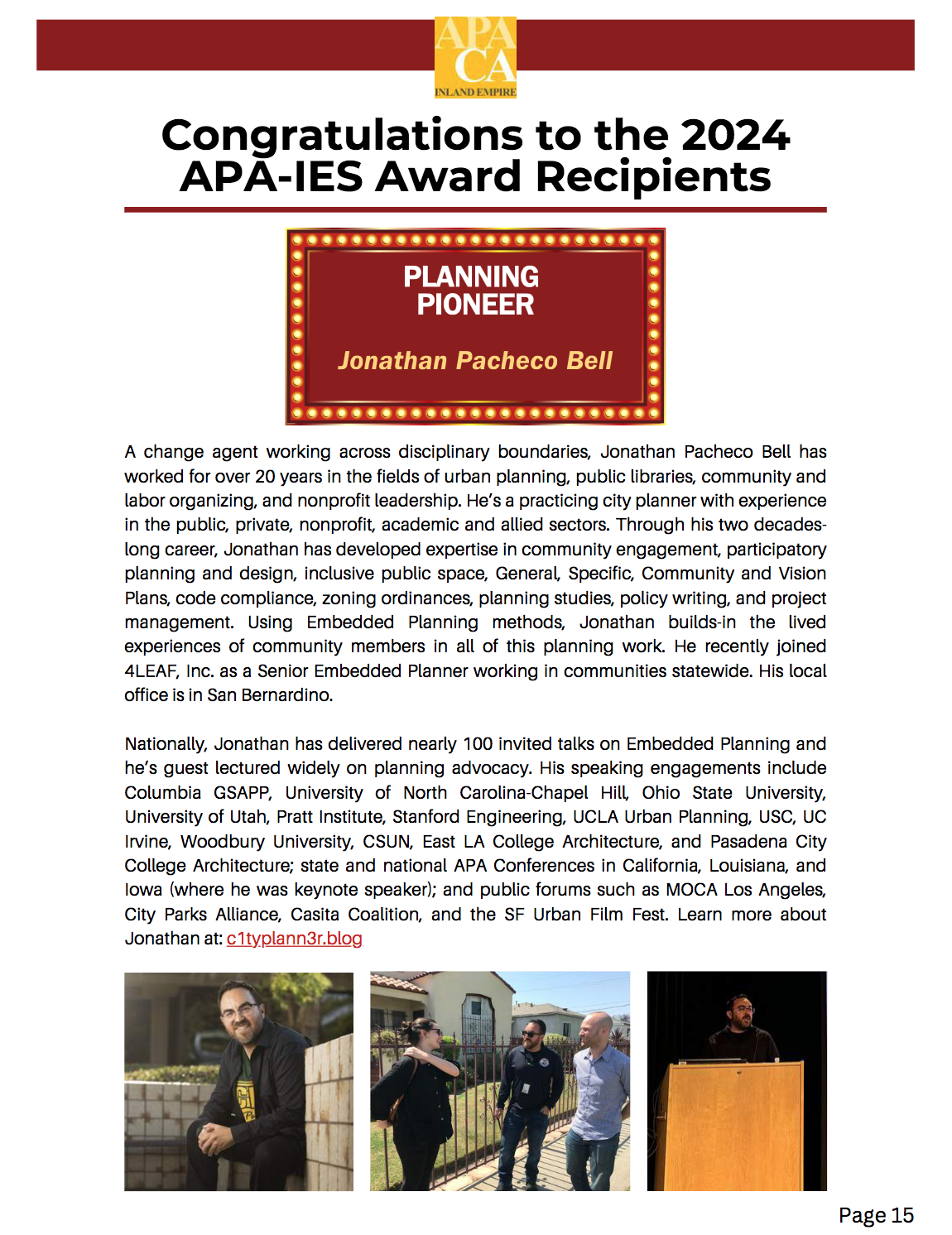
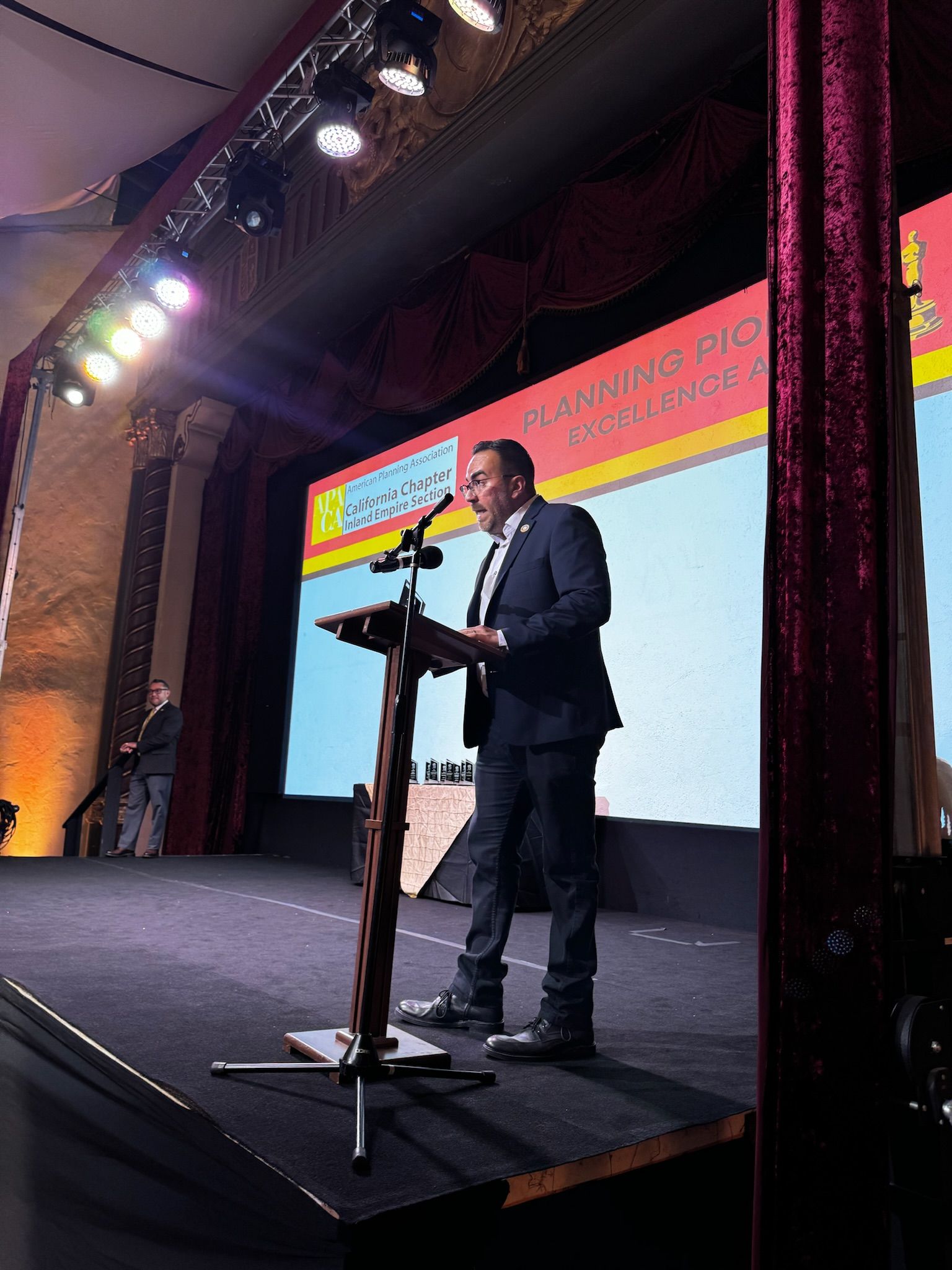
Jonathan has been a leader in the American Planning Association for over a decade. He’s a member of the Latinos and Planning Division and is published in APA’s practitioner magazine, Planning. He previously served as APA Los Angeles Social Media Director and was the Southern California representative on the APA National Social Equity Task Force. This year, Jonathan proudly received the Planning Advocate Award of Excellence from APA Los Angeles and the Planning Pioneer Award of Excellence from APA Inland Empire.
Born and raised in LA’s Latino/a Eastside, Jonathan serves as a mentor to First Gen students and emerging planners. A product of the California public school system from kindergarten to graduate school, he holds an M.A. in Urban Planning from UCLA Luskin School of Public Affairs, and additional degrees in library and information science, political science, and architecture. Connect at c1typlann3r.blog.
Identifying the Constraints to Implementing a Vegetation Barrier along Valley Boulevard. By: Taylor Galindo
Celebrating the graduates in my 2024 Senior Project class at Cal Poly Pomona Department of Urban and Regional Planning. Today we uplift this researcher:
Identifying the Constraints to Implementing a Vegetation Barrier along Valley Boulevard
By: Taylor Francis Galindo
Abstract:
Ambient air pollution is a significant health concern where industrial zones directly border residential zones. Numerous studies suggest the effectiveness of implementing vegetation to serve as a mitigative strategy in addressing ambient air pollution. This paper will examine the complexities of implementing vegetation as a barrier to mitigate air pollution in an environmental justice community located along Valley Boulevard in Southern California’s San Gabriel Valley. The qualitative data featured in the study collected interviews with local community stakeholders and professionals from various professional backgrounds. These insights provide a foundation of what agencies would need to overcome to implement a vegetation barrier along Valley Boulevard.
Keywords: Public Health, Environmental Injustice, Tree Canopy, Green Barriers, Sustainable Solutions, Ambient Air Pollution, and Industrial Zoning
Taylor presenting at the 2024 Cal Poly Pomona Urban & Regional Planning Senior Projects Day. Photo: Jonathan Pacheco Bell
Multi-use Trails: A Path to a Third Place at The Tracks at Brea Trail. By: David Pascual
Celebrating the graduates in my 2024 Senior Project class at Cal Poly Pomona Department of Urban and Regional Planning. Today we uplift this researcher:
Multi-use Trails: A Path to a Third Place at The Tracks at Brea Trail
By: David Pascual
Abstract:
This research examines the role of The Tracks at Brea Trail (TAB trail), a multi-use trail located in Brea, California, in Orange County, as a new Third Place among the existing Third Places that Americans identify, such as coffee shops, restaurants, libraries, shops, and even local community centers. Currently, the American adult population is experiencing high stress levels and sedentary lifestyles, increasing mental health problems and fatalities. With rising concerns about mental well-being among adults, there are limited Third Places to improve well-being, which is difficult to do outside peaceful environments.
Eleven walking tours were conducted with thirteen participants and photo evidence was taken, documenting how individuals perceive the greenspace and trail design elements TAB trail offers. The participants’ commentary highlighted their limited knowledge of Third Places, awareness of wildflowers and treescapes along the trail, and sense of isolation in certain trail sections. Participants who experienced distress commented that the trail helped improve their current emotions.
Multi-use trails shed awareness on how transportation planners must consider the greenspaces that individuals use to enhance their well-being while preserving the natural environment for local wildlife and plants and creating sections along those greenspaces. Cities and planners need to move forward in promoting spaces in and among multi-use trails to improve an individual’s social and mental well-being.
David presenting at the 2024 Cal Poly Pomona Urban & Regional Planning Senior Projects Day. Photo: Jonathan Pacheco Bell
Roles of Place Design Between Conventional and Student Housing in South Central Los Angeles. By: Osvaldo Martinez
Celebrating the graduates in my 2024 Senior Project class at Cal Poly Pomona Department of Urban and Regional Planning. Today we uplift this researcher:
Roles of Place Design in Creating a Sense of Community Between Conventional Homes and Student Housing in South Central Los Angeles
By: Osvaldo Martinez
Abstract:
For the last 4 to 5 years, the community around the University of Southern California in South Central LA has experienced an increase in student housing development where conventional, longtime residents live. This development wave not only introduces student housing in new neighborhoods but also implements unprecedented design that strays from existing neighborhood architectural styles and densities. This phenomenon raises the question of how these new forms of student housing affect residents’ perceptions of community identity, and how it affects community interactions with USC students.
Through qualitative research, I interviewed residents about new housing design and social interactions with USC students to understand the role of place design in creating a cohesive community. Residents agreed that the new forms of student housing should align with the community’s existing architectural styles, and that new student housing is being built to profit from the student market. Many residents felt that housing developers were intentional about creating a brand within the neighborhood rather than making developments that contribute to the neighborhood.
Osvaldo presenting at the 2024 Cal Poly Pomona Urban & Regional Planning Senior Projects Day. Photo: Jonathan Pacheco Bell
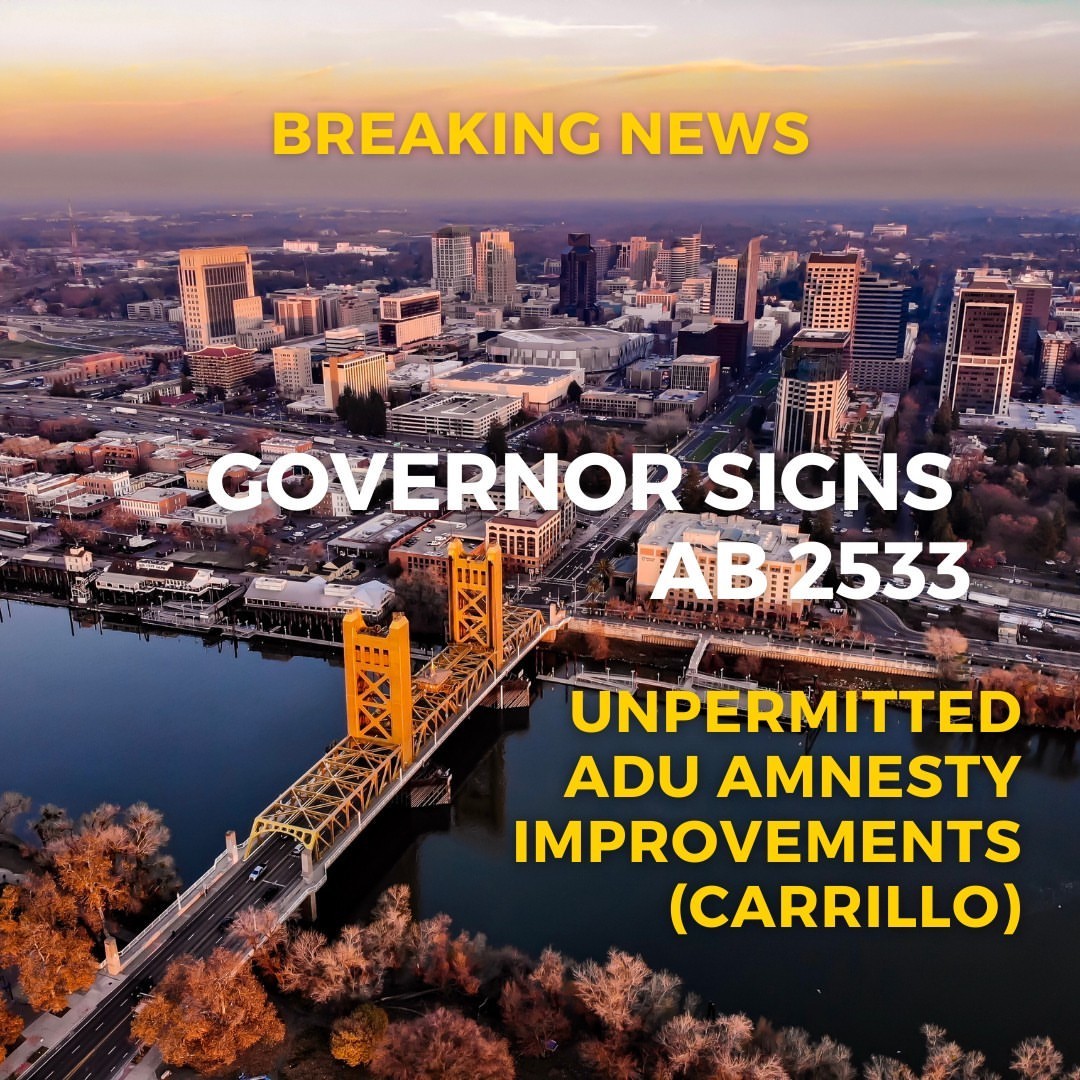
Governor Gavin Newsom has signed AB 2533 expanding amnesty for unpermitted ADUs. I’m proudly part of this effort in partnership with Casita Coalition, and the community of Florence-Firestone plays a role in the story. Shout out to Assemblymember Carrillo for authoring the legislation. Check out my reflections on AB 2533 as a former Zoning Enforcement Planner in Casita Coalition’s article authored by Board Chair Rafael Perez: https://www.casitacoalition.org/casita-coalition-blog/bringing-californias-hidden-housing-out-of-the-shadows-adu-amnesty-reform
From Casita Coalition social media:
Exciting News! Governor Newsom has signed Casita-sponsored AB 2533 into law! This bill is a game changer for legalizing unpermitted ADUs, making it easier, more affordable, and predictable for homeowners. Now, more homeowners can bring their units up to safety standards without breaking the bank, helping to preserve a critical segment of California’s naturally affordable rental housing market. This is a huge win for renters, homeowners, and housing stability in our communities! We thank Asm. Carrillo for championing this effort and everyone who supported this vital step toward advancing housing equity and preserving much-needed affordable homes. Our Board Chair, Rafael Perez, has authored a blog on AB 2355, titled “Bringing California’s Hidden Housing Out of the Shadows: ADU Amnesty Reform.” It features powerful insights from urban planner Jonathan Pacheco Bell @c1typlann3r and remarks from Assemblymember Juan Carrillo, highlighting the positive benefits this reform will unlock for communities.
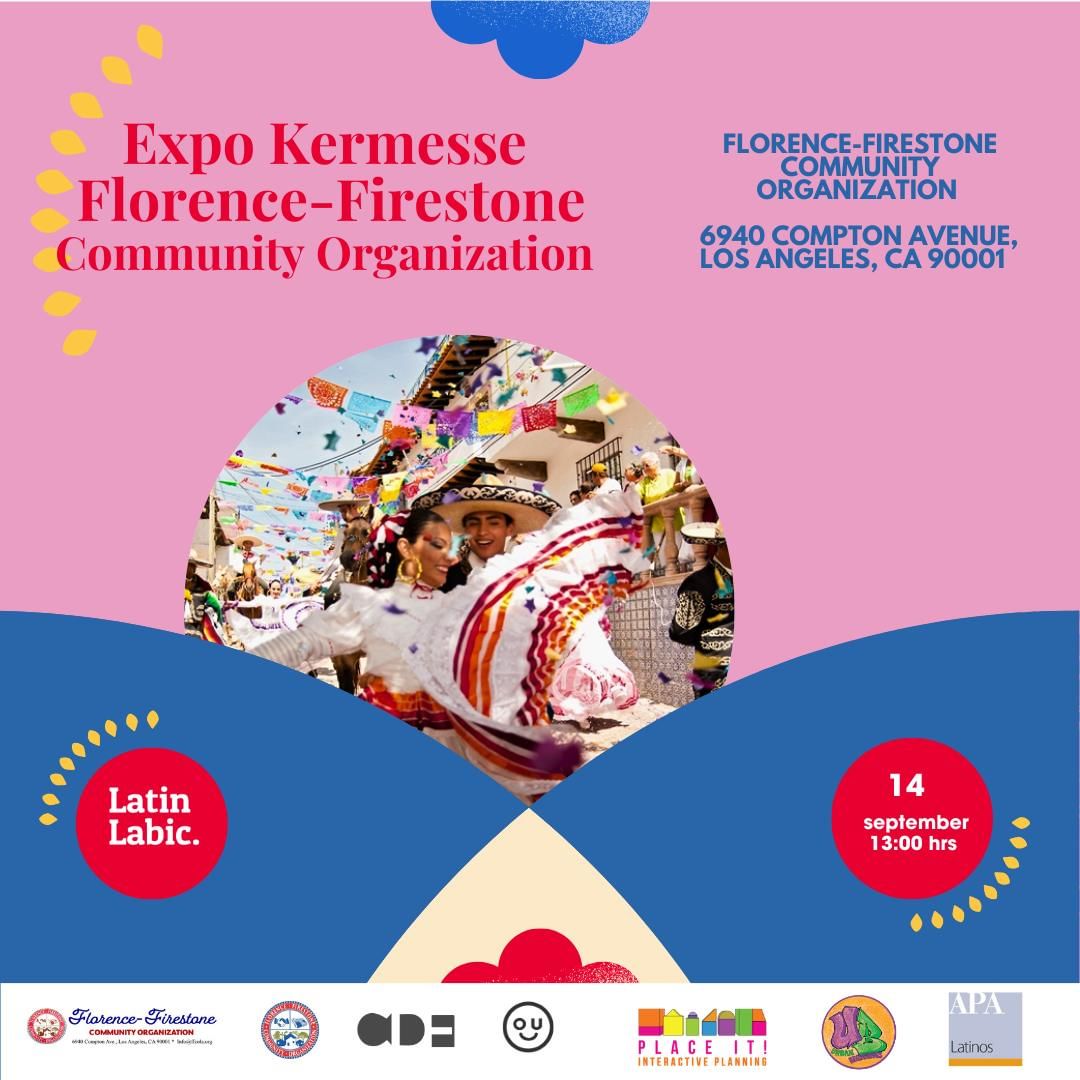
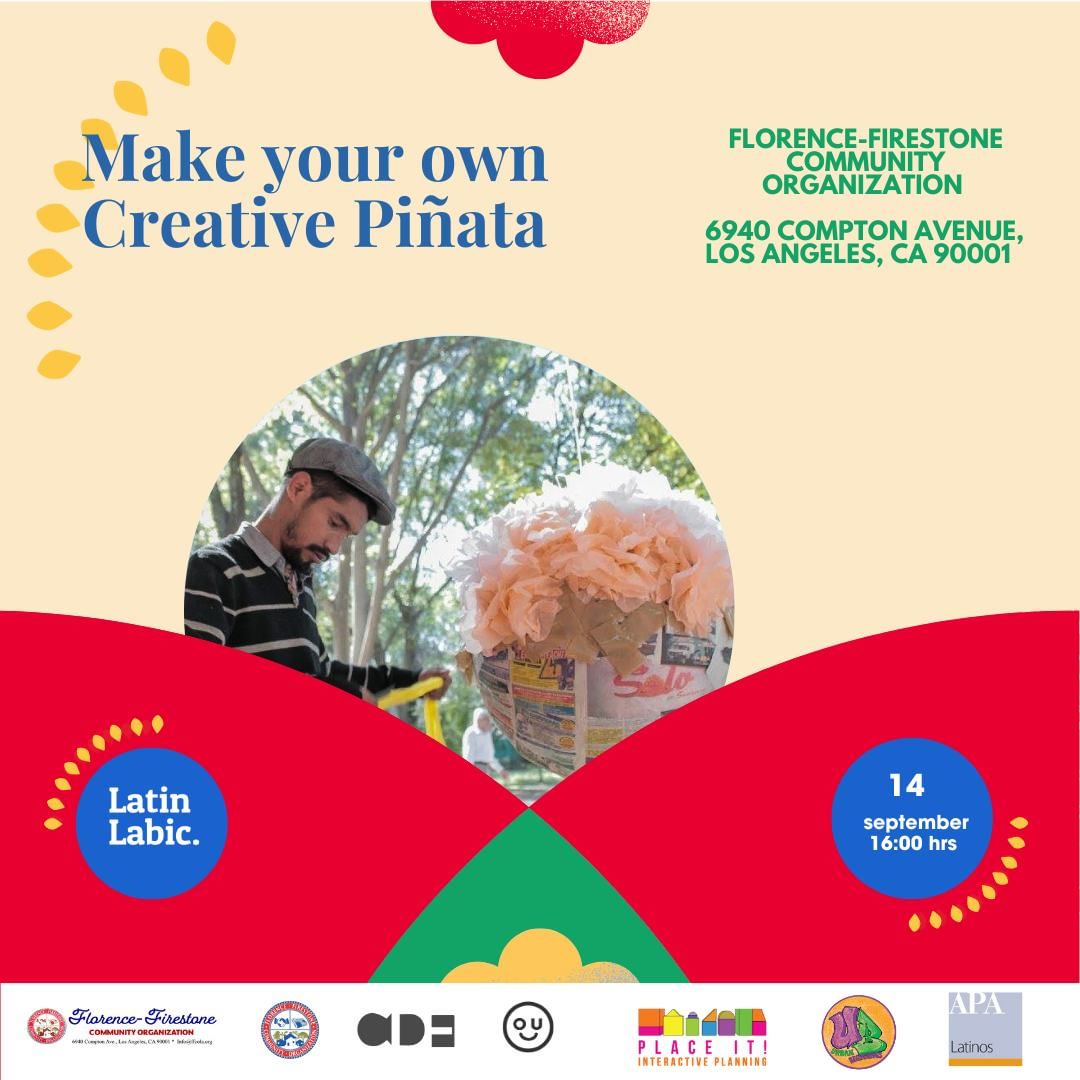
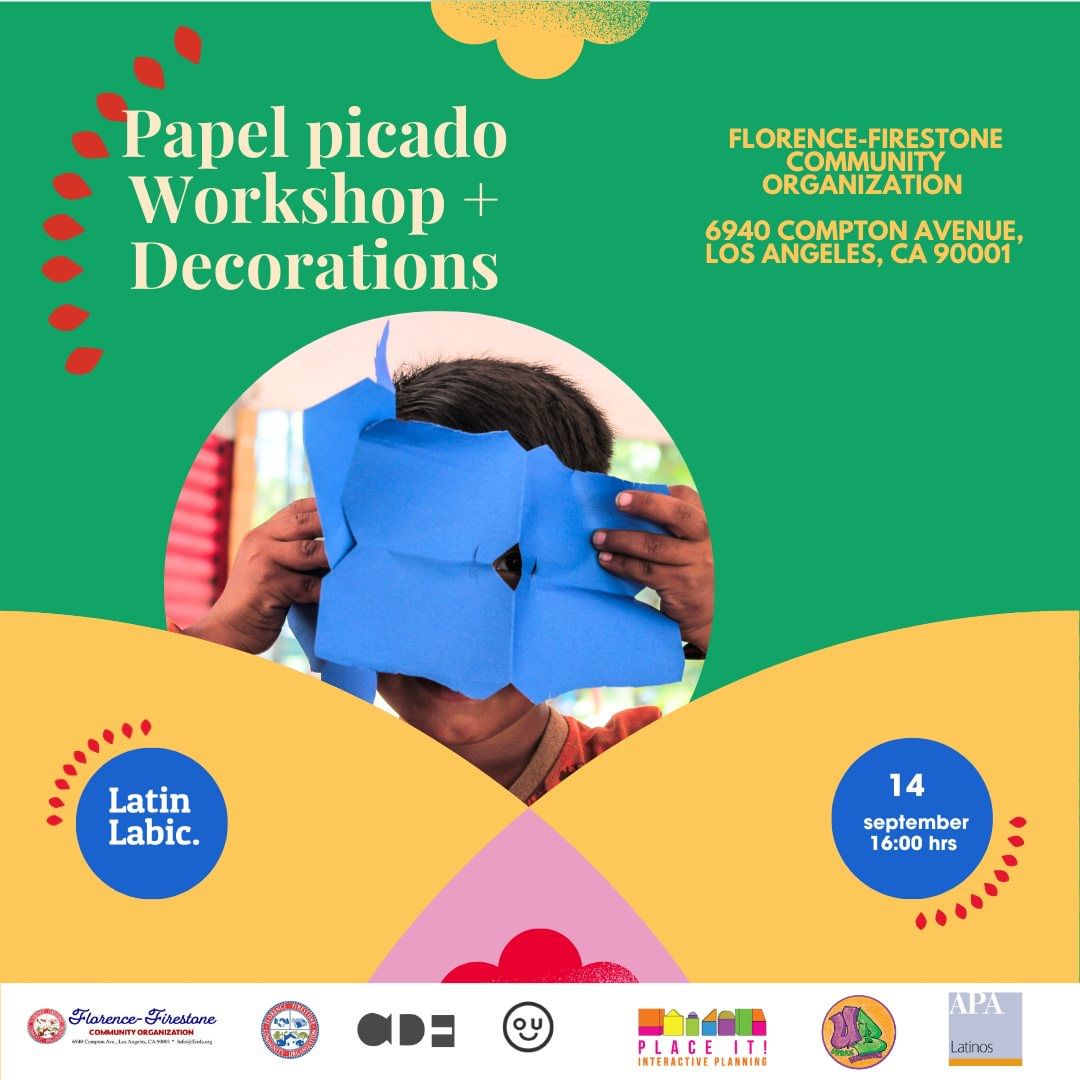
Latin Labic placemaking event and expo kermesse Saturday, September 14, 2024 at the Florence-Firestone Community Organization. With Ortopedia Urbana, Urban Beginnings podcast, APA Latinos and Planning, and Place It! Interactive Planning. Everyone is invited! Come through.
I’m doing an IG Live Sept 5th at 6pm Pacific with Elizabeth Gómez Ibarra and Ortopedia Urbana. We’ll discuss the social history, planning innovations, and future of the Florence-Firestone community in South Central LA. The conversation is a precursor to our inaugural Latin Labic placemaking event at the Florence-Firestone Community Organization on 9/14! Join the conversation.
I was interviewed by Abigail Bassett in the Observer for this article on fake jobs. I told the story of receiving a cold call offering me a job at an architecture firm that does not exist.
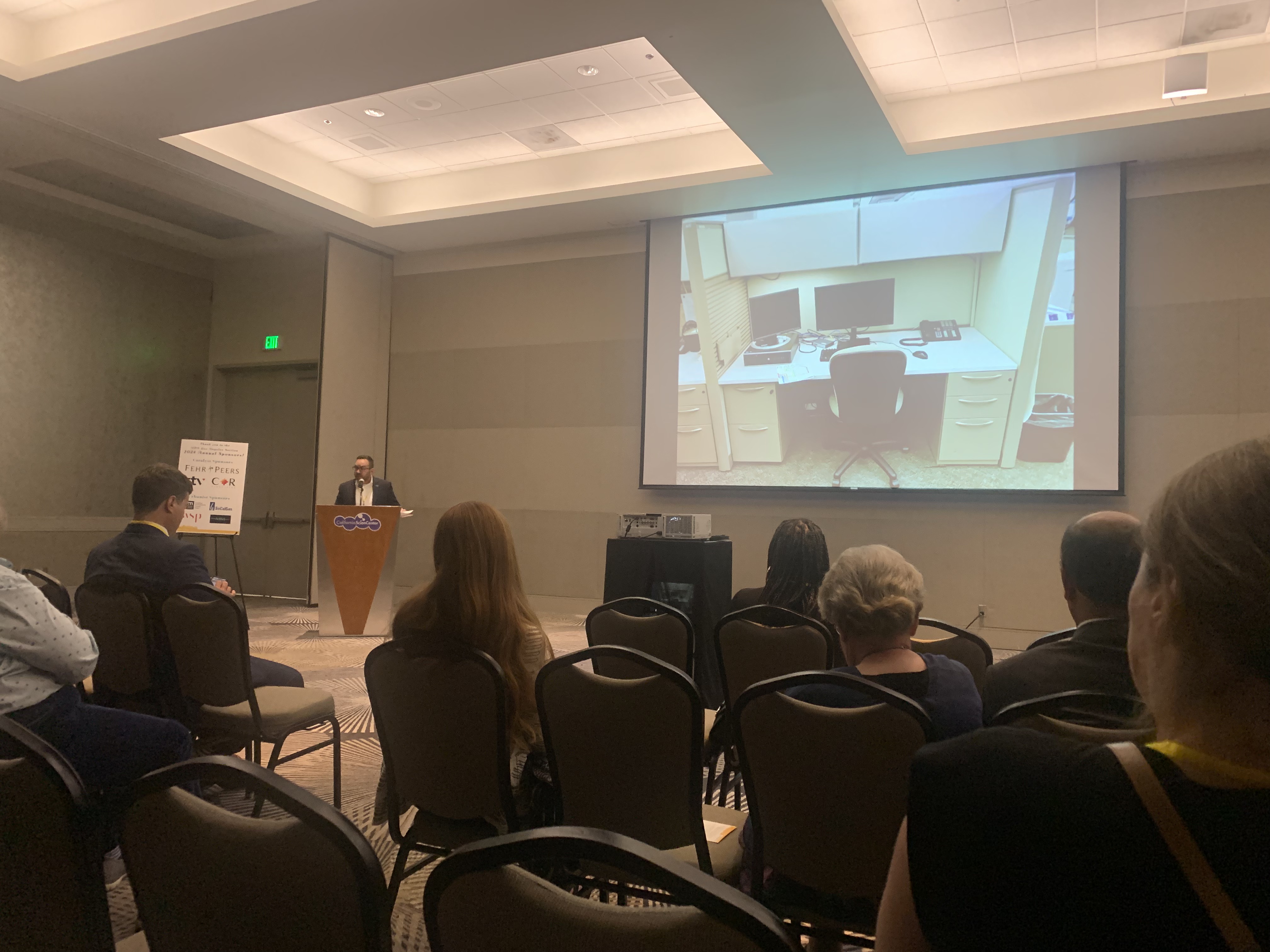
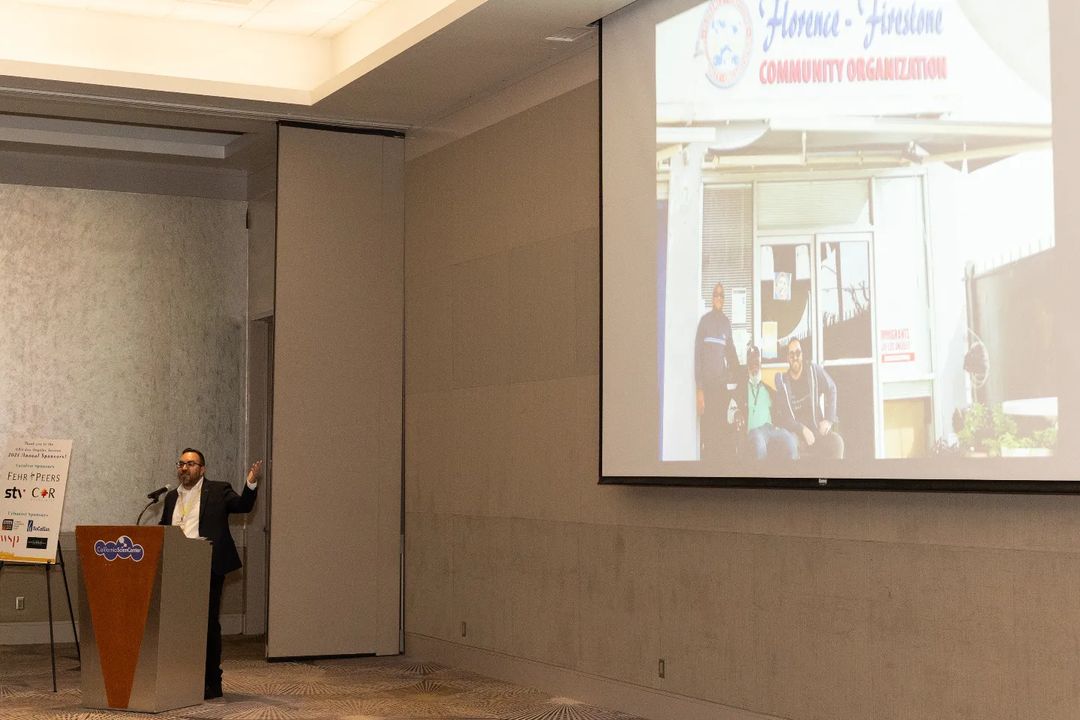
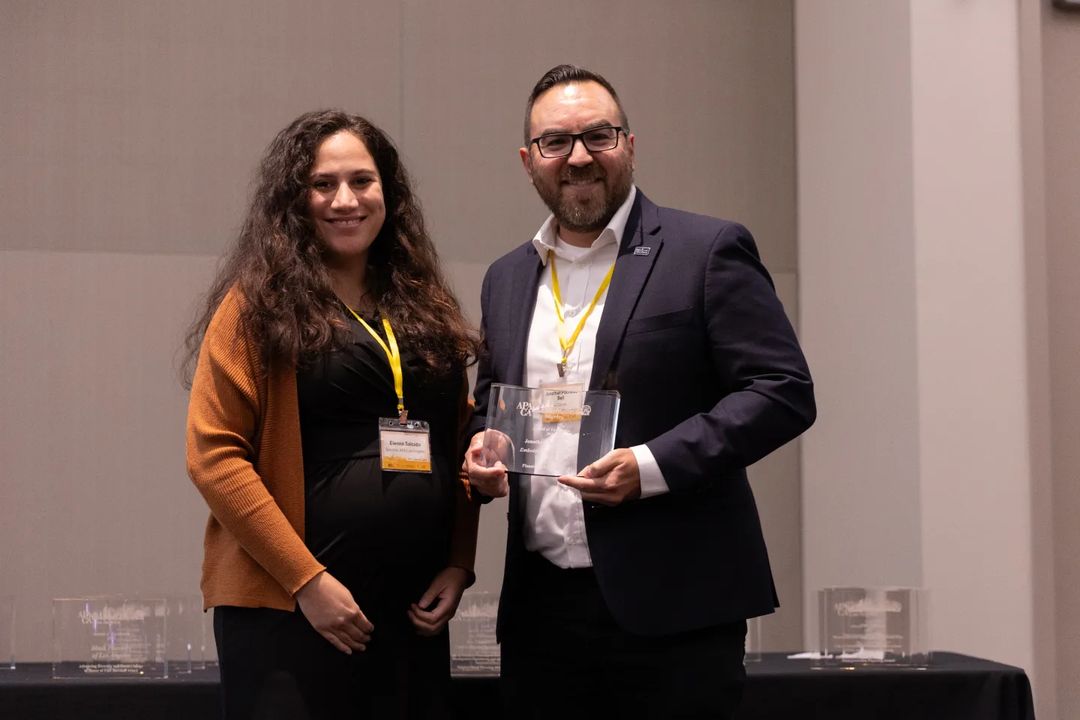
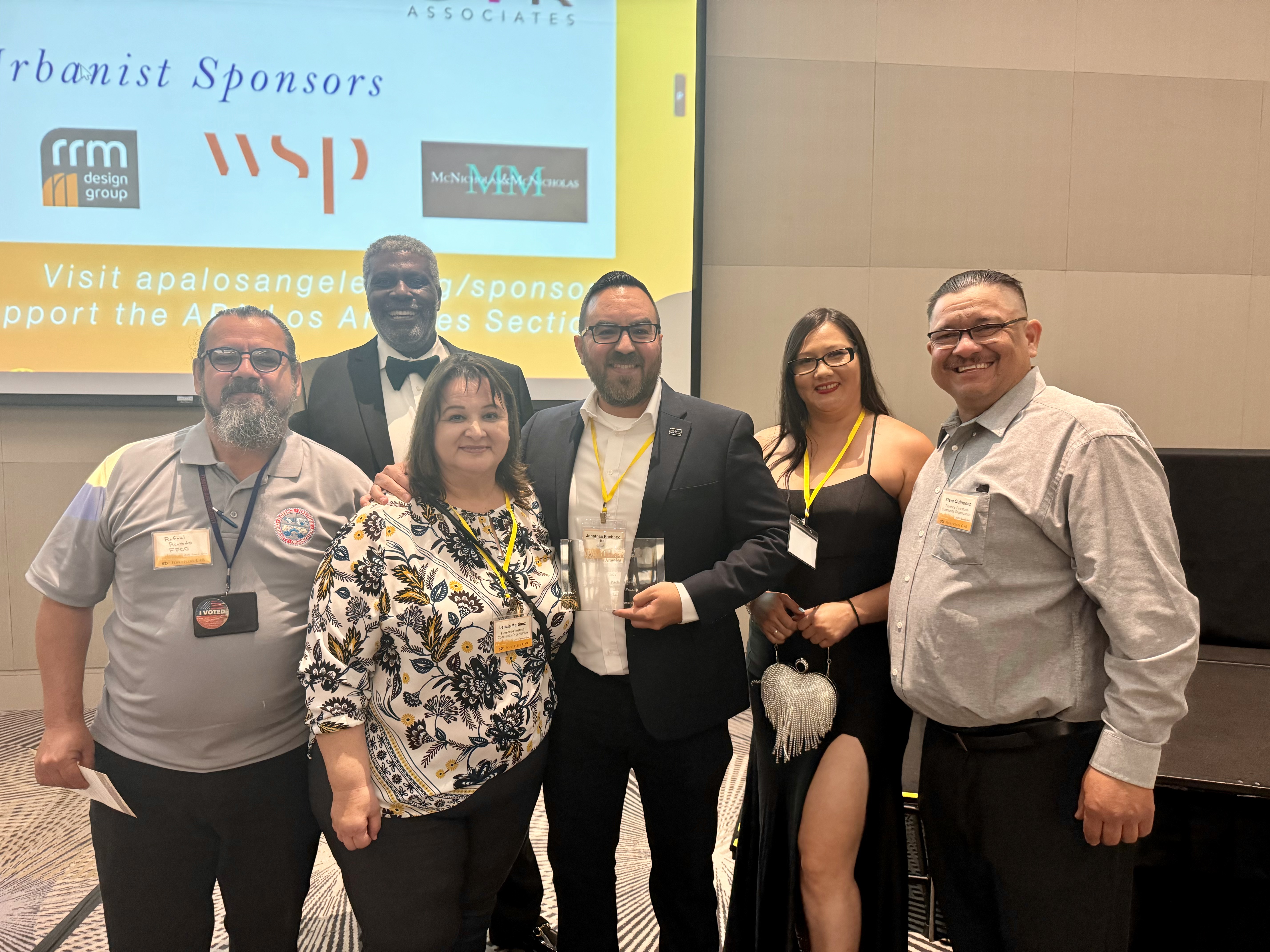
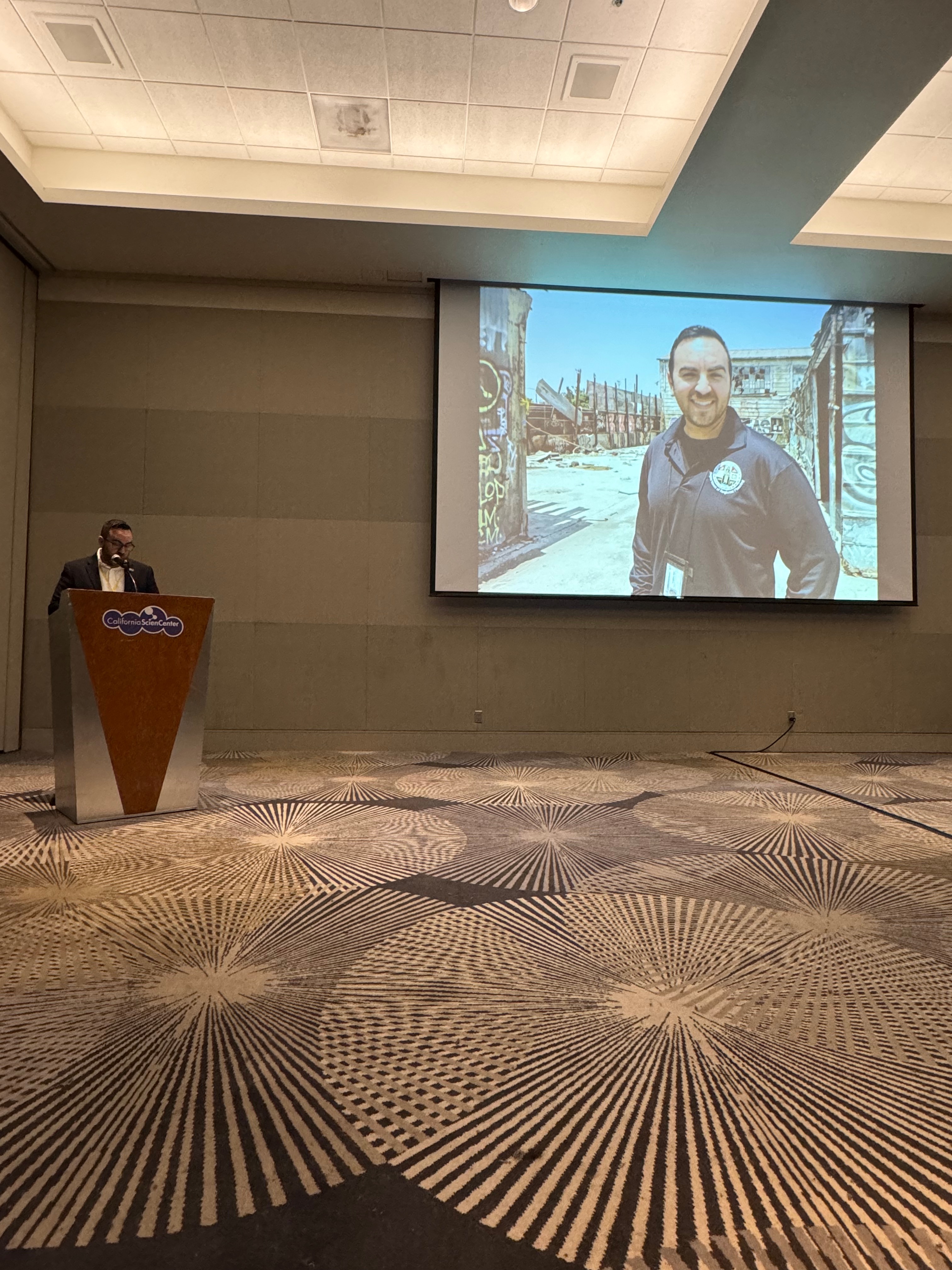
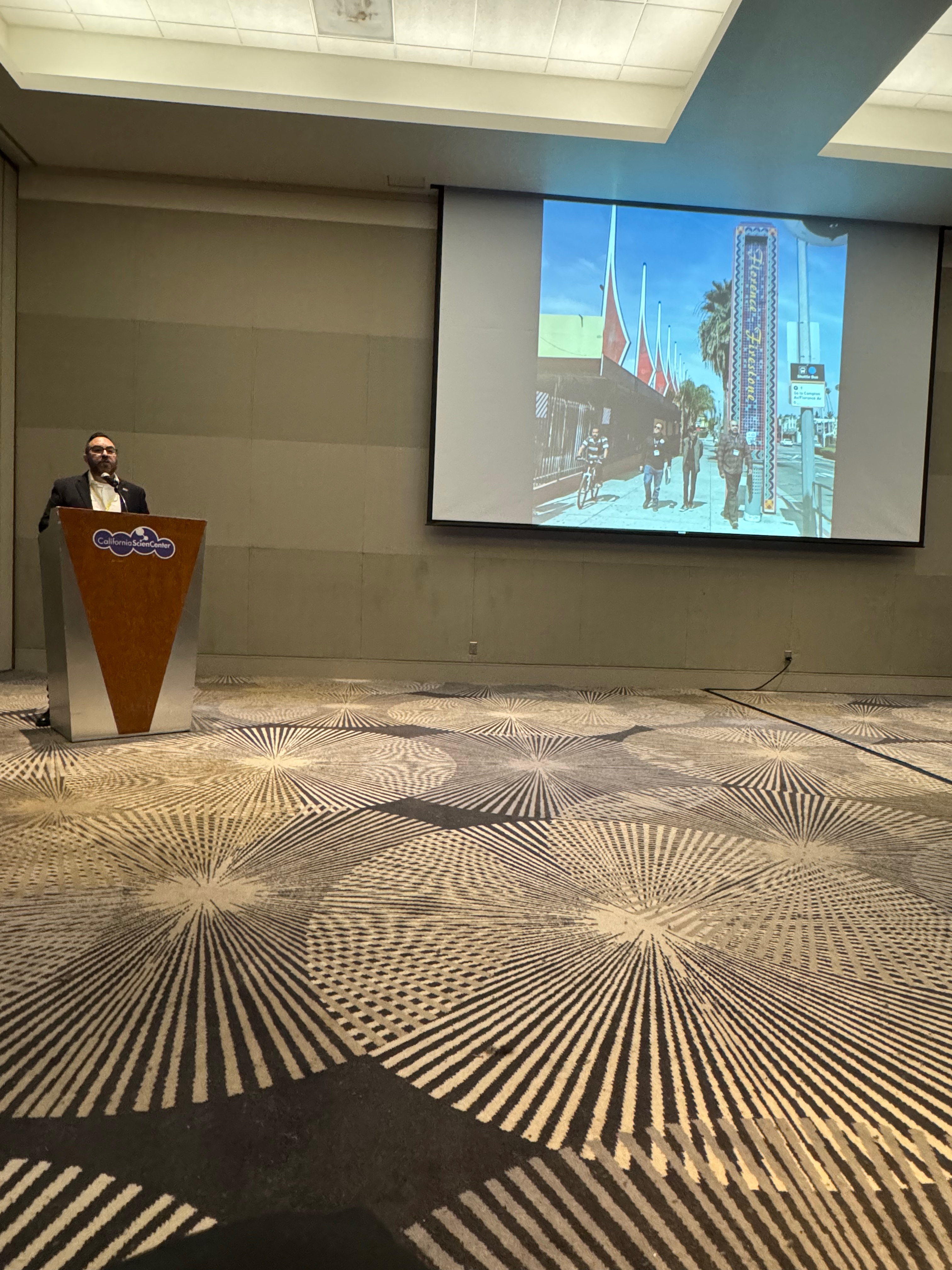
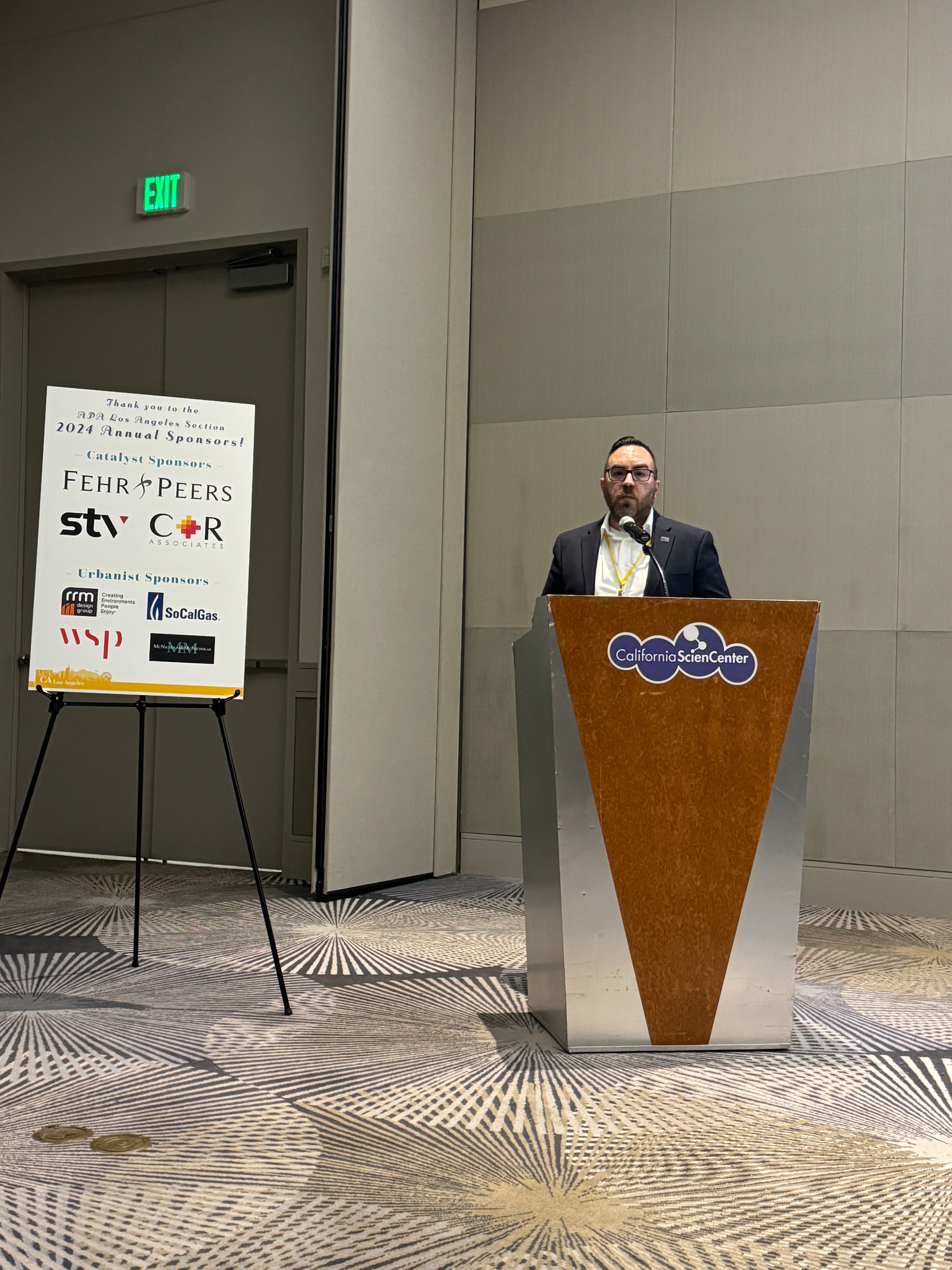
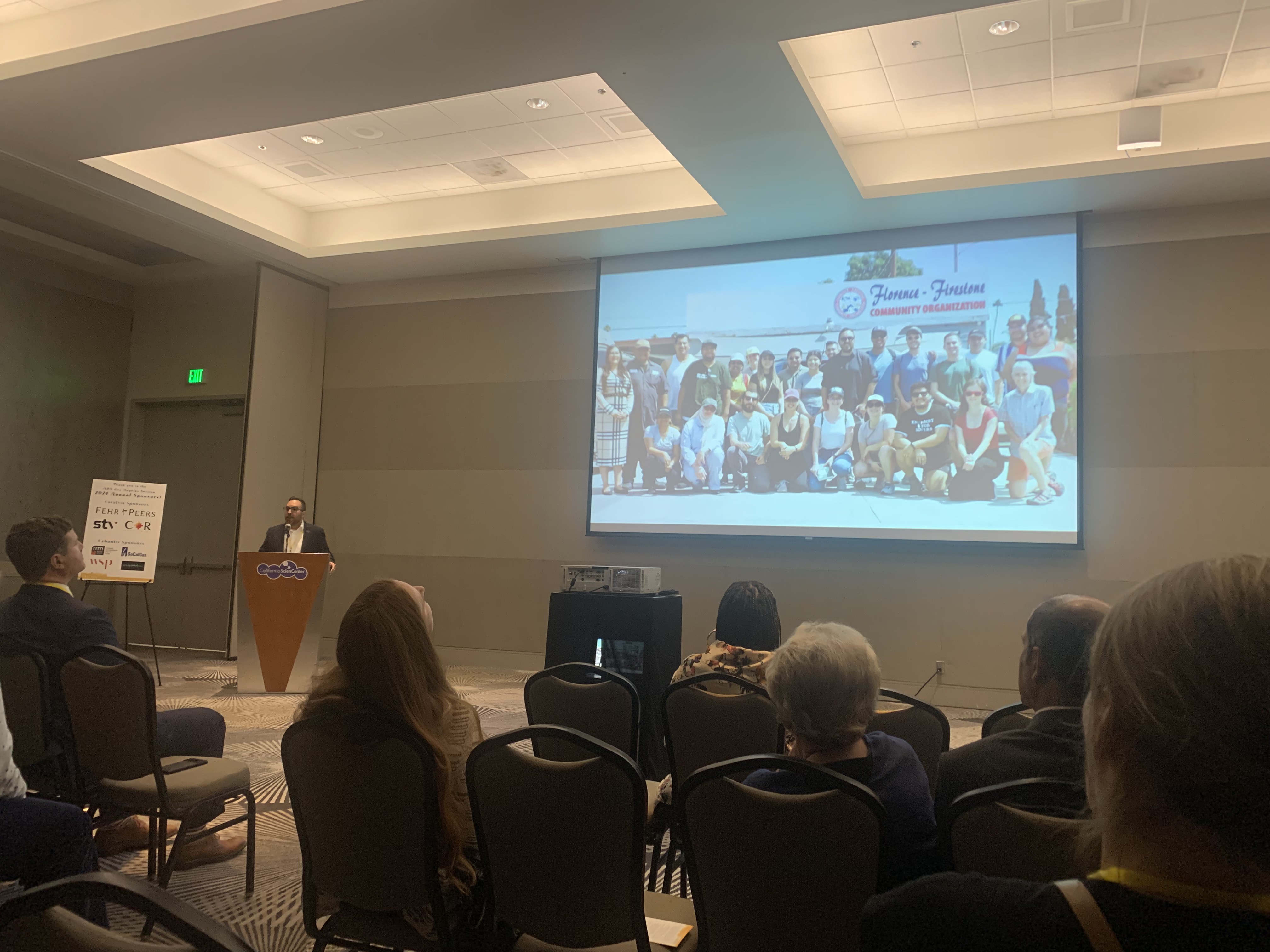
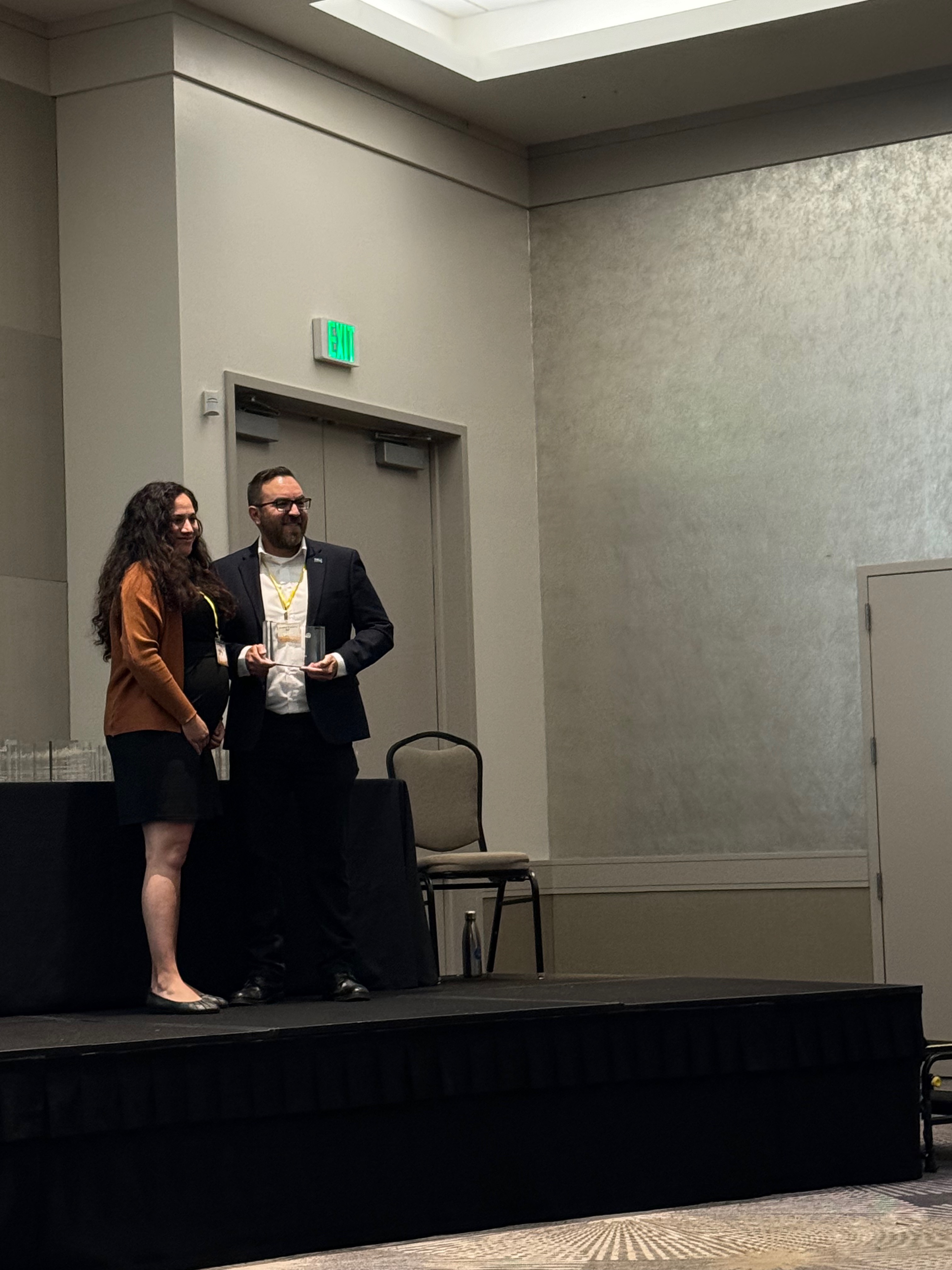
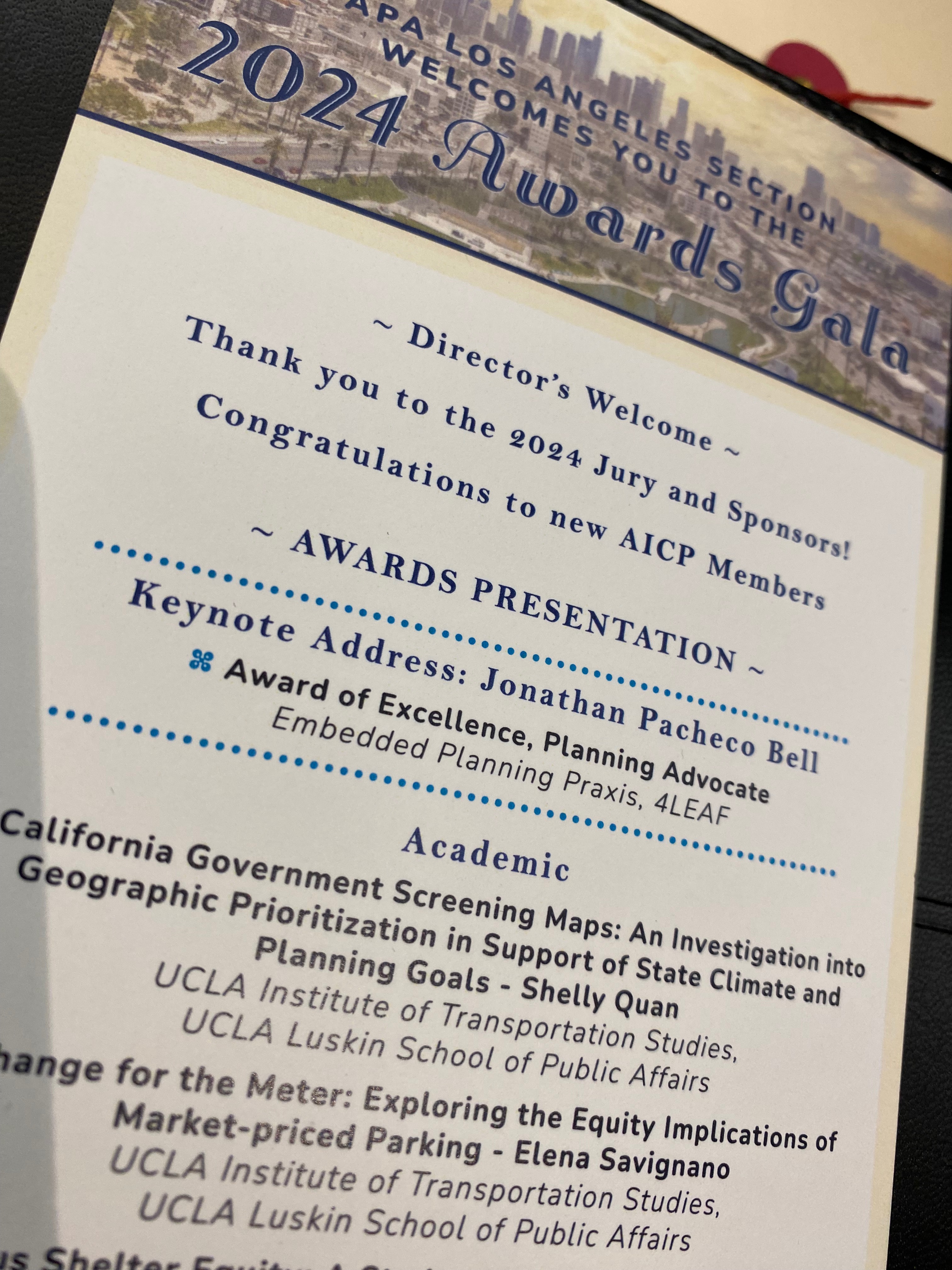
On June 25, I received the Planning Advocate Award 2024 and delivered the invited keynote on Embedded Planning at the APA Los Angeles annual awards gala. I thank my colleagues for the recognition and support! It means a lot coming from my home section.
As I wrote after the APA Inland Empire awards, and as I shared in the LA keynote, our #EmbeddedPlanning movement won. What began in Florence-Firestone is now a planning praxis in other states, regions, countries, and hemispheres.
For real, our #EmbeddedPlanning movement won. What began in Florence-Firestone is now a praxis in San Bernardino and Riverside counties and far beyond — in other states, territories, countries, and hemispheres.
This ain’t “me,” it’s “we.” We have built the future of planning.

























You must be logged in to post a comment.