Podcast: Embedded Planning in the Plains of Id

Excerpt of South Central LA Thick Map for “Flatlands: We Cannot Pod From Our Desks”

In November 2020, I was interviewed by grad students from the UCLA Urban Humanities Initiative. Their research methods seminar examined LA urban theory + praxis through the lens of Reyner Banham’s Los Angeles: The Architecture of Four Ecologies (1971).

I spoke at length about @EmbeddedPlanning praxis, west coast hip hop origins, and South Central LA.

The group distilled our conversation into a dope podcast called, “Flatlands: We Cannot Pod From Our Desks.”

Listen to my podcast interview and view the companion Thick Map of South Central LA — portion of it is this post’s image. Check out all project podcasts and infographics.

Thank you to Samantha Solis, Miranda Hirujo-Rincon, Carrie Gammell, and Celia Sanchez Zelaya.

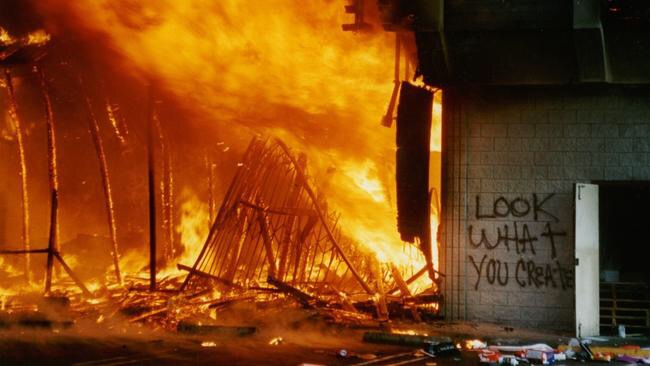
The 1992 Los Angeles Uprising began 25 years ago today

Today marks the 25th anniversary of the start of the 1992 Los Angeles Uprising.

I urge everyone to experience the immersive exhibits “No Justice, No Peace: LA 1992” and “Trouble Every Day: LA 1965/1992” at the California African American Museum.

The exhibits took me back to 1992, seeing the smoke plumes and ash from mom’s house in Montebello, thinking NWA had warned us this was coming again.

Today, some things are better in South Central L.A. Our SCLA unincorporated communities are rising through strong partnerships and civic engagement. But far too many structural inequalities throughout South Central remain.

Will history repeat a third time in L.A.?

The Dingbat is Dead. Long Live the Dingbat!

dingbat-2-0-cover

You know the Dingbat apartment building even if you don’t know its history. Architecture historian Reyner Banham coined the Dingbat phrase in the 1970s. It’s that clunky stucco box with a quirky facade perched precariously above parking spaces. Maligned by some, revered by many, studied ad infinitum: the Dingbat is distinctively “L.A.” 

The newest scholarship on this typology is the delightful Dingbat 2.0: The Iconic Los Angeles Apartment as Projection of a Metropolis. This book is a meticulous and exhaustive analysis of one of the most misunderstood building types in Los Angeles. I recommend it highly.

The book’s many essays illuminate the Dingbat’s origins, meaning(s), and (possible) future(s). Pictures are plentiful. Diagrams and photo simulations abound. A newly developed Dingbat taxonomy provides a handy guidebook for spotting them in the environment. And whereas prior studies focus almost exclusively on the Dingbat’s unmistakable facade, Dingbat 2.0 ventures to step inside. Residents share what it’s like to live in this particular form of multifamily housing. This new dimension brings us closer to a “complete comprehension” of the Dingbat.

Dingbat 2.0 is a must-read for urbanists, architects, historians, housing advocates, and everyday Angelenos.

Shout out to Los Angeles Forum for Architecture and Urban Design and DoppelHouse Press for bringing this to life. The book is helping me finish my own ‘little polemic’ on a Dingbat near me.

South Central Los Angeles: Embrace, don’t erase, local history

south-central-los-angeles-slauson-at-hooper
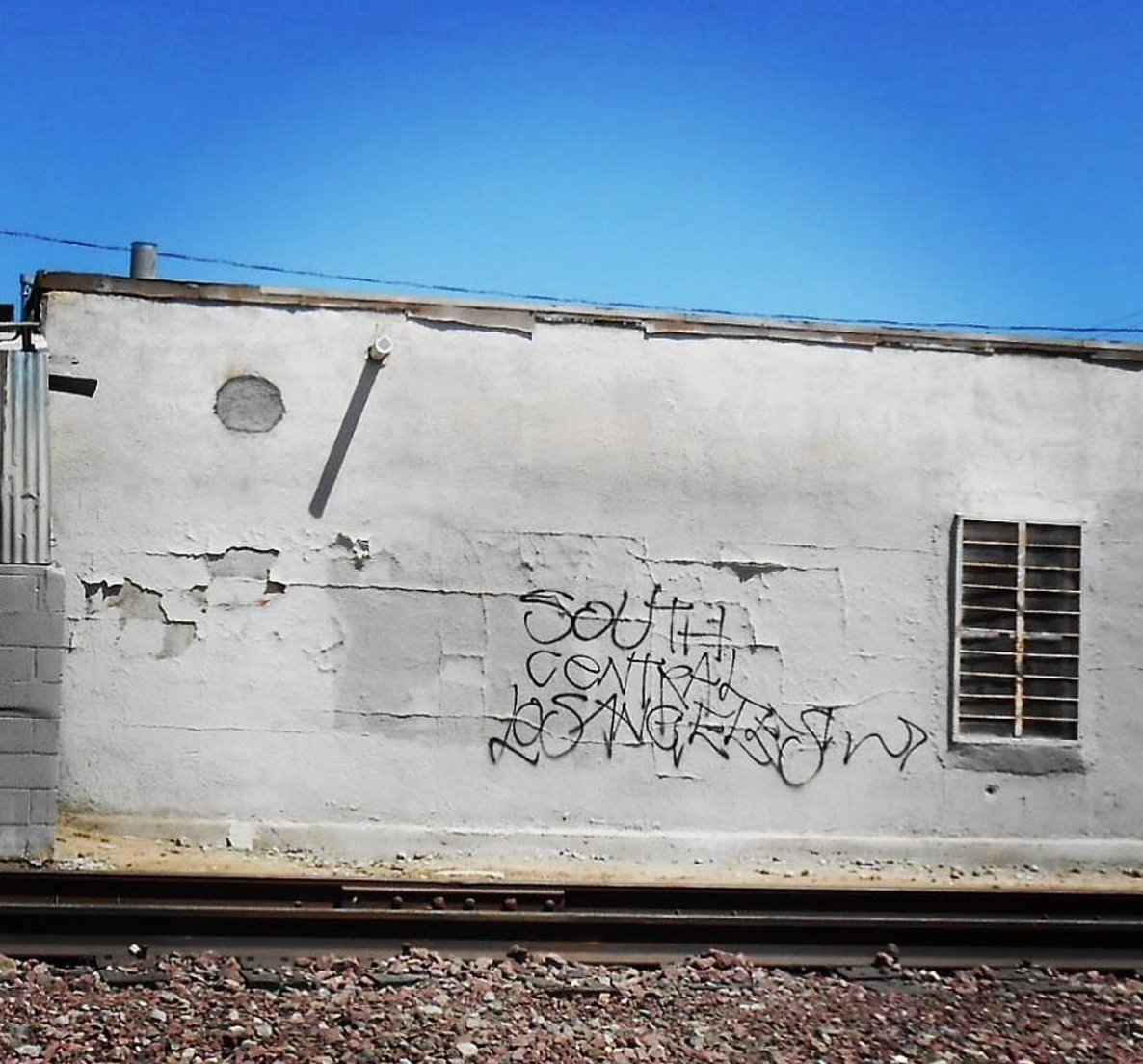
Graffiti writers at Slauson and Hooper Aves remind us that this geography is still called South Central Los Angeles. Photo by Jonathan P. Bell, @c1typlann3r

By: Jonathan P. Bell, @c1typlann3r

Remember that this geography is still, and will always be, South Central Los Angeles. The “South LA” rebranding was City of LA’s attempt at revisionist history after the 1992 Uprising (much like the City’s embarrassing 2014 “SOLA” proposal that’s thankfully fizzled).

Invest in place erasure and hope the world forgets: that went nowhere. Stakeholders young and older still call it South Central LA. History matters.

And, for the record, none of the City’s revisionism ever applied in the unincorporated communities: Florence-Firestone, Willowbrook, East Rancho Dominguez, West Rancho Dominguez, West Athens, and Lennox.

💛✊🏽 [Location: Slauson Av @ Hooper Av]

#SouthCentral #LosAngeles #OccasionalCritique #InstaEssay #MicroEssay

https://www.instagram.com/p/BNZ1EhbhQi-/

Candidate Statement for CAPE Board of Directors

CAPE represented planners, engineers, appraisers, GIS professionals and inspectors:

My name is Jonathan P. Bell. I’m a planner in the Zoning Enforcement section at the Department of Regional Planning. Currently I’m serving on our CAPE Board of Directors, and was honored to accept the appointment after the retirement of a long-time Director. I’m now seeking a full-term on the Board, and I humbly ask for your vote.

Leadership, experience, and dedication are the qualities I bring to our Board. Since 2012, I’ve served as a CAPE Delegate striving to improve workplace conditions for members. My service includes:

– 2013 and 2015 Contract Negotiations teams
– 2014 Political Endorsement Committee
– Recruitment of 13 new members since 2012
– Organizer for 2013 pay raise petition that garnered over 1,700 member signatures, and was delivered to the BOS

I’m proud that my hard work in support of our members helped me earn the Robert “Bob” Remes Outstanding CAPE Volunteer Award in 2014. This is the passion you’ll always get from me as your Board Director.

Union activism is in my blood. My mom and dad were Communications Workers of America union members for a combined 56 years. Mom was a CWA Shop Steward, and I helped her write grievances when I was in college. As your Board Director, I’ll continue to fight for union members, as I always have.

You need a Board Director who’ll fight hard for better benefits, wages, and pensions for our 2,700+ hardworking members. I have. I WILL.

I humbly ask for your vote.

In solidarity,
Jonathan P. Bell