After concluding my lecturer role at Cal Poly Pomona Urban and Regional Planning on May 31, 2025, I decided to archive my faculty page here.


After concluding my lecturer role at Cal Poly Pomona Urban and Regional Planning on May 31, 2025, I decided to archive my faculty page here.

Guest lecture “Embedded Planning is Radical Planning” in the Radical Planning Collective’s student-led course at UC San Diego. We will examine the origins and implementation of Embedded Planning praxis as an application of Radical Planning.
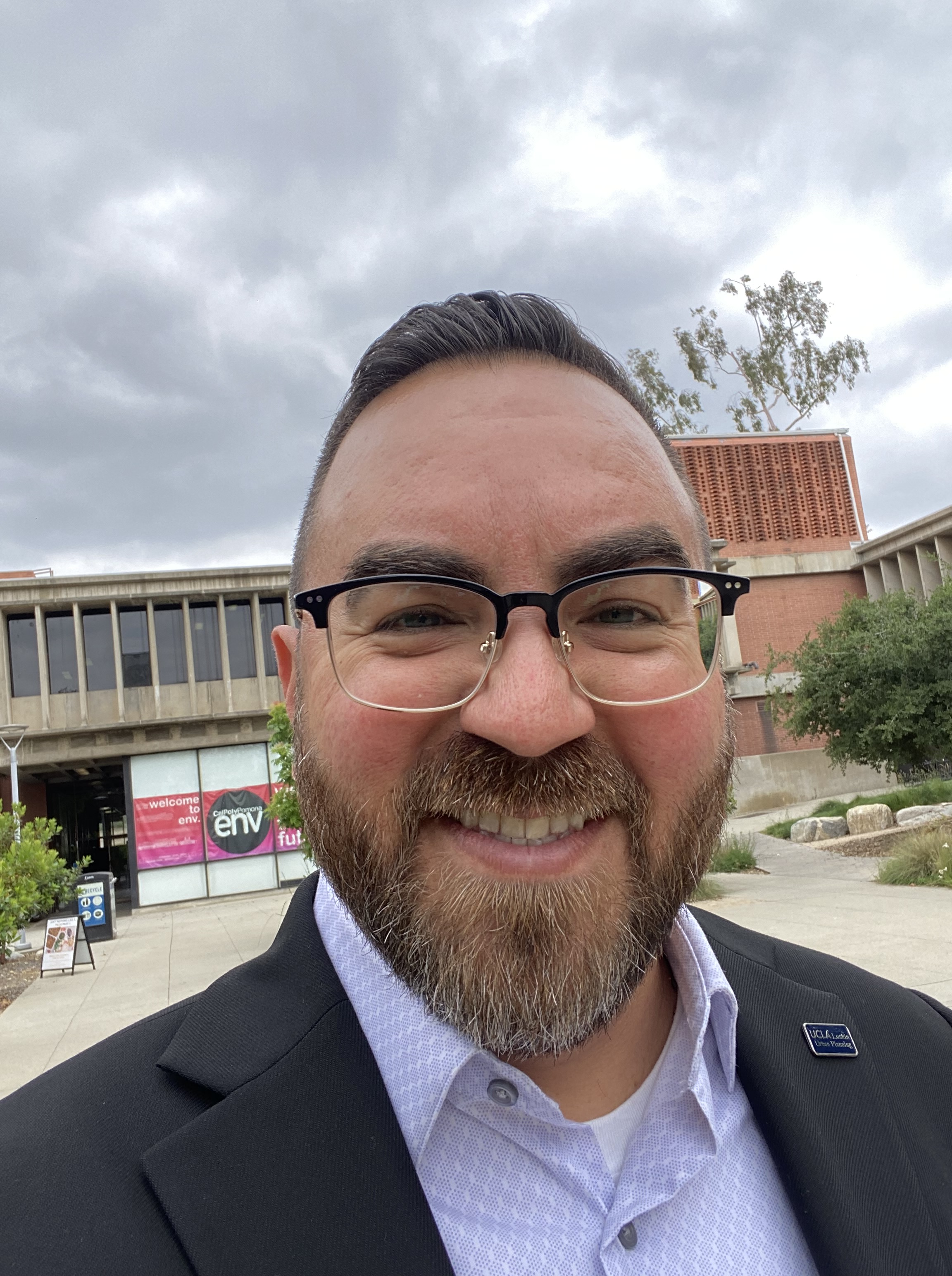
My time at Cal Poly Pomona has come to an end. The last 4 years were a dream come true. In 2021, I’d never have imagined that 1 lower division course would blossom into 6 across our bachelor’s and MURP programs, including my personal goal of teaching planning theory (my favorite at UCLA Luskin!). With that accomplished, I’ve decided to exit on a high note. This move makes space for new lecturers . . . new ideas, new lessons, new texts, new assignments, new theories, new planning methods, new pedagogies, new critiques, new praxis.
I’ll miss my students. My greatest joy was being a part of their journeys. I got to see folks new to the field evolve before my eyes into fierce urban planners—change agents. I hope my ramblings contributed to their growth. My students give me boundless hope. The future of urban planning is in good hands.
I was a mentor before CPP and I remain one. I’ve formed lifelong relationships with CPP students, faculty, and university fam. Many believe in Embedded Planning and other forms of activist praxis. We have momentum.
So this isn’t a “goodbye” but rather a “see you out there, in the neighborhoods, alongside our community members, planning and organizing, with your feet on the street.”

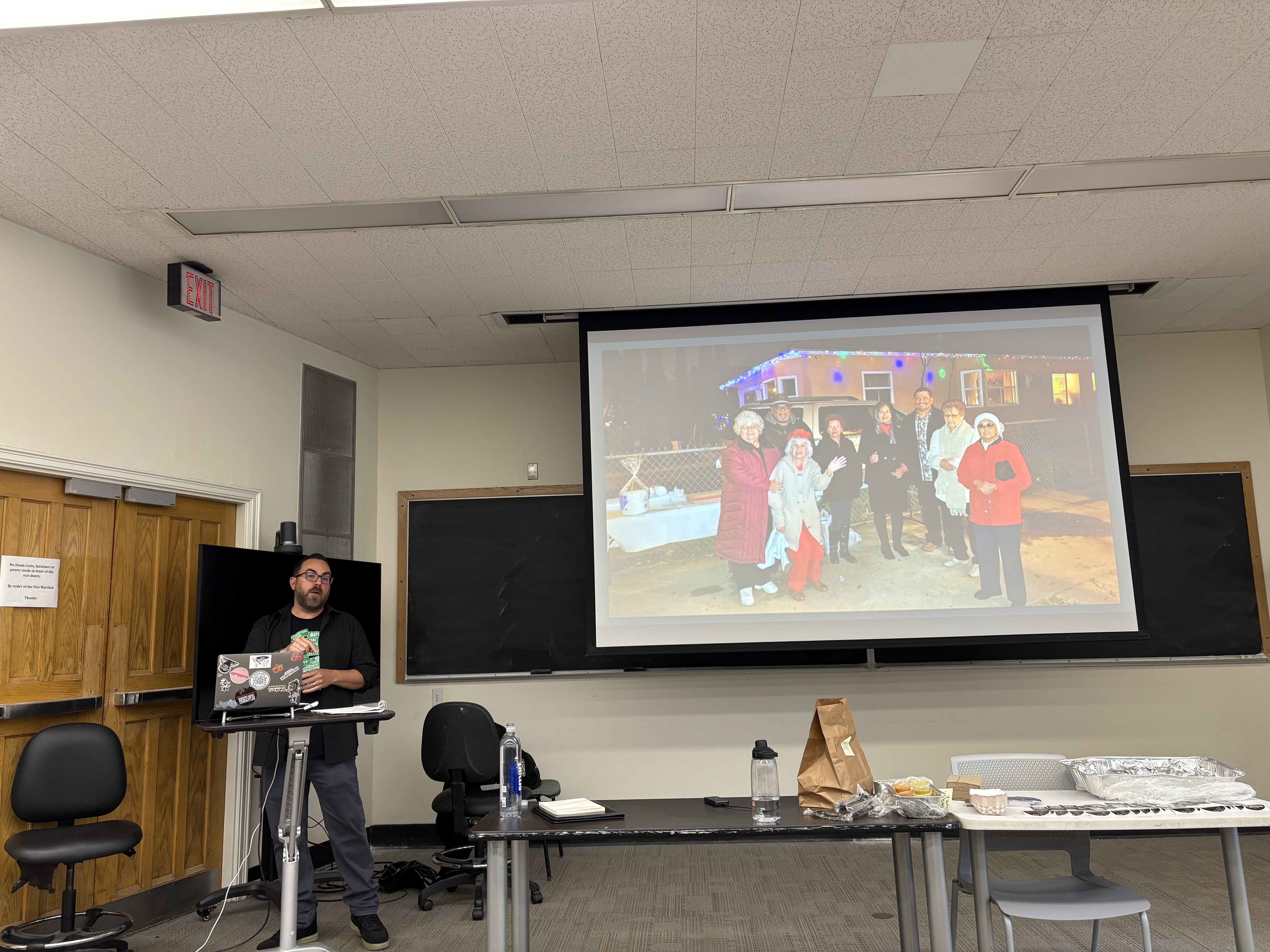
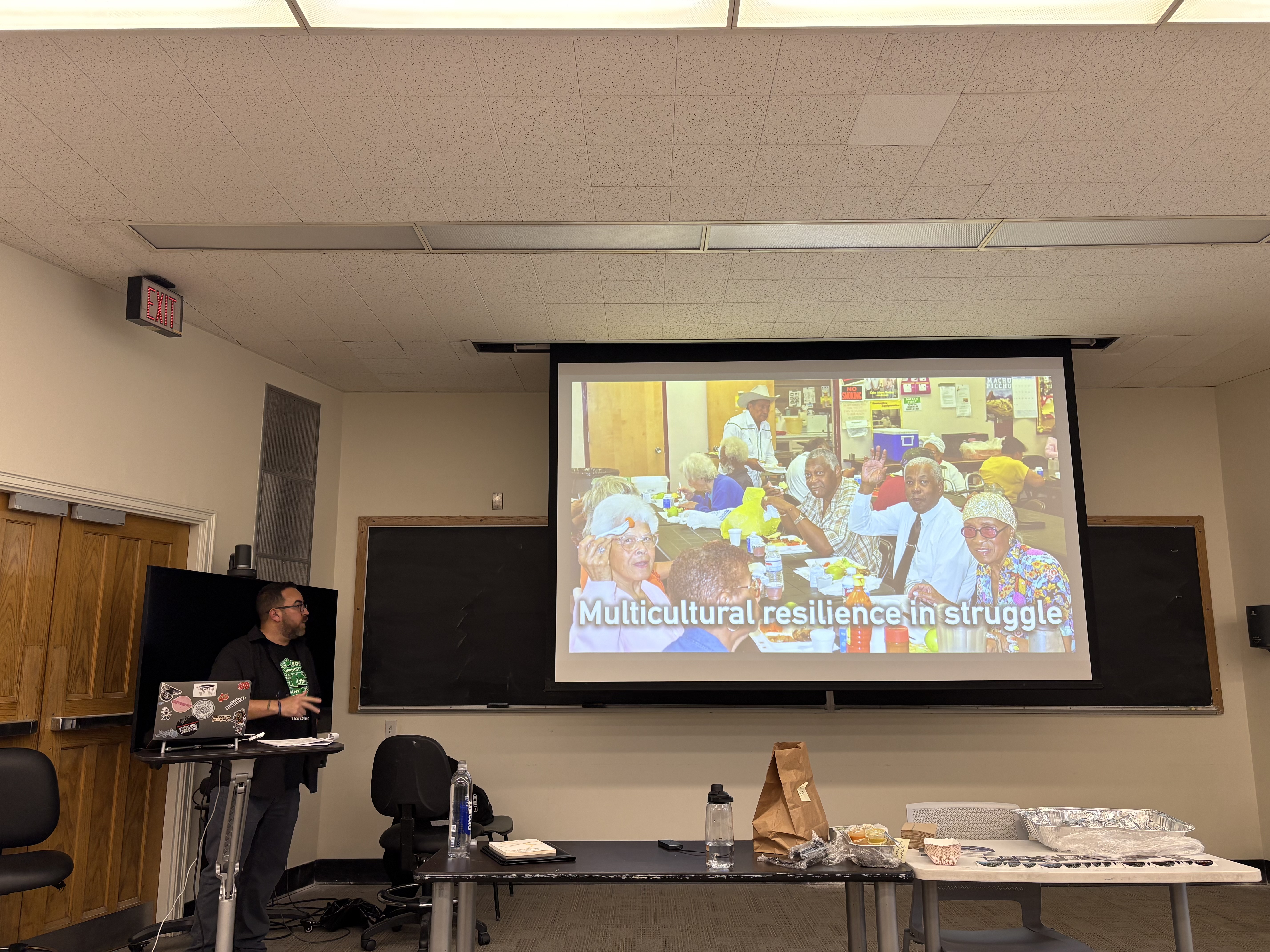
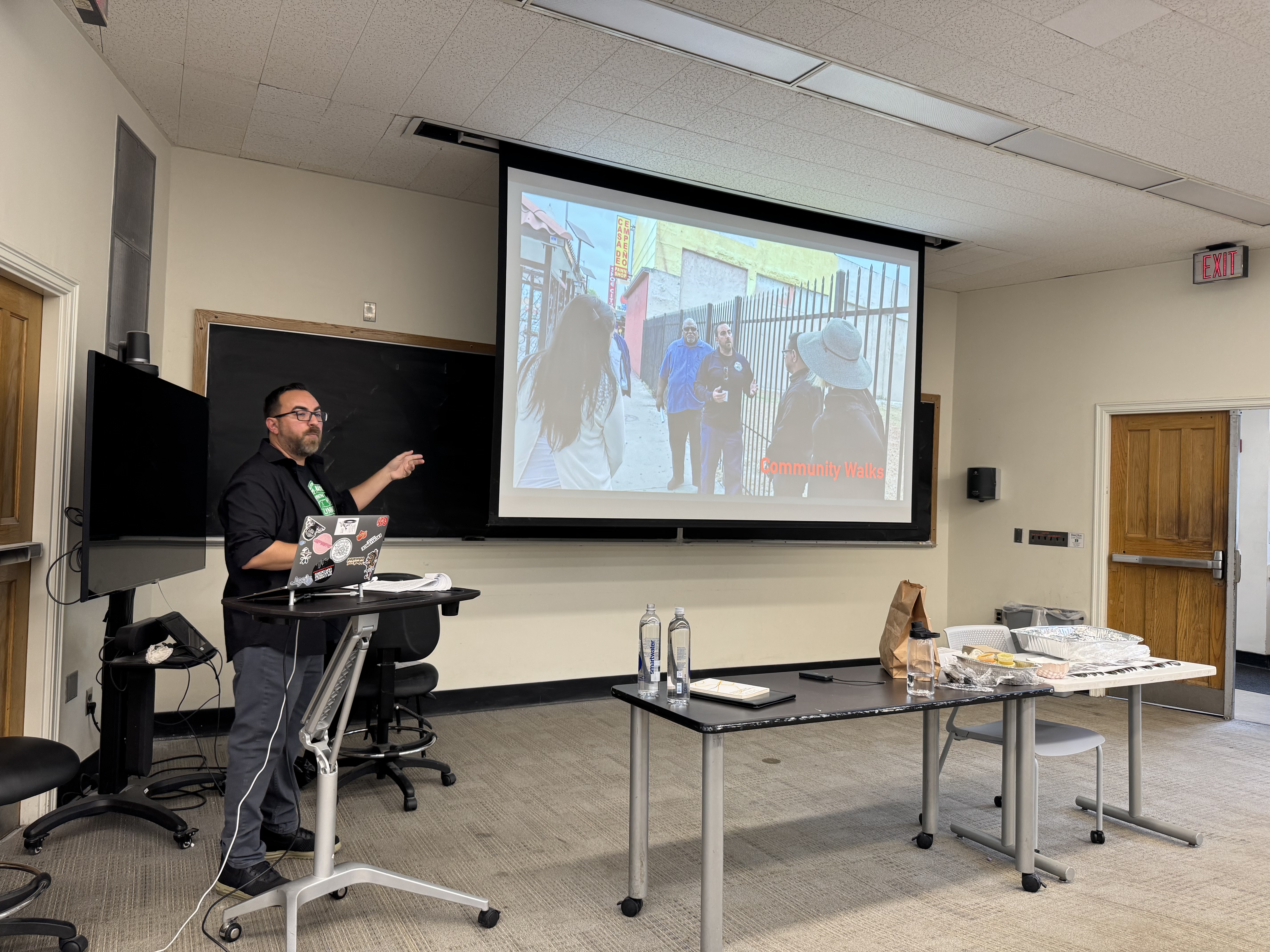
Scenes from Duke University from my 4/10 guest talk, “Embedded Planning is the Future.” The invited lecture was delivered in partnership with the undergraduate group Duke Our Urban Future and Duke Urban Studies.
This is chapter 3 in the #EmbeddedPlanning story.
We begin in medias res amidst my high stakes confrontation with unnamed powerholding figureheads suspicious of Embedded Planning because it subverted top-down control. I retrace my steps and epiphanies as a zoning enforcement planner to create Embedded Planning in South Central LA’s Florence-Firestone community. Drawing from personal experiences, I reflect on the challenges and benefits of street-level planning in the face of power. I then present case studies of others doing Embedded Planning coast to coast — and beyond!
When you hear planners today talk about “meeting people where they are,” know that we’ve long called it Embedded Planning praxis. And now we’re a worldwide movement.
Photos by AJ Adovor & Avery Smedley of Duke OUF and Dr. Ashley Hernandez of UNC Chapel Hill Carolina Planning. Thank you, Duke urban planners, for inviting me to speak on your campus!






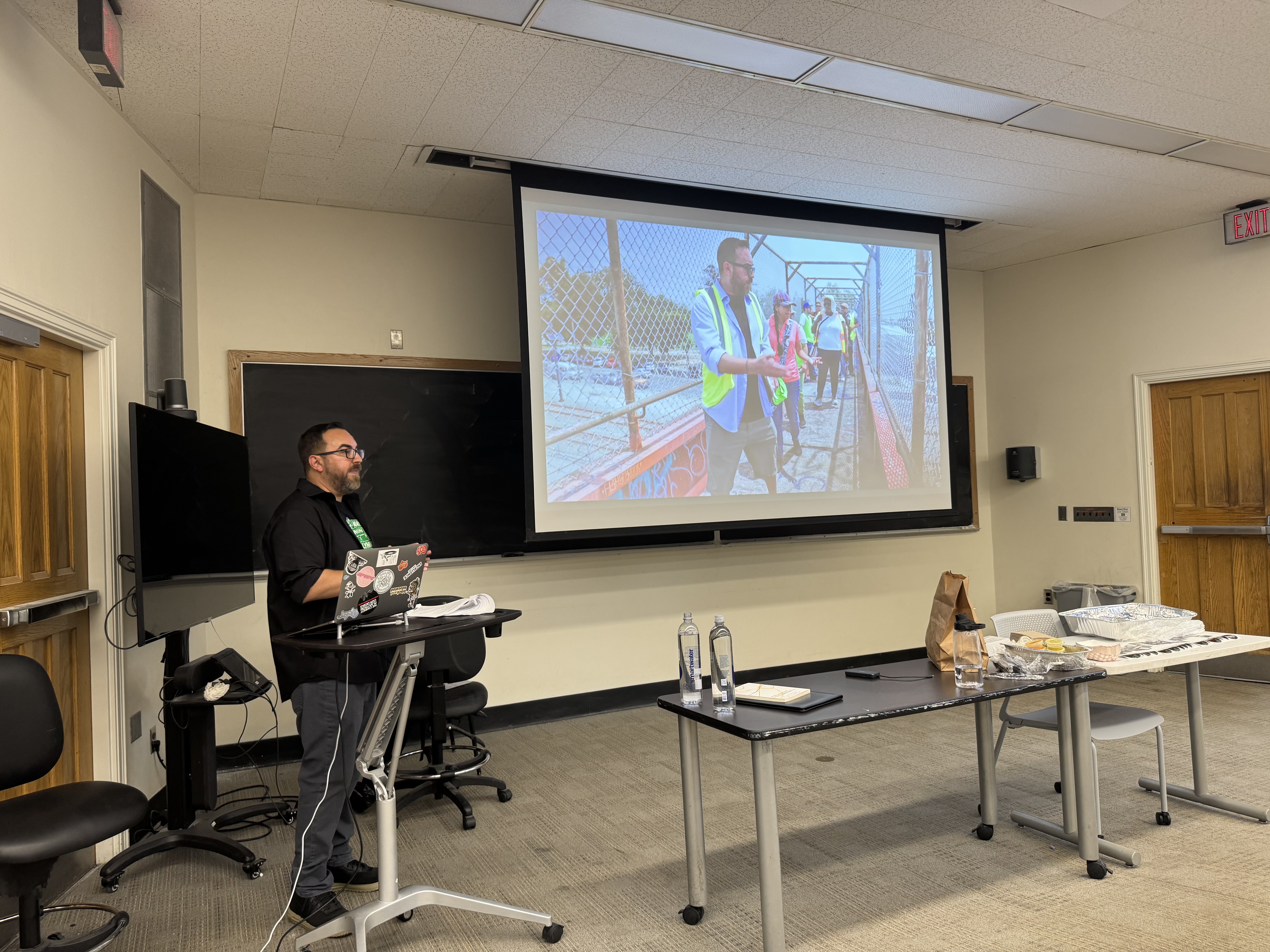
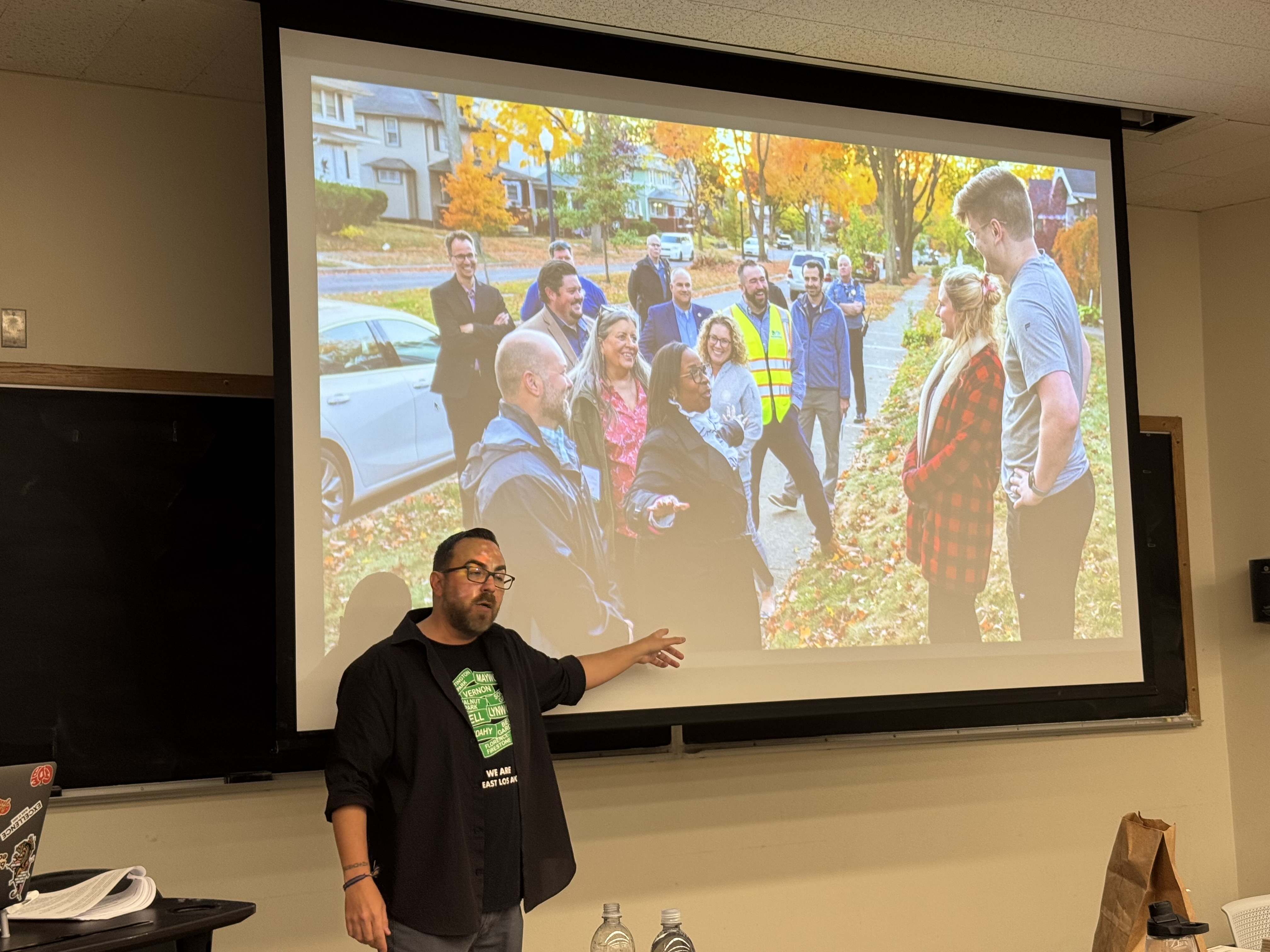
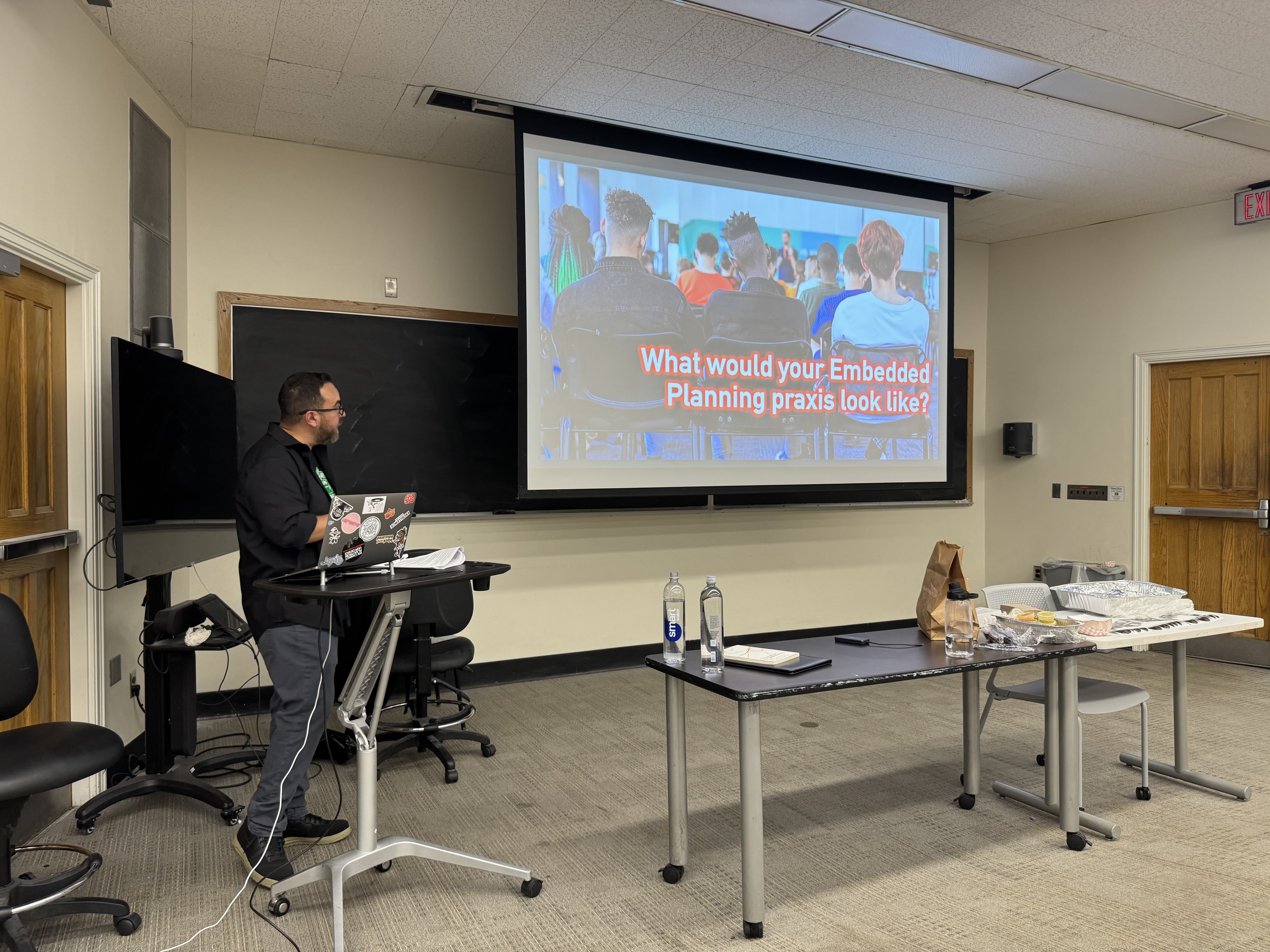

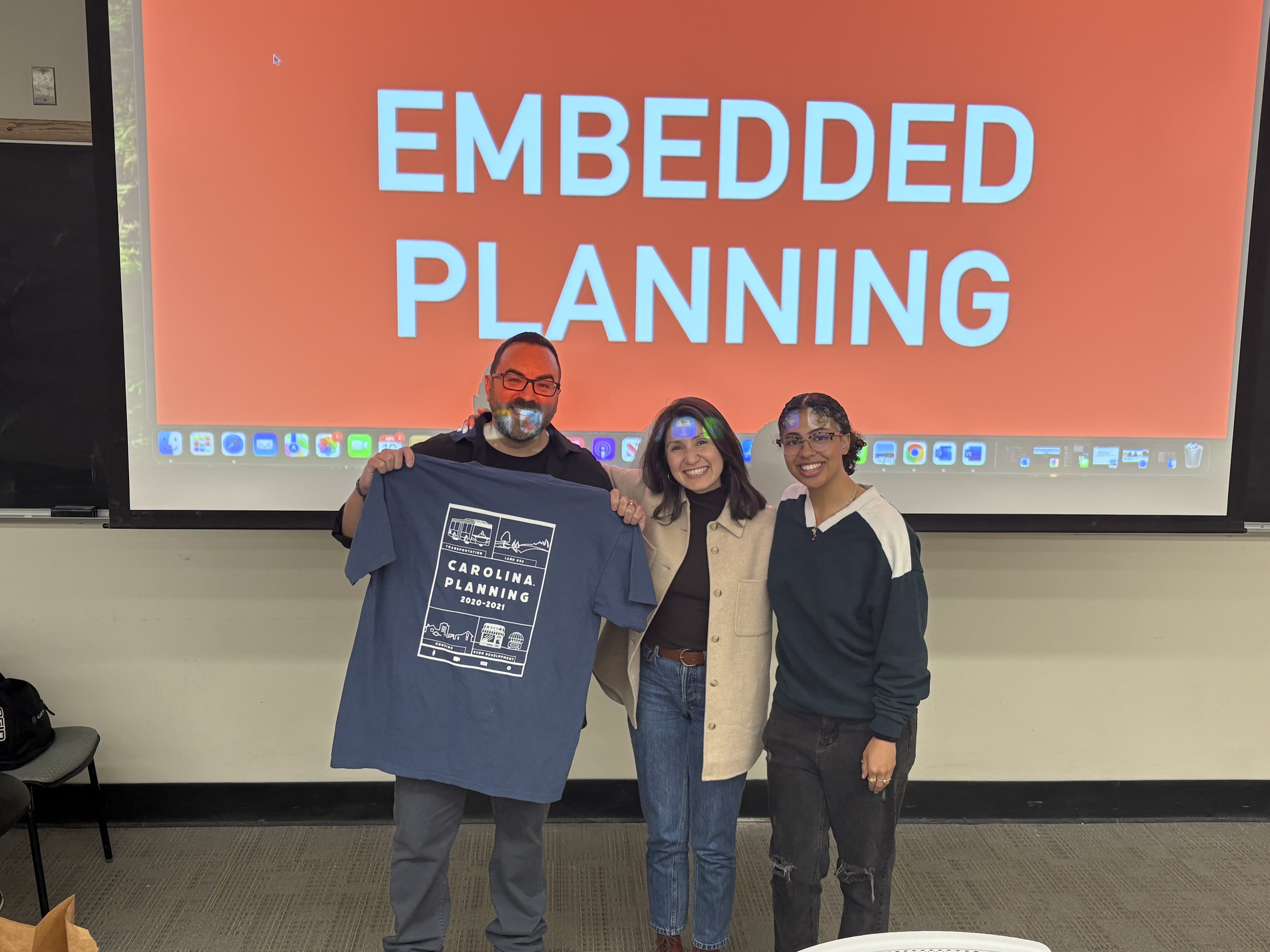

Join us 5/8 at CSUN Urban Studies and Planning for “Embedded Planning is the Future,” a public talk on the present and future of street-level activist planning.
Embedded Planning praxis shifts the planner’s work from a desk to the streets. Created during my Zoning Enforcement days in South Central’s Florence-Firestone community, this praxis aims to rebuild trust and foster meaningful relationships with marginalized communities harmed by inequitable planning.
We’ll highlight the spread of #EmbeddedPlanning coast to coast (and beyond!), with case studies, reflections, and personal experiences examining the challenges and benefits of street-level praxis.
Shout out to Dr. Brettany Kane Shannon for the invitation to return to CSUN URBS!
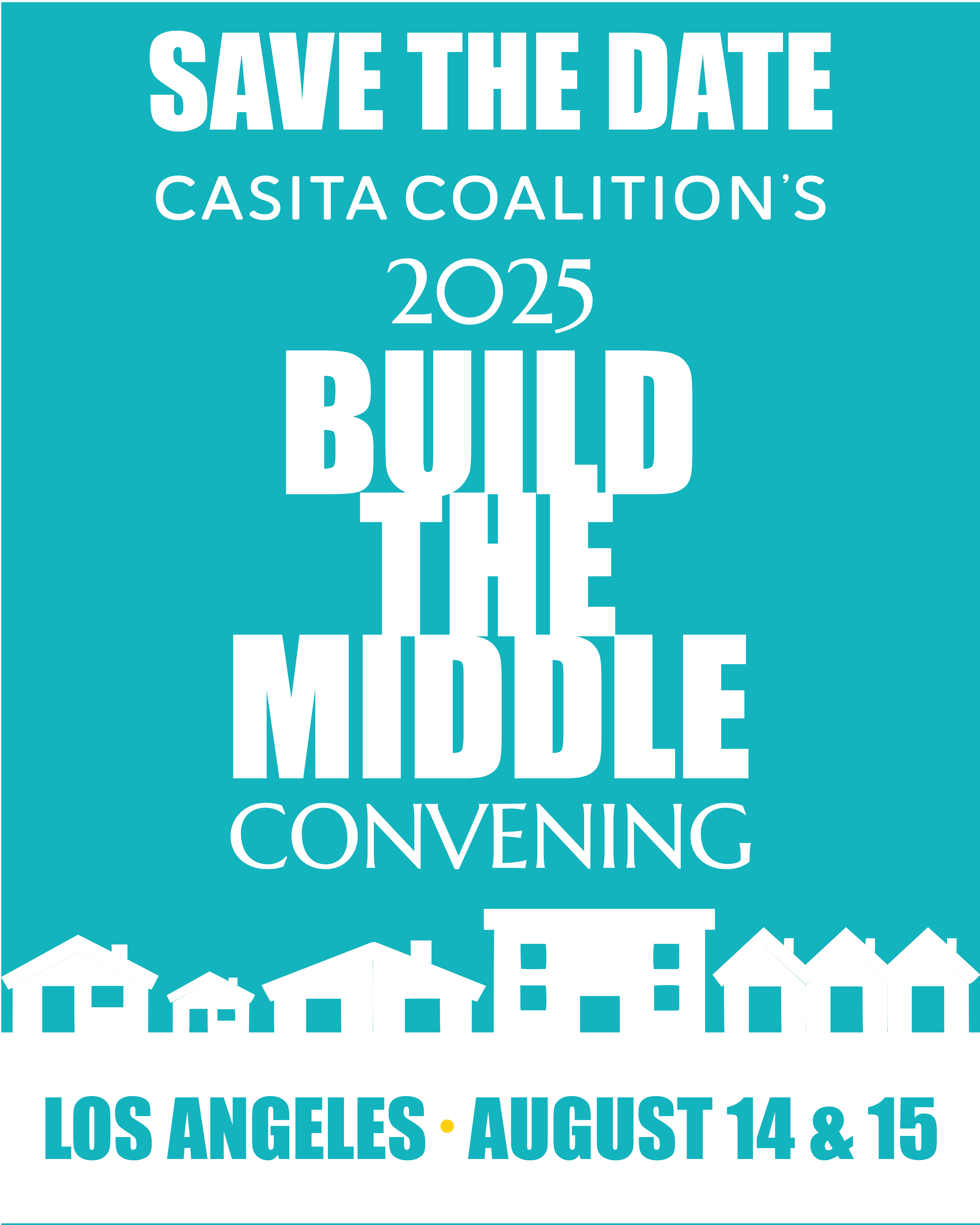
Save the Date! Join Casita Coalition for the 2025 Build the Middle Convening, happening: August 14–15 in Los Angeles! Mark your calendar. Follow for details. Let’s build what’s next.
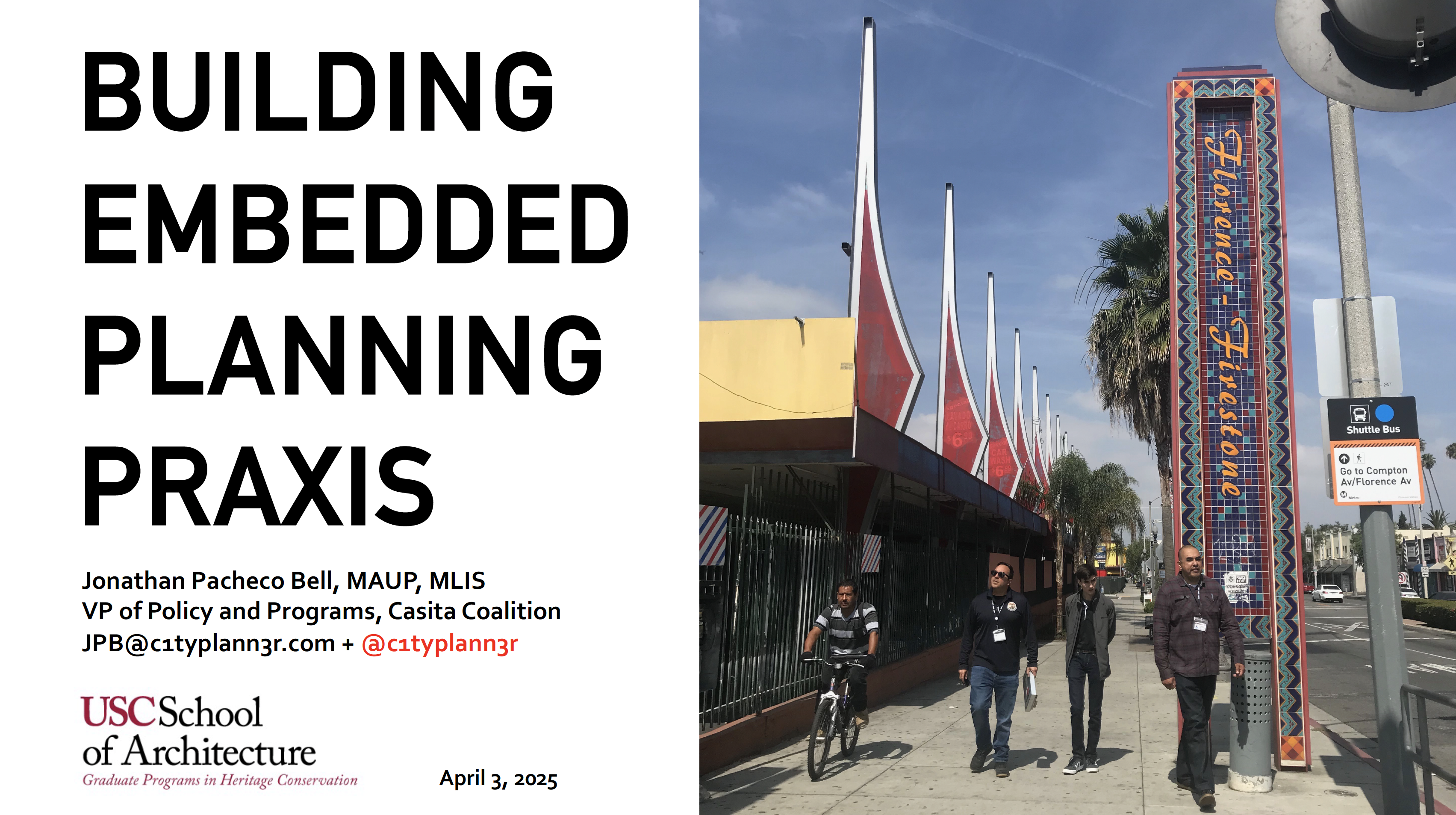
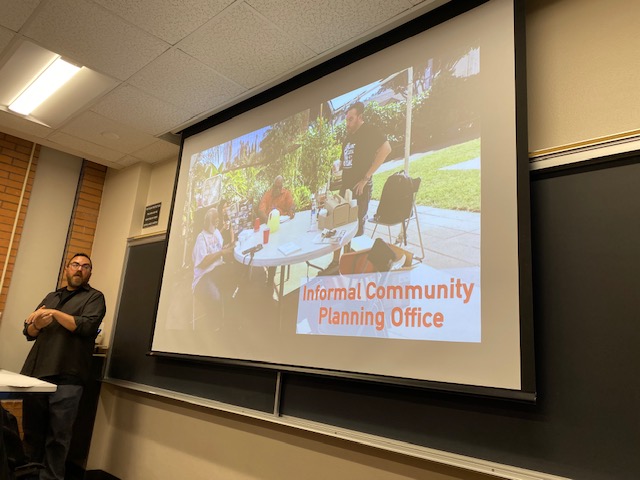
Scenes from USC Architecture from my 4/3 guest talk, “Building Embedded Planning Praxis.” The invited lecture was delivered in the USC Master of Heritage Conservation graduate course, Heritage Conservation Policy and Planning.
This is chapter 1 in the story of Embedded Planning praxis.
I lay out my path to Embedded Planning which includes coming up as graffiti writer and hip hop kid in the 80s & 90s, dropping out of architecture school in ‘98, and then finding urban planning thanks to Mike Davis and Edward W. Soja (both rest in power). Embedded Planning was co-created with community members in Florence-Firestone in South Central LA.
Who’s the cat in the photo?! In 2003 in the MAUP program at UCLA Luskin Department of Urban Planning, I took an architecture theory course where I learned Professor Gregory Ulmer’s CATTt method for writing a manifesto. I would go on to use the CATTt to write my 1-page manifesto on Embedded Planning titled, “We Cannot Plan From Our Desks,” published in the October 2018 issue of APA’s Planning Magazine.
And now we’re a worldwide movement in planning theories and practices.
Photos by Meredith Drake Reitan, Professor & Associate Dean. Thanks for the invite to speak with your MHC students!


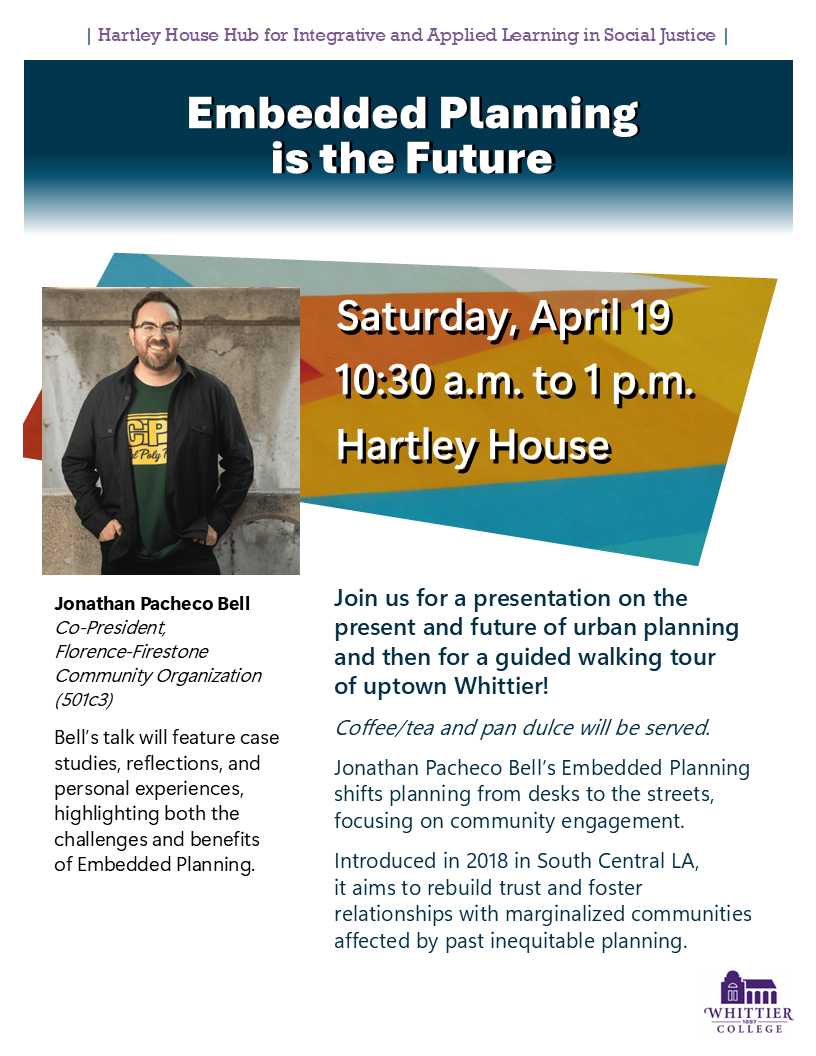
Join us at Whittier College Hartley House for “Embedded Planning is the Future,” a public talk on the present and future of street-level planning, followed by a feet on the street walking tour of Uptown Whittier.
Embedded Planning shifts the planner’s work from a desk to the streets. Created in the Florence-Firestone community in South Central LA, this praxis aims to rebuild trust and foster meaningful relationships with marginalized communities harmed by inequitable planning.
The talk features case studies, reflections, and personal experiences highlighting both the challenges and benefits of Embedded Planning in these times.
Coffee, tea, and pan dulce will be served. OUR EVENT IS FREE TO ALL.
When: Saturday, April 19, 2025, 10:30am to 1pm
Where: Hartley House, Whittier College, 13741 Earlham Drive, Whittier, CA 90602
Thanks to Whittier College Hartley House Hub for Integrative and Applied Learning in Social Justice for event support!
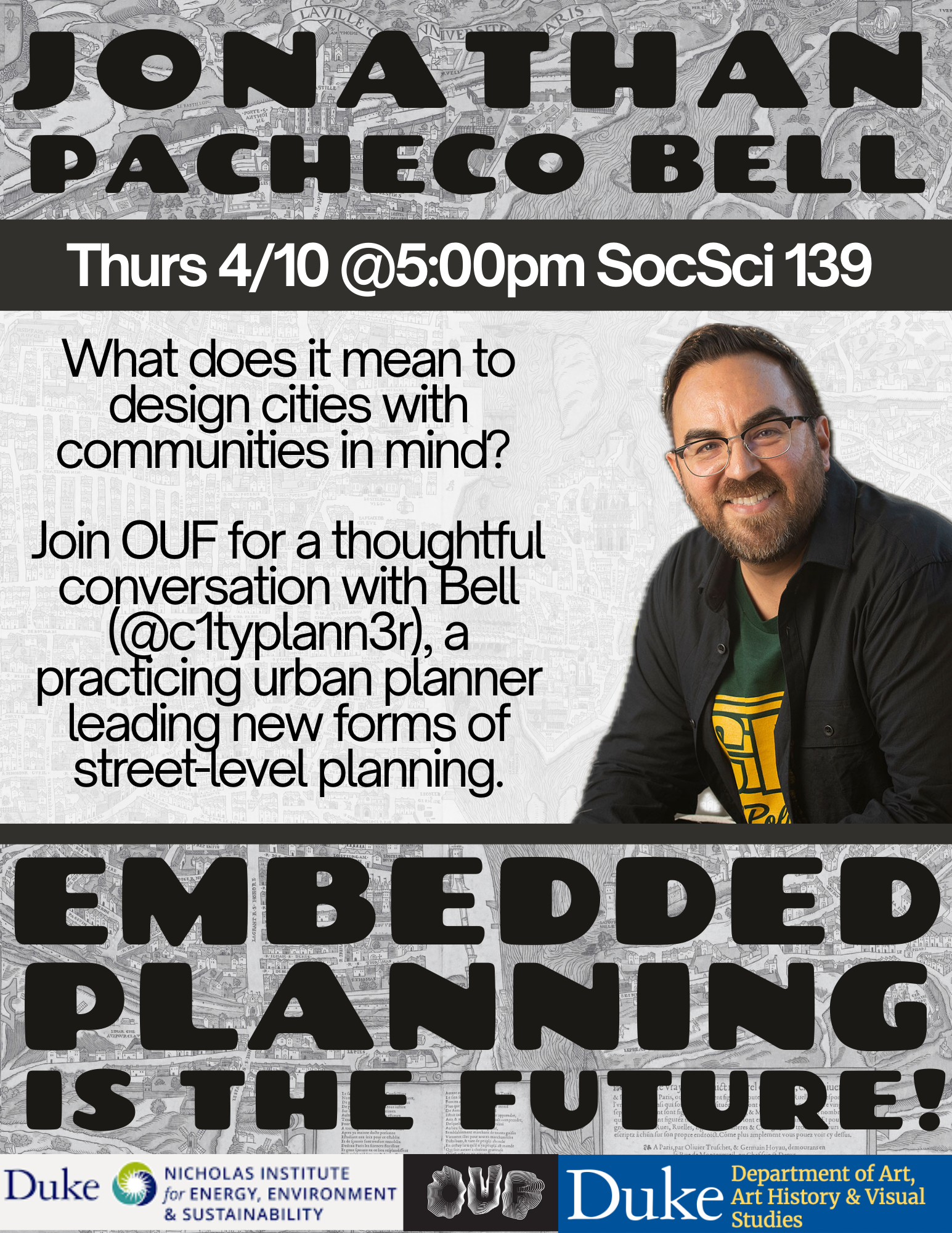
On April 10th, I’m at Duke University with Our Urban Future for the invited public talk, “Embedded Planning is the Future.” I consider this Chapter 3 in the Embedded Planning speaking series. We’ll discuss Embedded Planning’s trajectory — including origins, challenges, and benefits — and examine why this praxis is the future of planning.
After the talk, we’ll hold an extended Q & A to discuss my work on Middle Housing (Casita Coalition), Community Empowerment (Florence-Firestone Community Organization), and Urban Planning Education (Cal Poly Pomona Urban & Regional Planning).
Open to students, planners, and community — if you’re in Raleigh-Durham-Chapel Hill come through!
Big thanks to Duke’s Nicholas Institute for Energy, Environment & Sustainability for sponsoring our event.

I’m doing the guest lecture “Embedded Planning is the Future” at UC Irvine with the Urban Studies Students Association. The event is free to all on Tuesday, February 11, 2025.
Summary
Jonathan Pacheco Bell’s Embedded Planning approach revolutionizes planning practice by emphasizing street-level planning within the community rather than traditional desk-based methods. Developed by Bell in South Central LA and publicly introduced in 2018, this praxis seeks to rebuild trust and foster meaningful relationships with marginalized communities historically harmed by inequitable planning.
Embedded Planning involves planners working directly from community spaces and places, engaging residents in their everyday environments. This immersive approach helps planners gain a deeper understanding of local needs and aspirations, ensuring that community voices significantly shape planning decisions. By embedding themselves into neighborhoods, planners build strong, authentic relationships, moving beyond one-off, transactional, superficial consultations to create lasting and impactful partnerships.
Despite its support from communities, Embedded Planning has faced resistance from conventional planning practice and management, which has viewed this approach with skepticism. Working from the neighborhood to integrate community directly into planning processes challenges traditional methods and requires navigating complex dynamics between stakeholder expectations and regulatory constraints.
Since its inception, Embedded Planning has gained an international following among emerging planners who are eager to implement more inclusive practices. Bell’s talk will highlight real-world case studies, reflections, and personal experiences, while also showcasing the approach’s challenges and benefits. Attendees will learn how Embedded Planning fosters trust, informs better decision-making, and promotes more equitable community development. This emerging movement represents a crucial shift towards centering planning as an active and continuous process from within the community and represents the future of planning.

In Spring 2025, the Florence-Firestone Community Organization (FFCO) — where I proudly serve as Co-President — is partnering with Scripps and Pitzer colleges to integrate the Florence-Firestone neighborhood into these Environmental Analysis courses:
Building on our past efforts, FFCO will host walking tours and discussions, conduct in-class guest lectures, and provide readings and resources to learn about our Florence-Firestone community in South Central LA.
Local news coverage of Florence-Firestone lamentably focuses on social ills. While the community endures challenges and struggles, there is more to it than the clickbait headlines. Our decades-long community-driven work proves it. The creation of Embedded Planning in Florence-Firestone, now a worldwide movement, proves it. The birth of FFCO as a community advocacy voice during COVID proves it. Florence-Firestone is a vibrant and historic community. Students will experience it.
Below is a variety of key resources on Florence-Firestone. I am proud to have worked on nearly all of these projects. These help reframe the narrative about our community. They tell a fuller story of partnerships, solidarity, and hope.
Embedded Planning was born on the streets of Florence-Firestone: https://c1typlann3r.blog/embeddedplanning/
Florence-Firestone Community Plan (2019): https://c1typlann3r.blog/wp-content/uploads/2024/08/florence-firestone-community-plan-final.pdf
Florence-Firestone Vision Plan (2009): https://c1typlann3r.blog/wp-content/uploads/2023/08/florence-firestone-vision-plan-2009-final.pdf
Florence-Firestone Step by Step Pedestrian Plan Draft (2023): http://www.publichealth.lacounty.gov/place/stepbystep/florencefirestone.htm
Florence-Firestone Historic Context Statement (from Metro Area Plan 2023 Draft): https://planning.lacounty.gov/wp-content/uploads/2023/04/ff_hcs_survey_dpr_forms_bind.pdf
Metro Area Plan Historic Resource Map (see Florence-Firestone on map): https://dudek.maps.arcgis.com/apps/webappviewer/index.html?id=b5957133802f4ed0bb2611939aee69eb
Florence-Firestone Transit Oriented Development (TOD) Specific Plan (2022): https://case.planning.lacounty.gov/assets/upl/project/fftod_board-letter-20230207.pdf
Florence-Firestone TOD Story Map: https://storymaps.arcgis.com/stories/e9823a0f2a9440399f04f1bbb44d97d2
Vision Zero Florence-Firestone project awarded $21.49 million Federal implementation grant: https://lacounty.gov/2023/02/08/la-county-vision-zero-project-in-florence-firestone-awarded-21-49-million-federal-implementation-grant/
Community Pedestrian and Bicycle Safety Training (CPBST) Report: Recommendations to Improve Pedestrian and Bicycle Safety in Florence-Firestone: https://safetrec.berkeley.edu/sites/default/files/17-0929_cpbst-florence-firestone-recommendations-report.pdf
The CPBST at Work in Florence-Firestone: https://catsip.berkeley.edu/safety-stories/stories-field/cpbst-work-florence-firestone
Florence-Firestone Community Parks and Recreation Plan: https://file.lacounty.gov/SDSInter/dpr/182627_Florence-FirestoneMasterPlan.pdf
92nd Street Linear Park project: https://sites.google.com/kounkuey.org/92ndstreetprojectupdates/92nd-street-linear-park
Paseo Through Time in Florence-Firestone (book): https://www.dropbox.com/s/i7kgx455x0ttx57/FF-2-2018.pdf?dl=0
Everyday Heroes of Florence-Firestone (KCET article): https://www.kcet.org/history-society/everyday-heroes-of-florence-firestone
@FlorenceFirestone on Instagram: https://www.instagram.com/florencefirestone/
Racial Equity in Planning for Unincorporated Los Angeles County. Building Justice. A brief study of the histories, legacies, and impacts at the intersection of systemic racism and planning in Florence-Firestone: https://c1typlann3r.blog/wp-content/uploads/2023/08/d55ca-f-fequity_final-compressed.pdf
After Years Of Waiting, A South LA Neighborhood Has A New Library: https://laist.com/news/politics/florence-library-years-of-waiting-opens-south-los-angeles
Florence-Firestone Stands Up For Its Library, Lays Down the Foundation for a Movement: https://la.streetsblog.org/2019/09/27/florence-firestone-stands-up-for-its-library-lays-down-the-foundation-for-a-movement
Florence-Firestone Will Not Be Forgotten: https://ascjcapstone.com/terms/spring-2020/ethanwar/
A South Central Neighborhood Suffers from the Loss of its Community Library: https://medium.com/intersections-south-la/a-south-central-neighborhood-suffers-from-the-loss-of-its-community-library-df783979ac60
Black Panther History, Immigrant Stories Highlighted in Book about South Central’s Florence-Firestone Community: https://medium.com/intersections-south-la/black-panther-history-immigrant-stories-highlighted-in-book-about-south-centrals-d9c75a2d6380
For the First Time Ever, Three Young Latinx Women are Leading this South Central Coalition: https://medium.com/intersections-south-la/for-the-first-time-ever-three-young-latinx-women-are-leading-this-south-central-neighborhood-1330ecda360c
How a Tire Shop in South L.A. Became a Community Hub for Locals: https://medium.com/intersections-south-la/how-a-tire-shop-in-south-l-a-became-a-community-hub-for-locals-8bf37c21e25a
Libraries in the ‘Hood: A Social History of the Florence and Graham Branch Libraries in the Community of Florence-Firestone, 1912-2012 (thesis proposal): https://c1typlann3r.blog/wp-content/uploads/2022/06/jpbell-thesis-proposal-libr285.pdf
Stories of Everyday Heroes (LA County Library): https://lacountylibrary.org/ffeverydayheroes/
Pat Brown Institute at Cal State LA survey reveals severe economic impacts of COVID-19 in Southeast Los Angeles County area: https://www.calstatela.edu/univ/ppa/publicat/pat-brown-institute-cal-state-la-survey-reveals-severe-economic-impacts-covid-19
Florence-Firestone Community Organization: https://ffcola.org/
Florence-Firestone Community Leaders: https://www.facebook.com/FFCLPage
Inner City Visions: https://innercityvisions.org/
Juntos Florence-Firestone Together: https://www.instagram.com/juntosfftogether/
Florence-Firestone Merchants Association: https://www.facebook.com/profile.php?id=100051324773983
Florence-Firestone/Walnut Park Chamber of Commerce: https://www.facebook.com/FFWPChamber/
Podcast interviews I have done that reference Florence-Firestone: https://c1typlann3r.blog/interviews/
Bronco Magazine article and video on Embedded Planning and Florence-Firestone: https://broncomag.cpp.edu/article/embedded-planning/
Florence-Firestone Community Organization:
Florence-Firestone Community Organization Latin Labic & Expo Kermesse:
Florence-Firestone Community Organization and SELA Collaborative interview, including Embedded Planning origins in Florence-Firestone (starts at 5:25 min mark):
How a Tire Shop in South L.A. Became a Community Hub for Locals:
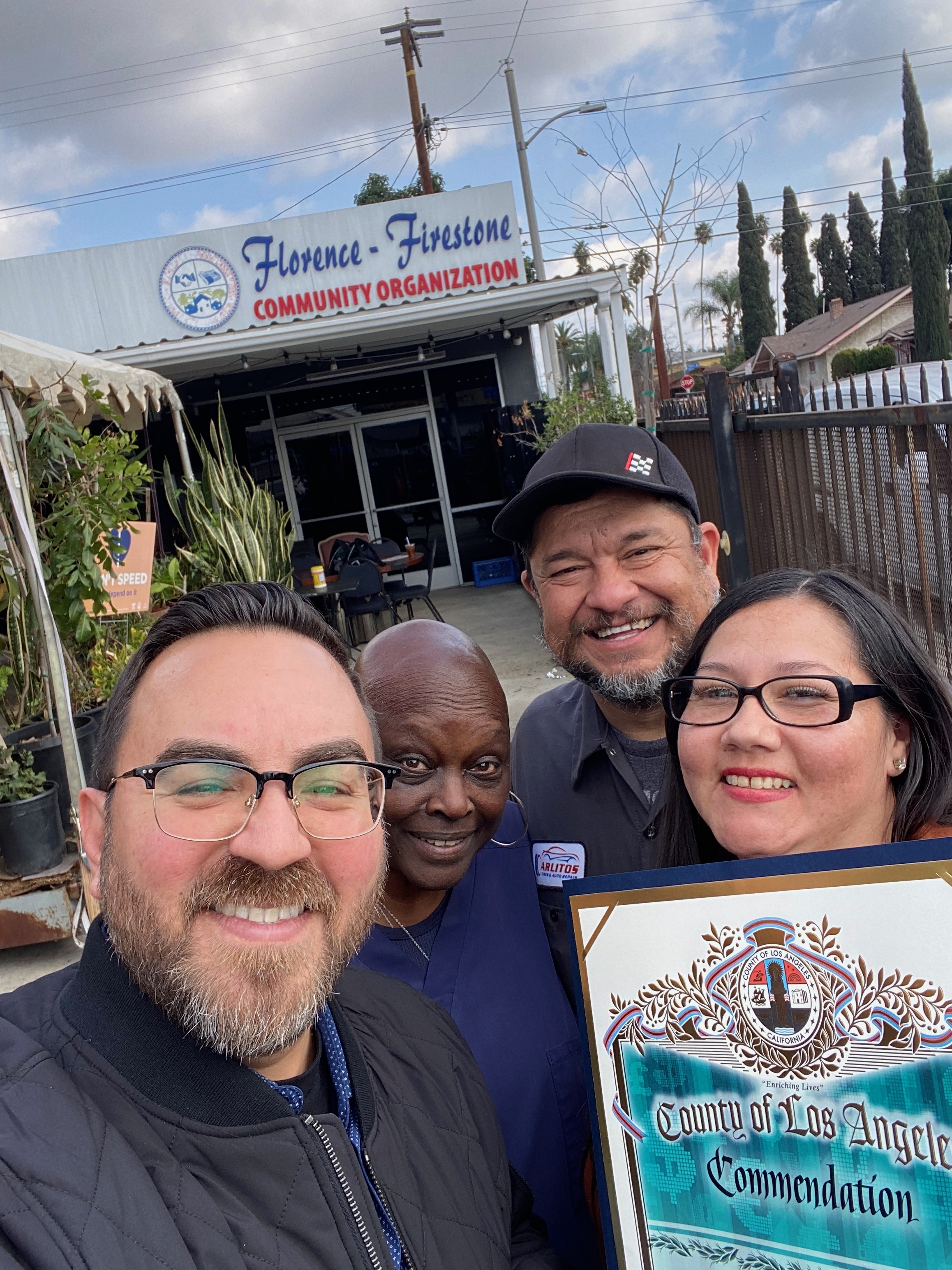
The Florence-Firestone Community Organization received an LA County scroll for leading community engagement in the Participatory Budget pilot project. Thank you, Supervisor Holly J. Mitchell and Second District staff, for the recognition. Onward to implementation!
To learn more about Participatory Budgeting in SD2, please visit Reimagine LA at: https://reimagine.la/resources-pb/
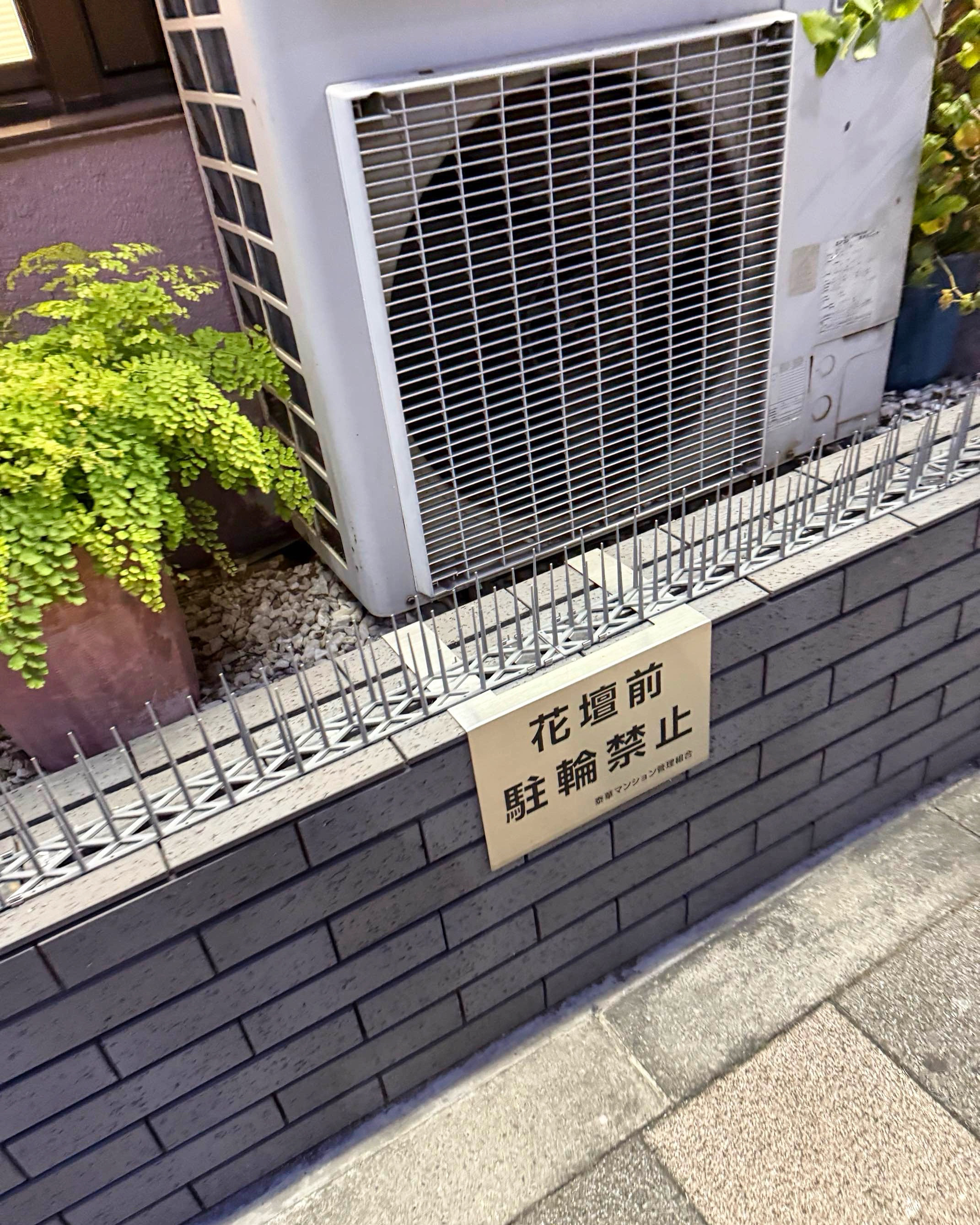
Cal Poly Pomona MURP student Abby Urquiza found some conspicuous Hostile Architecture in Tokyo. Last semester, we examined Hostile Architecture in the Planning & Control module in our course, URP 5120: Planning Ideas & Action. From our readings:
The city is engaged in a merciless struggle to make public facilities and spaces as ‘unlivable’ as possible for the homeless and the poor.
~Mike Davis, Fortress LA chapter, City of Quartz: Excavating the Future in Los Angeles (1990)
“Planning as oppression” does exist in a variety of settings and . . . it affects a range of social relations in space.
~Oren Yiftachel, Planning and Social Control: Exploring the Dark Side (1998)

Here’s my 2024 LinkedIn Rewind, by Coauthor.studio:
In 2024, what began in Florence-Firestone transformed into an international movement. Embedded Planning won.
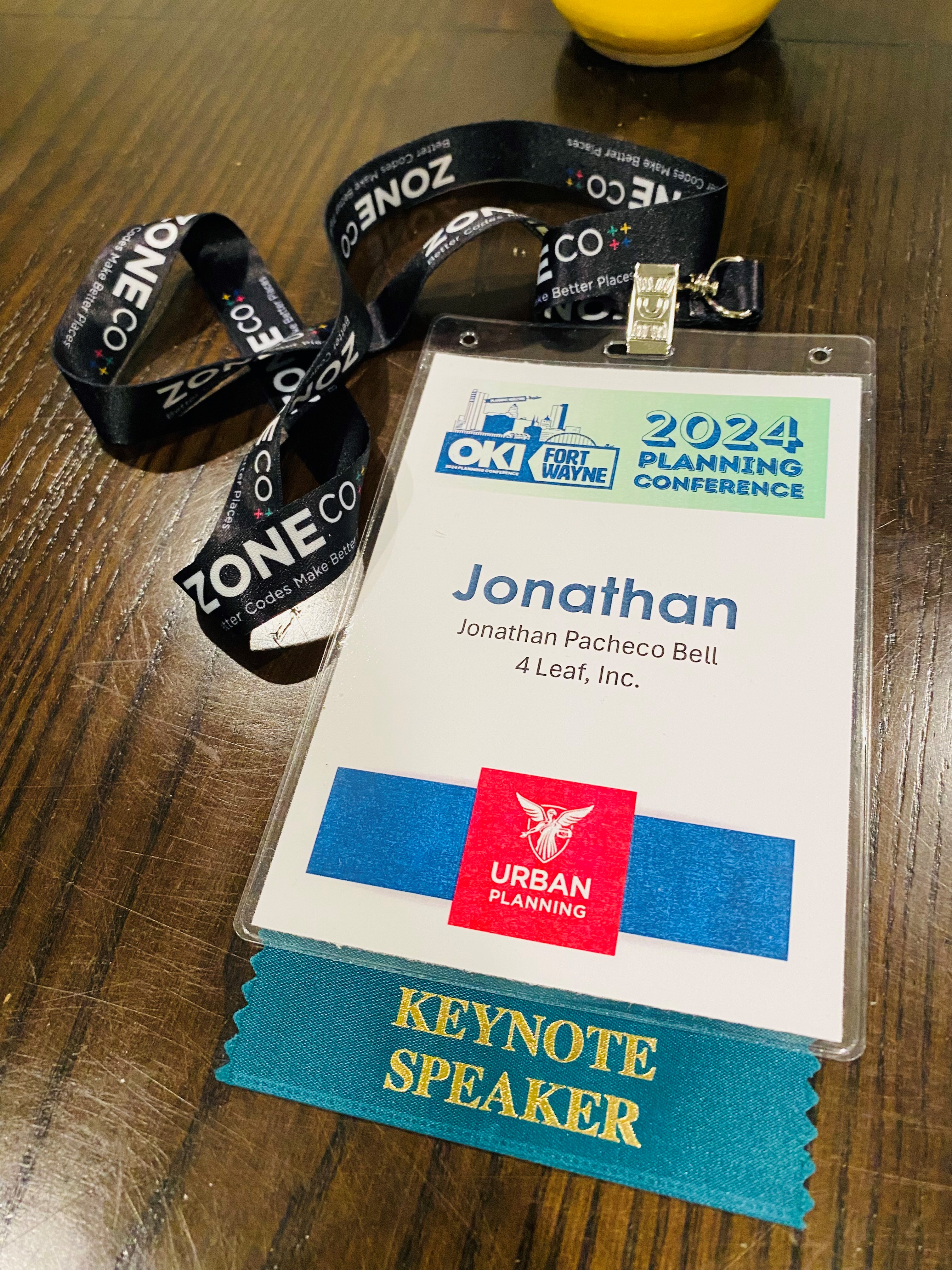
When I started this praxis in South Central LA, some planning figureheads viewed street-level planning work with skepticism. Today, planning organizations are implementing Embedded Planning praxis as official policy. The City of Fort Wayne didn’t just adopt our approach — they embraced it fully, showing what’s possible when management supports planners working directly from community spaces.
This year validated what our community knew all along: We Cannot Plan From Our Desks.
Key transformations:
• Fort Wayne’s formal implementation of Embedded Planning with full institutional support
• Florence-Firestone Community Organization’s expansion of street-level programs
• FFCO’s Latin Labic + Expo Kermesse bringing creative placemaking to South Central LA
• Growing recognition through APA Planning Advocate and Pioneer awards
• Cal Poly Pomona Urban and Regional Planning students advancing community-centered research
Three posts that captured our movement’s growth:
“What’s exciting is that Dan Baisden and the team have fully implemented it with support from the city of Fort Wayne. It’s the opposite of what I dealt with.”
https://www.linkedin.com/feed/update/urn:li:activity:7269035353406087168/
“What began in Florence-Firestone is now a planning praxis in other states, regions, countries, and hemispheres. We have built the future of planning.”
https://www.linkedin.com/feed/update/urn:li:activity:7213357453130760192/
“Our Latin Labic success showed how creative placemaking strengthens community bonds while informing better planning visioning.”
https://www.linkedin.com/feed/update/urn:li:activity:7241581623320666113/
Looking ahead: As Embedded Planning expands globally in 2025, our focus remains clear — rebuilding trust through street-level planning while keeping our trailblazing work in Florence-Firestone as our north star.
To every planner now embedding themselves in communities, and to every community member who showed us the way: this transformation belongs to all of us. The future of planning isn’t in our offices. It’s on the streets, in the neighborhoods, with the people.

You must be logged in to post a comment.