“My approach will rely on my experience in public health, geography, and community planning. I truly believe that good planning involves making small, strategic interventions. I love the book Urban Acupuncture which explores this concept. I’m a big advocate of #EmbeddedPlanning – a community-focused approach to urban planning that emphasizes collaboration, engagement, and meeting people where they are in order to achieve positive outcomes. I will work with LandWatch’s partners and stakeholders to create policies that support these objectives.”
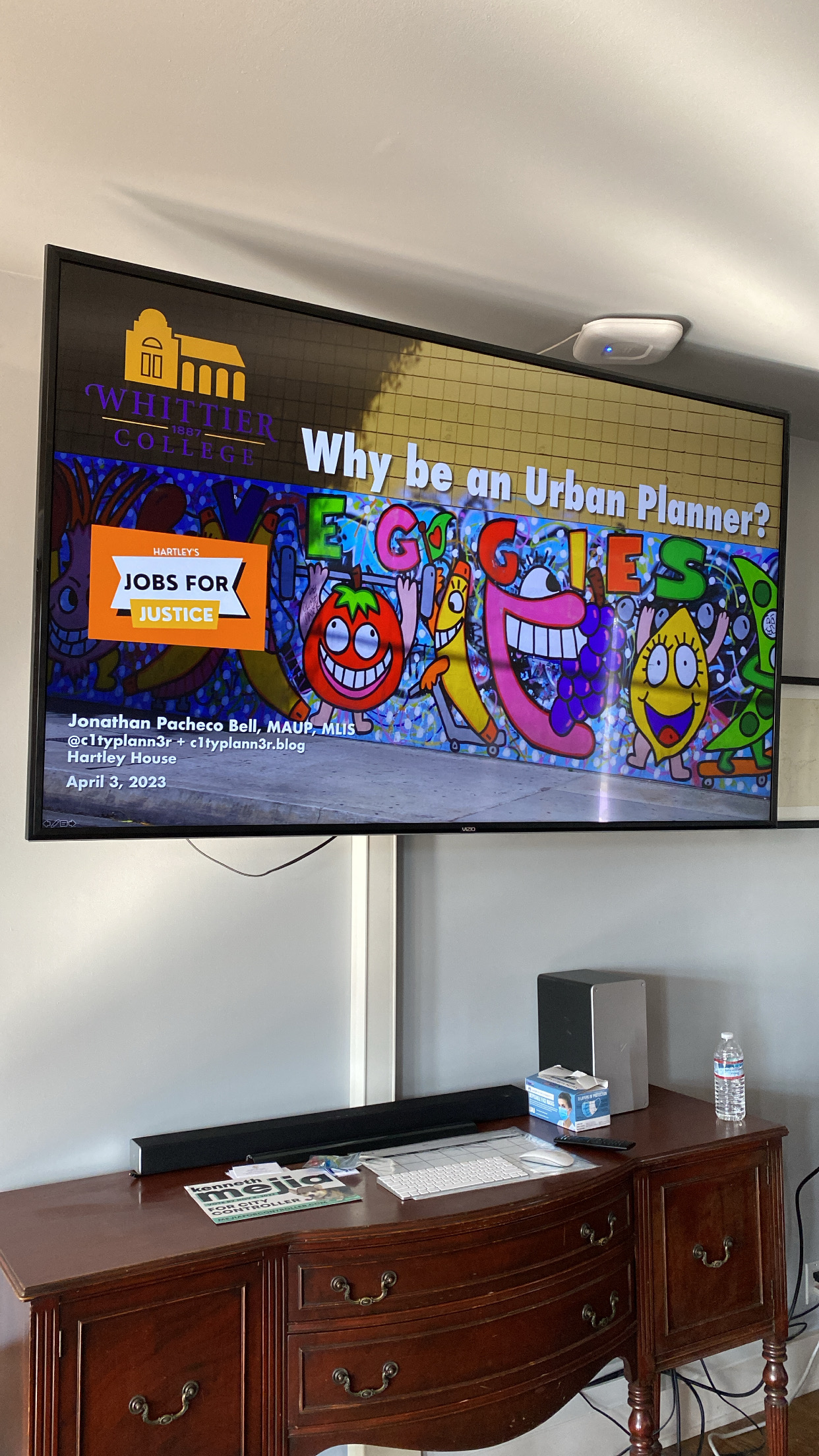
I appreciated speaking at Whittier College in the Jobs For Justice series.
Titled, “Why be an Urban Planner?,” the talk explored my route to planning through hip hop, graffiti, and architecture; what urban planning is; careers in public, private, nonprofit planning & allied fields; and my thesis that the future of planning is #EmbeddedPlanning praxis.
Shout out to Dr. Rebecca Overmeyer-Velazquez for the invitation.
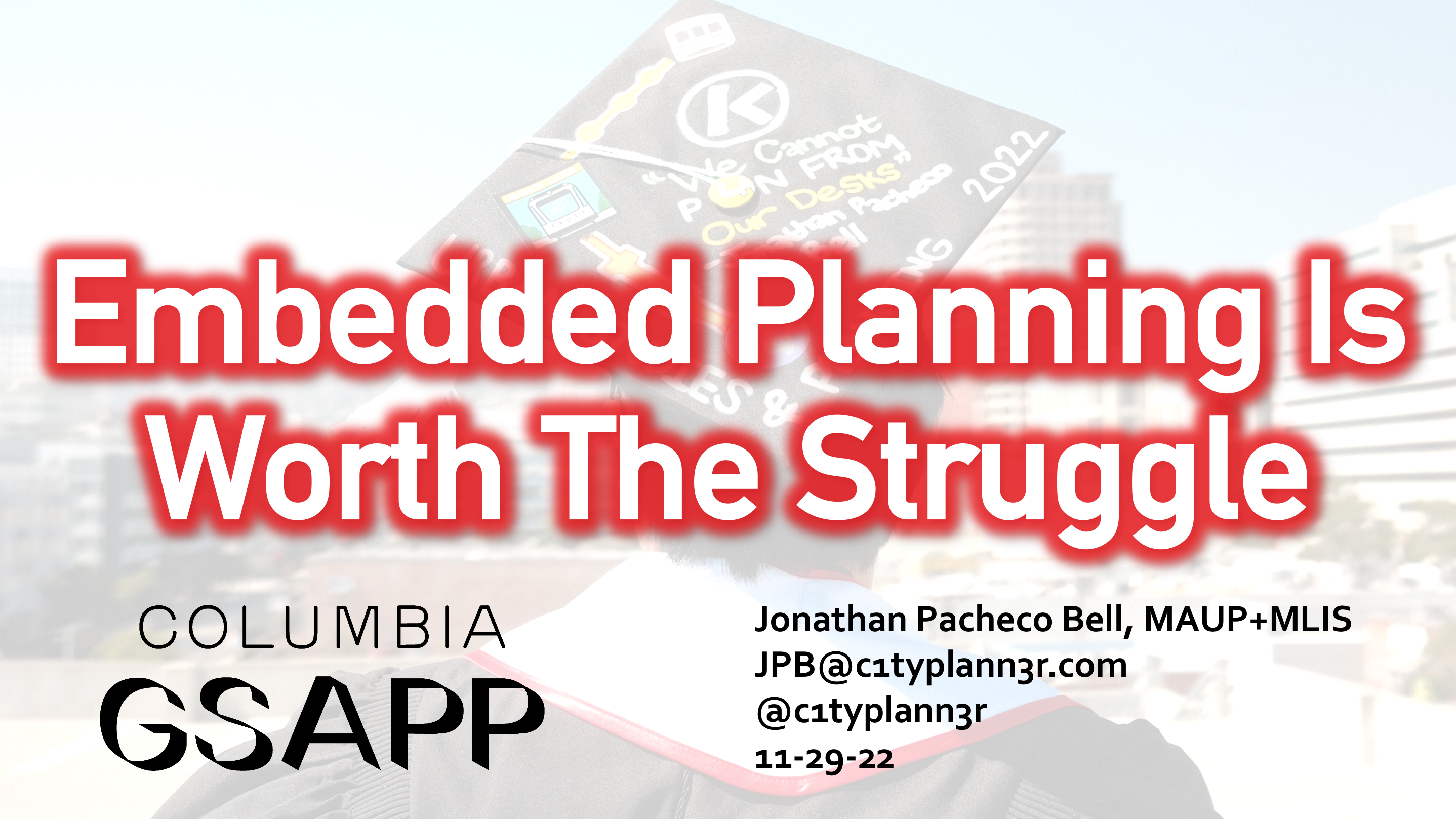
I enjoyed launching my new talk “Embedded Planning is Worth The Struggle”at Columbia GSAPP last November. I’m now working on scheduling in-person venues for 2023. Where should we go next?
“Urban Planning Program Council welcomed Andrew Cronson (M.S. UP and M.S. HP ‘25), Shannon Hui (M.S. UP ’24), Ethan Floyd (M.S. UP ’24) and Ted Lim (M.S. UP ’24) who were selected as the First-Year Program Council Representatives. They joined Victoria Lin (M.S. UP ’23) and Matthew Shore (M.S. UP ’23) who are the Second-Year Program Council Representatives. For the first time we hosted the Urban Planning Welcome Back Picnic in Central Park as well as a Campus Secrets Tour that allowed students access to lesser known locations in Columbia University. We also hosted the annual Thanksgiving Dinner and a Jonathan Pacheco Bell LiPs Lecture + Lunch so students have opportunities to speak to embedded planners who work in the field.”
“Like many other professions, planning deals with a theory/practice gap. What we’re taught in our urban planning classes frequently differs from what we do on the job. In the academy, planners learn about theories such as #AdvocacyPlanning and #InsurgentPlanning that were born as challenges to technocratic #RationalPlanning. But in practice, radical approaches require the planner to be political, take a stand, and challenge power structures. That makes some planning traditionalists uncomfortable.
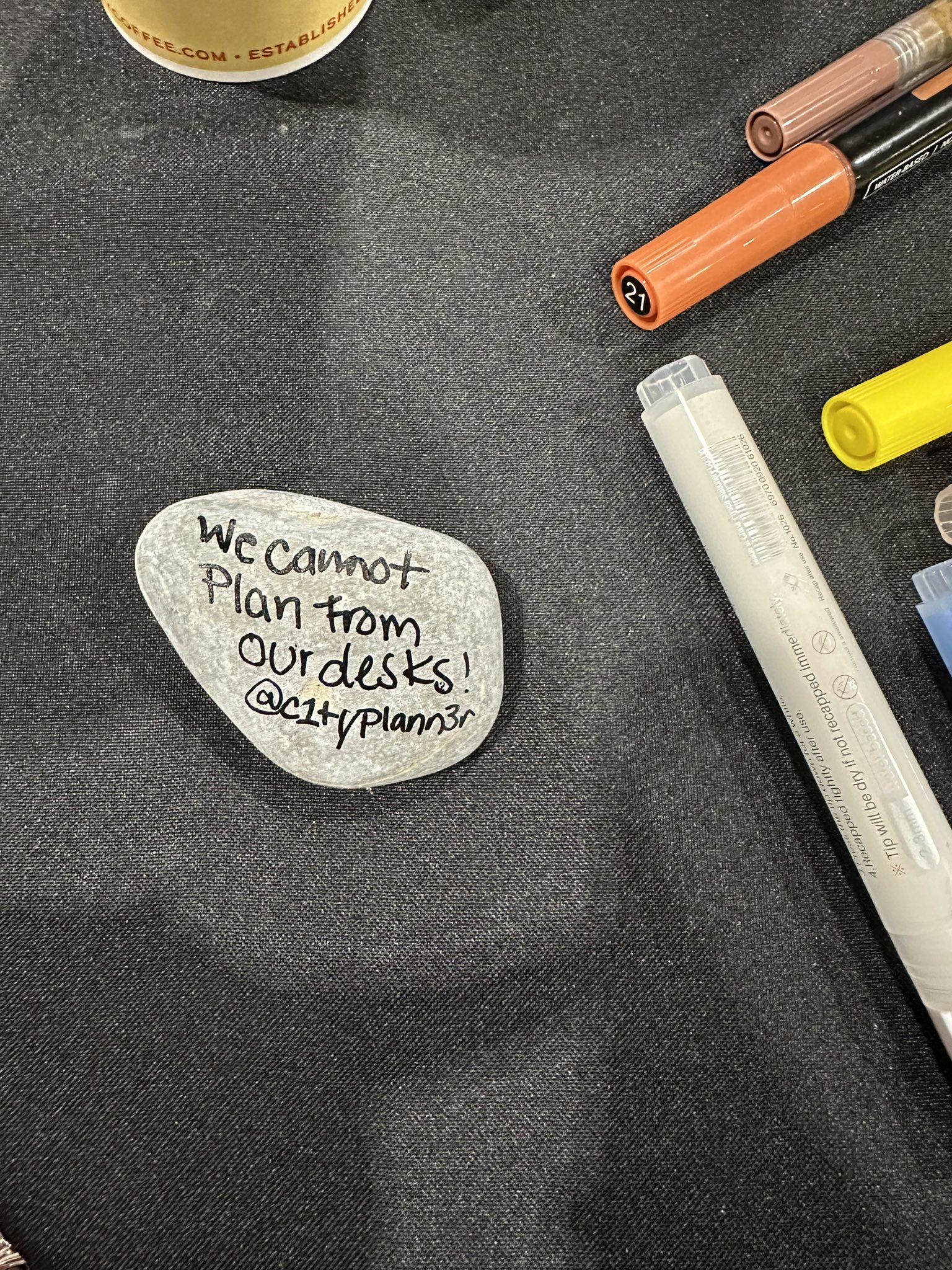
Planning, by convention, is a desk-bound profession, and planners work separately from the communities they serve. #EmbeddedPlanning challenges planners to perform their work at the street-level. I use the phrase “move with intention.” This means you do as much as possible to relocate your work from behind a desk to the spaces and places of the community. Go to the people. Be part of daily community life. Plan in plain language. Make the neighborhood your office. This is how you build trust with community members. Embedded Planning makes traditional city planning more accessible.”
Planning is political. Decisions about the built environment inherently impact people’s lives. Everything planners do involves a struggle over “who gets what, when, where, how, and why?” Planners respond to this debate but many of our practices have resulted in unjust planning. In this time of increasing interrogation of planning’s legacies of inequity, planners are moving with intention to be better partners. And as part of repair and healing, planners are seeking more ways to build meaningful community partnerships. No longer is technocratic rational planning the default. But while the pivot to participatory methods helped democratize the planning process, professional practice still prefers project-based, one-off, transactional engagement.
Orthodox planning must evolve.
A better way is possible.
Los Angeles-based urban planner Jonathan Pacheco Bell urges practitioners to consider Embedded Planning praxis. Developed by Bell on the ground in South Central LA, Embedded Planning is a way to fundamentally restructure community engagement and practice. Embedded Planning means planning from the street, not from a desk. Embedded Planners work in the spaces and places of community members, building bridges with marginalized communities harmed by inequitable planning. Embedded Planning is a praxis that puts theory into action to better this world. Since Bell declared Embedded Planning exists in 2018, it has grown into an international movement among emerging planners. In this talk, Bell will show how Embedded Planning is being used to transform engagement into lasting community partnerships rooted in trust.
Community members have embraced Embedded Planning because they feel seen and included. Yet despite this praxis bringing ignored voices to the table, Bell encountered blatant hostility from planning figureheads who judged Embedded Planning as “too political.” Through storytelling and personal reflection, Bell will illustrate the struggle to carry out Embedded Planning in the face of power. Attendees will learn the challenges and benefits of this unorthodox approach and understand why this praxis is the future of planning.
In this time of increasing interrogation of planning’s legacies of inequity, planners are moving with intention to be better partners. And as part of repair and healing, planners are seeking more ways to build meaningful community #partnerships. No longer is technocratic rational planning the default.
But while the pivot to participatory methods helped democratize the planning process, professional practice still prefers project-based, one-off, transactional engagement.
Orthodox planning must evolve.
A better way is possible.
Los Angeles-based urban planner Jonathan Pacheco Bell urges practitioners to consider Embedded Planning praxis. Developed by Bell on the ground in South Central LA, Embedded Planning is a way to fundamentally restructure community engagement and practice. Embedded Planning means planning from the street, not from a desk. Embedded Planners work in the spaces and places of community members, building bridges with marginalized communities harmed by inequitable planning. Embedded Planning is a #praxis that puts theory into action to better this world.
Since Bell declared Embedded Planning exists in 2018, it has grown into an international movement among emerging planners. In this talk, Bell will show how #EmbeddedPlanning is being used to transform engagement into lasting community partnerships rooted in trust.
Community members have embraced Embedded Planning because they feel seen and included. Yet despite this praxis bringing ignored voices to the table, Bell encountered blatant #hostility from planning figureheads who judged Embedded Planning as “too political.” Through storytelling and personal reflection, Bell will illustrate the struggle to carry out Embedded Planning in the face of power. Attendees will learn the challenges and benefits of this unorthodox approach and understand why this praxis is the future of planning.
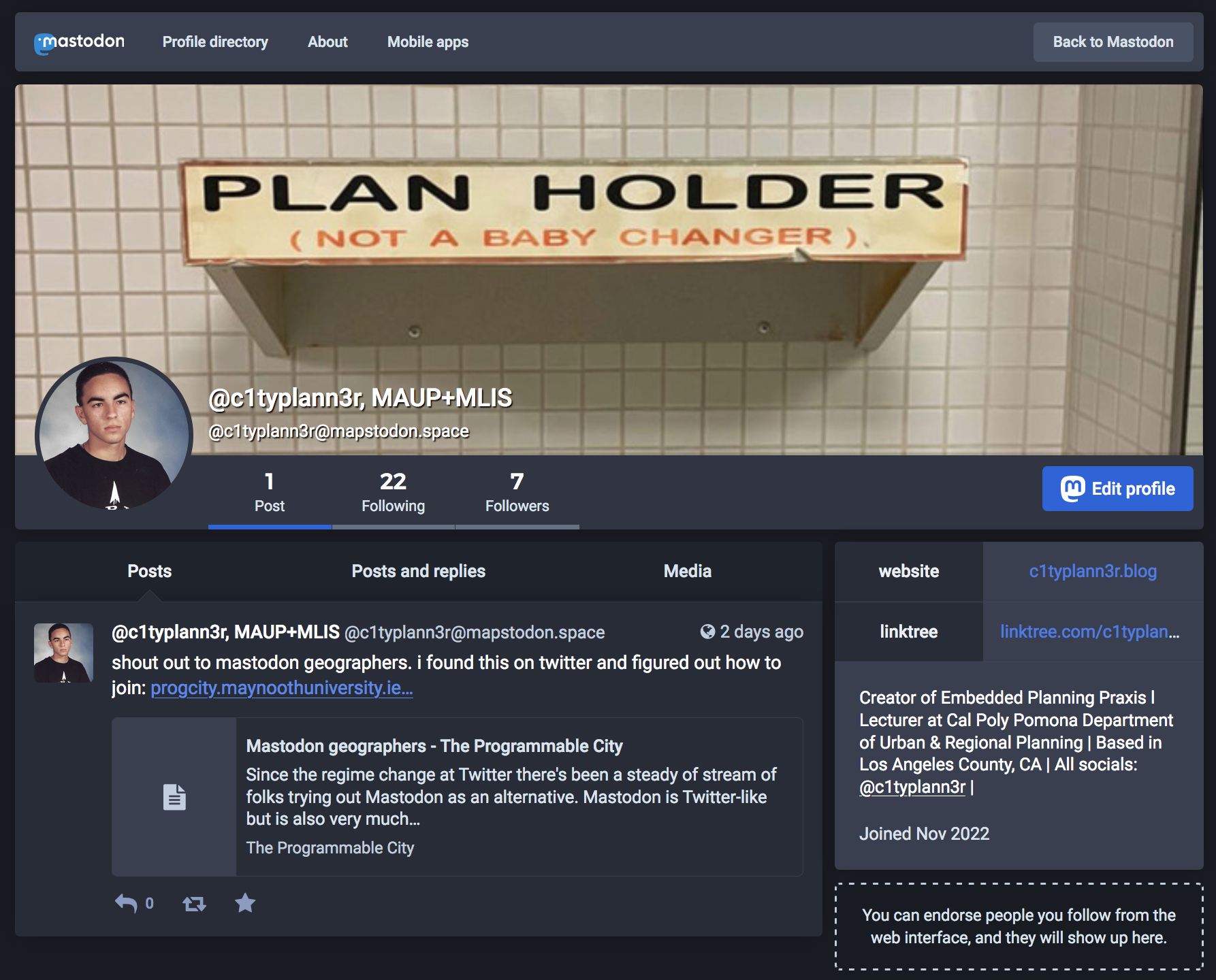
On Election Night 2022, I joined Mastodon. Launched in 2016, Mastodon is an open source alternative to Twitter. Sign ups spiked in the last several weeks. I see why.
I remember a time before what we were calling The Information Superhighway. I remember the thrill of the nascent world wide web. Mastodon feels like I’m back in those early internet days. No ads. No trolls. No tech bro degradation. While it’s been only a couple days, the ethos is conversation. Nobody trying to go viral. No pendejos. It’s what Twitter used to be.
Much has been said about how confusing Mastodon is compared to Twitter — and any other social network. It’s not that complicated though. I figured out how to join in 15 minutes. Time will vary for every user. Yes there’s a learning curving, as there is with any new tool. It’s worth it. This runs counter to today’s insta-gratification culture but patience is key. Patient follow through.
Mastodon is a decentralized network of communities, known in techspeak as “instances.” They’re organized around a topic, region, interest, or theme. You register your account on an instance of choice. Some require a waiting period to join. Others are instantaneous. After joining, you have access to other instances in the network. You can follow and engage folks on yours and other instances. You don’t log into Mastodon so much as you log into your account on your instance/community, and from there you can access everything on Mastodon.
I joined the instance Mapstodon.space. Yes it’s a play on words! The geographer-focused community is a “gathering space for GIS, mapping, geospatial and cartography professionals and enthusiasts.” It was this thread on #GeographyTwitter that helped me figure out this place. As an urban planner, I feel at home here.
I joined a chorus of voices sharing the impact of the late urban historian Mike Davis. I mean every word ❤ I’m an LA urban planner because of Mike. Embedded Planning praxis exists because of his teachings.
When I abruptly quit architecture school in 1998 and was depressed and lost but found my way to critical planning practice, the book that got me there was City of Quartz.
Community engagement must evolve. We planners engage the public when we need feedback. People are consulted; input is gathered; and plans, for the most part, incorporate public input — then the relationship concludes, only to restart with the next project. Such transactional planning does little to build long-term stakeholder relationships.
In a time of increasing interrogation of planning and its legacies of inequity, planners today are seeking better ways to build and sustain meaningful partnerships. Urban planner Jonathan Pacheco Bell (@c1typlann3r) proposes #EmbeddedPlanning as a way to fundamentally restructure community engagement and practice. Embedded Planning means planning from the street, not from a desk. Embedded Planners work in the spaces and places of community members. Embedded Planners build bridges with marginalized communities harmed by past planning practices. Embedded Planning is a praxis that puts theory into action to better this world. Since Bell declared Embedded Planning exists in 2018, it has grown into an international movement embraced by emerging planners.
Through storytelling and personal reflection, Bell will illustrate how Embedded Planning is being used to build lasting community partnerships that center engagement as an ongoing process. Attendees will learn the benefits and challenges of Embedded Planning, including takeaways for implementation, and understand why this #praxis is the future of planning.
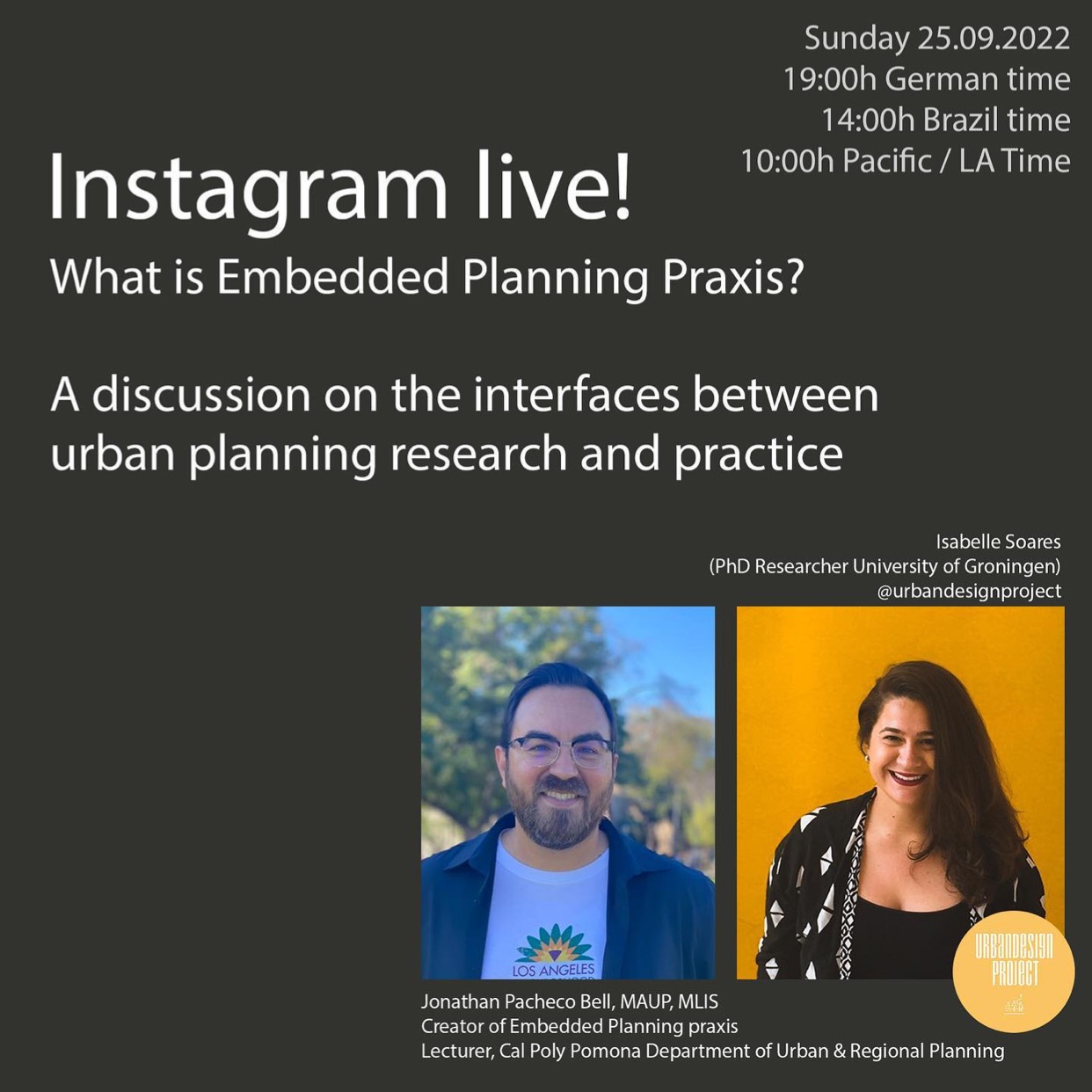
Infographic by Isabelle Soares @UrbanDesignProject
I enjoyed discussing Embedded Planning praxis on Instagram Live with Isabelle Soares @urbandesignproject. Planners and designers from Brazil, Germany, Netherlands, Canada and the US took part in the event, making it the first international conversation I’ve done on Embedded Planning. I learned a lot from Isabelle and the audience. Every chat advances the praxis. More to come.








You must be logged in to post a comment.